Download Mendeley
Nonsymmetrically Substituted 1,1'-Biphenyl-Based Small Molecule Inhibitors of the PD-1/PD-L1 Interaction.
Hec-Galazka, A., Tyrcha, U., Barczynski, J., Bielski, P., Mikitiuk, M., Gudz, G.P., Kitel, R., Musielak, B., Plewka, J., Sitar, T., Holak, T.A.(2024) ACS Med Chem Lett 15: 828-836
- PubMed: 38894909 Search on PubMedSearch on PubMed Central
- DOI: https://doi.org/10.1021/acsmedchemlett.4c00042
- Primary Citation Related Structures:
9EO0 - PubMed Abstract:
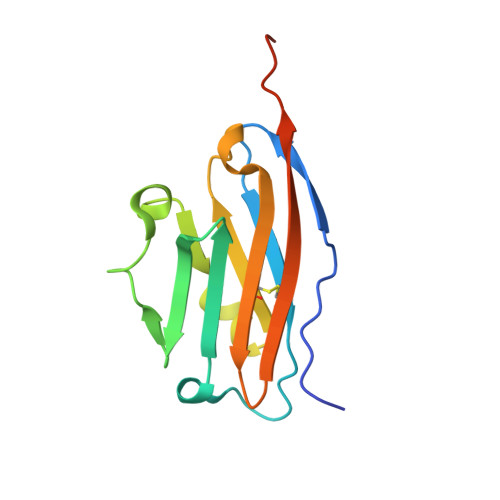
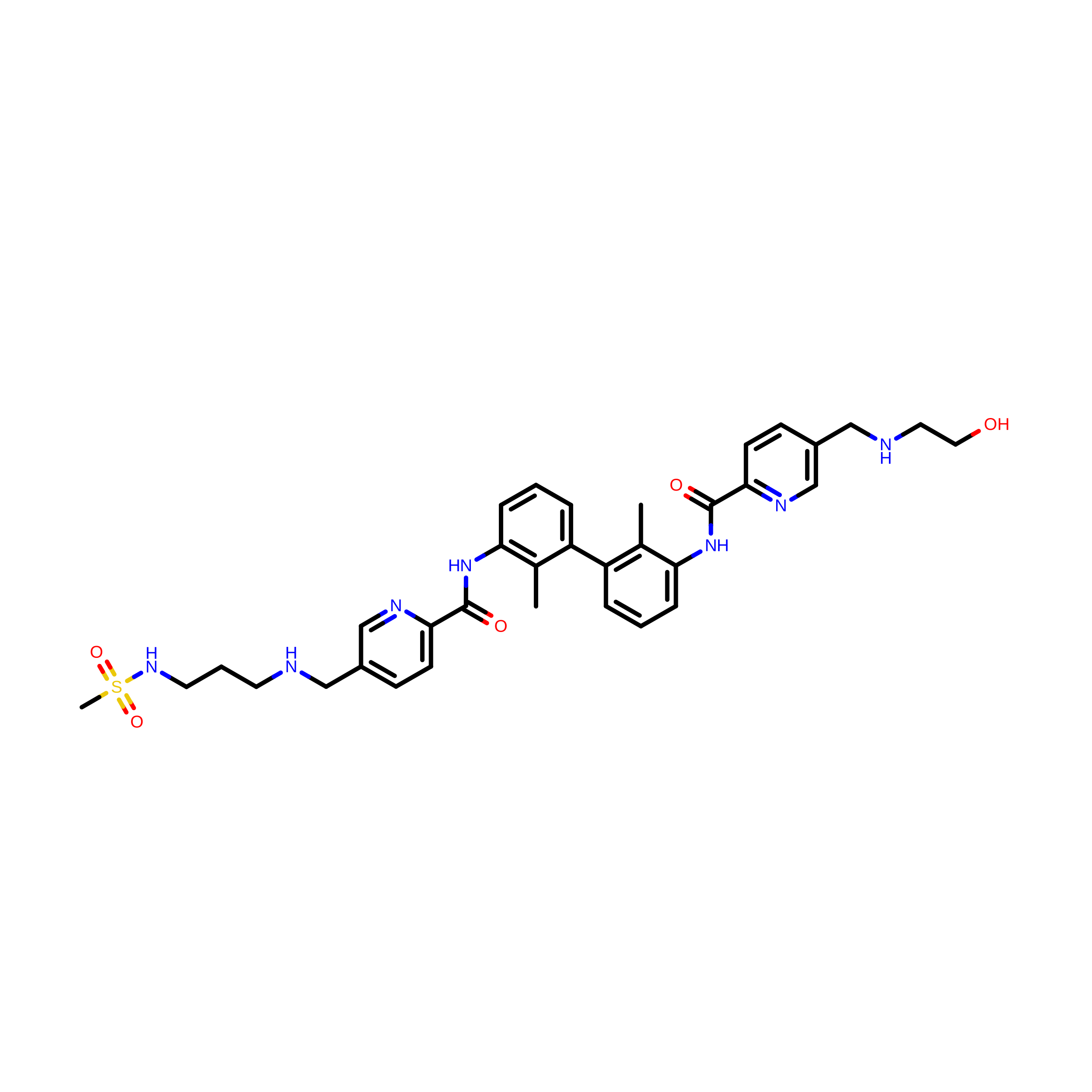
Therapeutic antibodies directed against either programmed cell death-1 protein (PD-1) or its ligand PD-L1 have demonstrated efficacy in the treatment of various cancers. In contrast with antibodies, small molecules have the potential for increased tissue penetration; better pharmacology; and therefore, improved antitumor activity. A series of nonsymmetric C2 inhibitors were synthesized and evaluated for PD-1/PD-L1 interaction inhibition. These compounds induced PD-L1 dimerization and effectively blocked PD-L1/PD-1 interaction in a homogeneous time-resolved fluorescence (HTRF) assay with most inhibitors exhibiting IC 50 values in the single-digit nM range and below. Their high inhibitory potency was also demonstrated in a cell-based coculture PD-1 signaling assay where 2 exhibited an EC 50 inhibitory activity of 21.8 nM, which approached that of the PD-L1 antibody durvalumab (EC 50 = 0.3-1.8 nM). Structural insight into how these inhibitors interact with PD-L1 was gained by using NMR and X-ray cocrystal structure studies. These data support further preclinical evaluation of these compounds as antibody alternatives.
- Jagiellonian University, Doctoral School of Exact and Natural Sciences, prof. S. Łojasiewicza 11, 30-348 Krakow, Poland.
Organizational Affiliation: