9EAH | pdb_00009eah

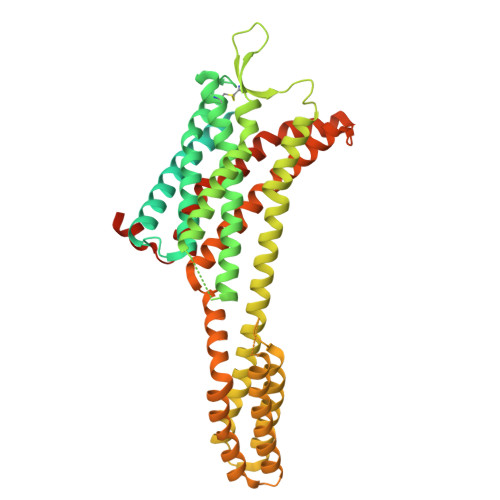
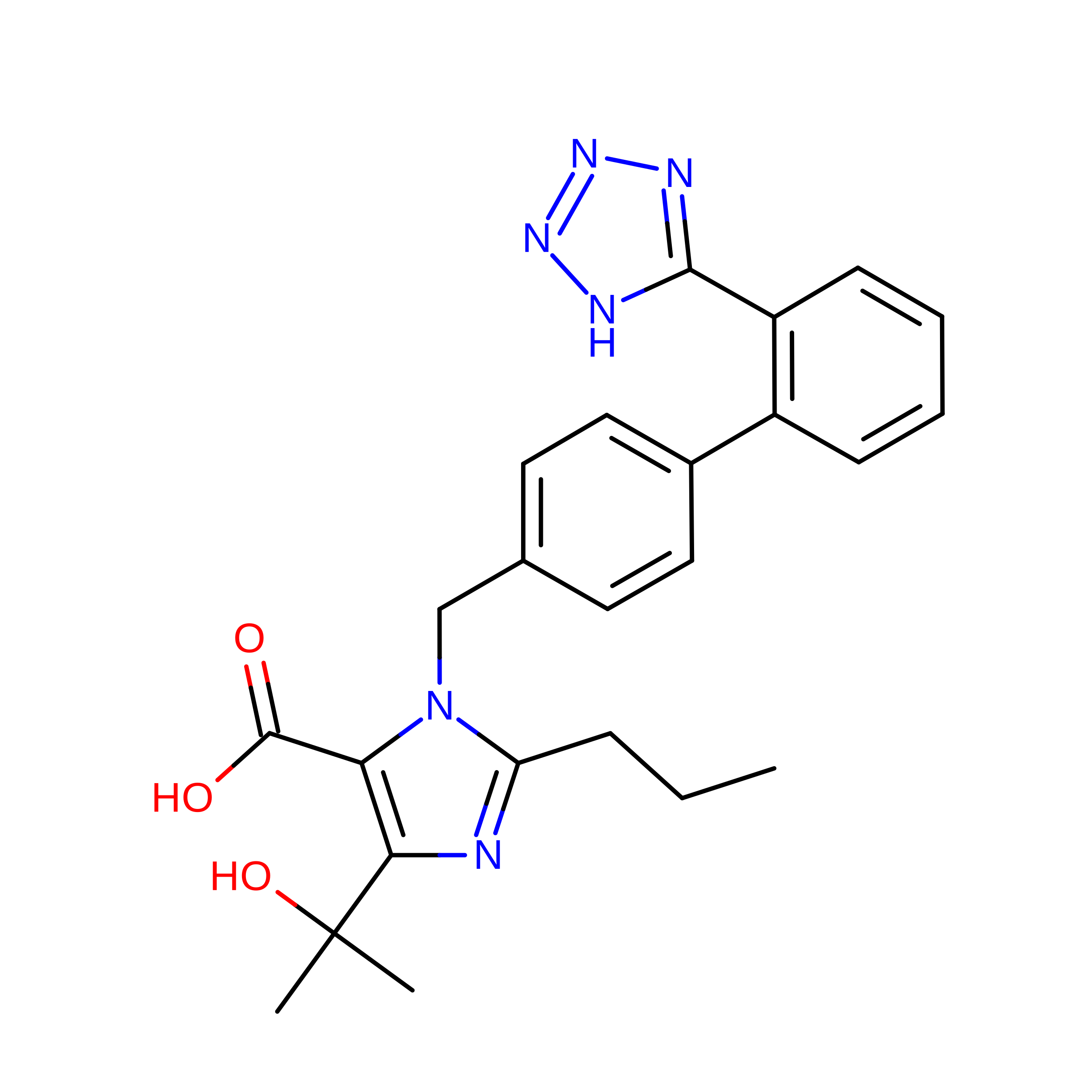
Structure of nanobody AT209 in complex with the olmesartan-bound angiotensin II type I receptor (AT1R)


Experimental Data Snapshot

  • Method: ELECTRON MICROSCOPY
  • Resolution: 3.10 Å
  • Aggregation State: PARTICLE 
  • Reconstruction Method: SINGLE PARTICLE 

wwPDB Validation   3D Report Full Report


This is version 1.2 of the entry. See complete history


Literature

Epitope-directed selection of GPCR nanobody ligands with evolvable function.

Skiba, M.A.Canavan, C.Nemeth, G.R.Liu, J.Kanso, A.Kruse, A.C.

(2025) Proc Natl Acad Sci U S A 122: e2423931122-e2423931122

  • DOI: https://doi.org/10.1073/pnas.2423931122
  • Primary Citation of Related Structures:  
    9EAH, 9EAI, 9EAJ

  • PubMed Abstract: 

    Antibodies have the potential to target G protein-coupled receptors (GPCRs) with high receptor, cellular, and tissue selectivity; however, few antibody ligands for GPCRs exist. Here, we describe a generalizable selection method to enrich for GPCR ligands from a synthetic camelid antibody fragment (nanobody) library. Our strategy yielded multiple nanobody ligands for the angiotensin II type I receptor (AT1R), a prototypical GPCR and important drug target. We found that nanobodies readily act as allosteric modulators, encoding selectivity for both the receptor and chemical features of GPCR ligands. We then used structure-guided design to convert two nanobodies from allosteric ligands to competitive AT1R inhibitors through simple mutations. This work demonstrates that nanobodies can encode multiple pharmacological behaviors and have great potential as evolvable scaffolds for the development of next-generation GPCR therapeutics.


  • Organizational Affiliation
    • Department of Biological Chemistry and Molecular Pharmacology, Blavatnik Institute, Harvard Medical School, Boston, MA 02115.

Macromolecules
Find similar proteins by:  (by identity cutoff)  |  3D Structure
Entity ID: 1
MoleculeChains Sequence LengthOrganismDetailsImage
Nanobody AT209,Type-1 angiotensin II receptor,Soluble cytochrome b562A,
D [auth B]
580CamelidaeHomo sapiensEscherichia coliMutation(s): 3 
Membrane Entity: Yes 
UniProt & NIH Common Fund Data Resources
Find proteins for P30556 (Homo sapiens)
Explore P30556 
Go to UniProtKB:  P30556
PHAROS:  P30556
GTEx:  ENSG00000144891 
Entity Groups  
Sequence Clusters30% Identity50% Identity70% Identity90% Identity95% Identity100% Identity
UniProt GroupP30556
Sequence Annotations
Expand
  • Reference Sequence
Find similar proteins by:  (by identity cutoff)  |  3D Structure
Entity ID: 2
MoleculeChains Sequence LengthOrganismDetailsImage
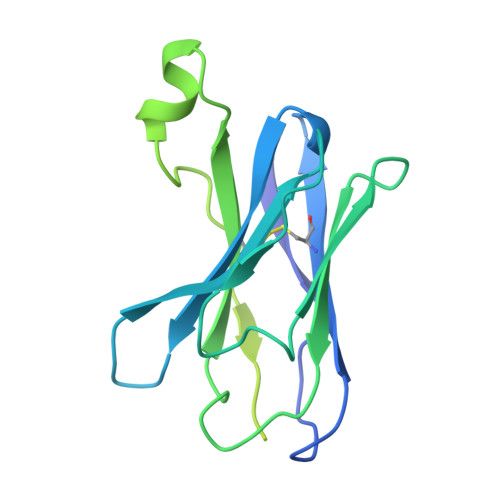
BAG2 Anti-BRIL Fab Heavy ChainB [auth C]231synthetic constructMutation(s): 0 
Entity Groups  
Sequence Clusters30% Identity50% Identity70% Identity90% Identity95% Identity100% Identity
Sequence Annotations
Expand
  • Reference Sequence
Find similar proteins by:  (by identity cutoff)  |  3D Structure
Entity ID: 3
MoleculeChains Sequence LengthOrganismDetailsImage
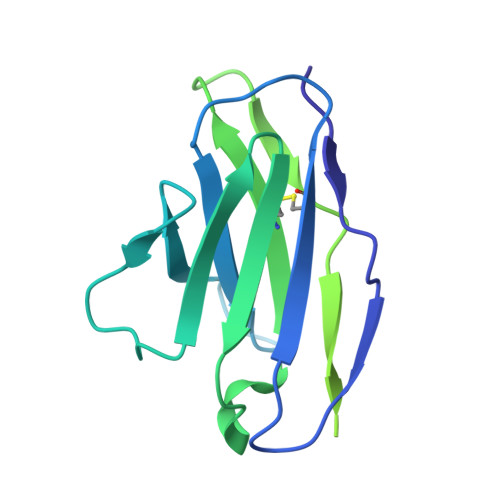
BAG2 Anti-BRIL Fab Light ChainC [auth D]215synthetic constructMutation(s): 0 
Entity Groups  
Sequence Clusters30% Identity50% Identity70% Identity90% Identity95% Identity100% Identity
Sequence Annotations
Expand
  • Reference Sequence
Experimental Data & Validation

Experimental Data

  • Method: ELECTRON MICROSCOPY
  • Resolution: 3.10 Å
  • Aggregation State: PARTICLE 
  • Reconstruction Method: SINGLE PARTICLE 
EM Software:
TaskSoftware PackageVersion
MODEL REFINEMENTPHENIX1.21.1_5286:

Structure Validation

View Full Validation Report


Entry History & Funding Information

Deposition Data


Funding OrganizationLocationGrant Number
Helen Hay Whitney FoundationUnited States--
National Institutes of Health/Eunice Kennedy Shriver National Institute of Child Health & Human Development (NIH/NICHD)United StatesK99HD110612
National Institutes of Health/Eunice Kennedy Shriver National Institute of Child Health & Human Development (NIH/NICHD)United StatesR21HD101596
National Institutes of Health/National Cancer Institute (NIH/NCI)United StatesR01CA260415

Revision History  (Full details and data files)

  • Version 1.0: 2025-03-05
    Type: Initial release
  • Version 1.1: 2025-03-19
    Changes: Data collection, Database references
  • Version 1.2: 2025-03-26
    Changes: Data collection, Database references