Download Mendeley
Covalent inhibitors of the PI3K alpha RAS binding domain impair tumor growth driven by RAS and HER2.
Klebba, J.E., Roy, N., Bernard, S.M., Grabow, S., Hoffman, M.A., Miao, H., Tamiya, J., Wang, J., Berry, C., Esparza-Oros, A., Lin, R., Liu, Y., Pariollaud, M., Parker, H., Mochalkin, I., Rana, S., Snead, A.N., Walton, E.J., Wyrick, T.E., Aitichson, E., Bedke, K., Brannon, J.C., Chick, J.M., Hee, K., Horning, B.D., Ismail, M., Lamb, K.N., Lin, W., Lu, J., Pastuszka, M.K., Pollock, J., Sigler, J.J., Tomaschko, M., Tran, E., Yue, C., Kinsella, T.M., Molina-Arcas, M., Cook, B.N., Simon, G.M., Weinstein, D.S., Downward, J., Patricelli, M.P.(2025) Science 390: 702-709
- PubMed: 41066541 Search on PubMedSearch on PubMed Central
- DOI: https://doi.org/10.1126/science.adv2684
- Primary Citation Related Structures:
9E8M - PubMed Abstract:
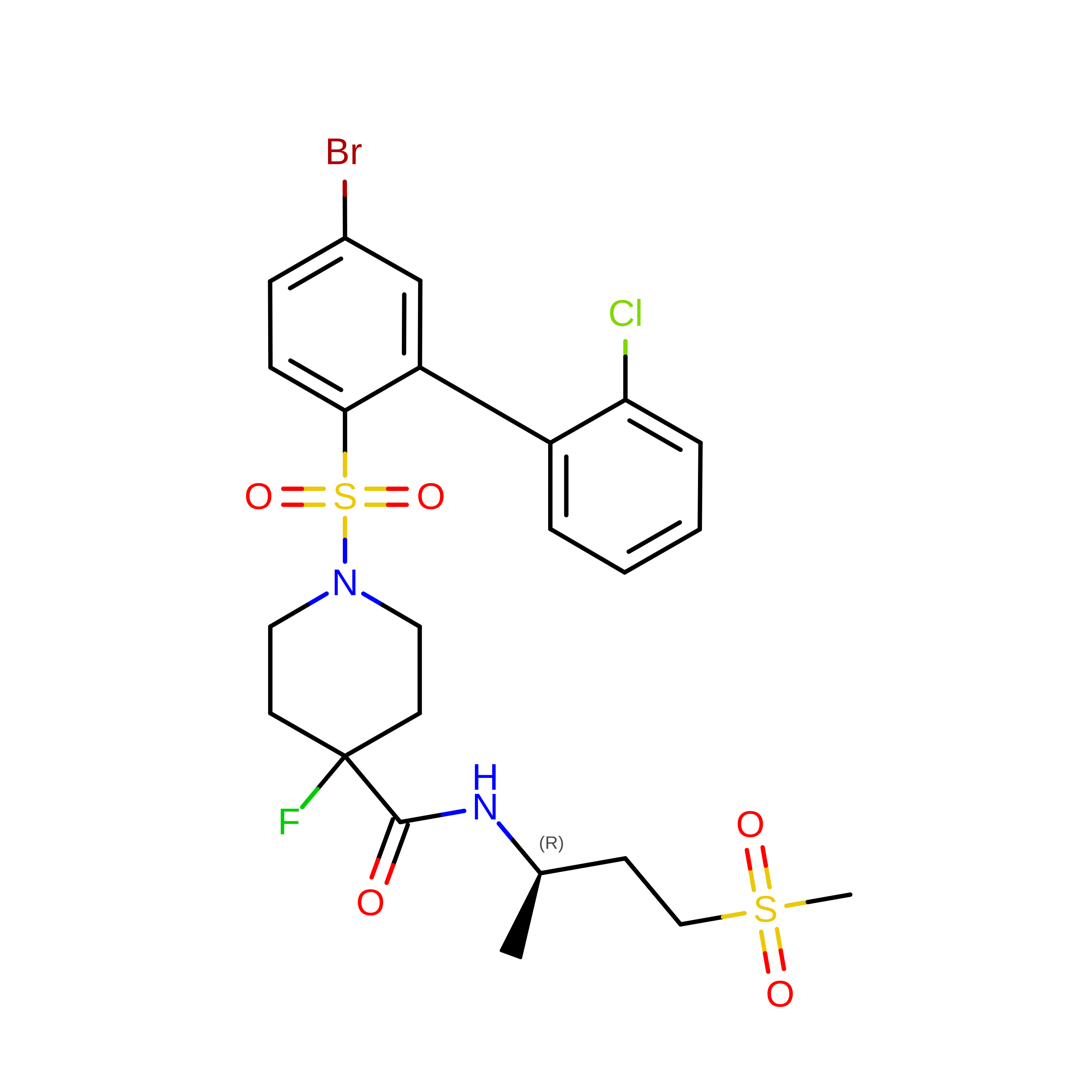
Genetic disruption of the RAS binding domain (RBD) of phosphoinositide 3-kinase alpha (PI3Kα) impairs the growth of tumors driven by the small guanosine triphosphatase RAS in mice and does not affect PI3Kα's role in insulin-mediated control of glucose homeostasis. Selectively blocking the RAS-PI3Kα interaction may represent a strategy for treating RAS-dependent cancers as it avoids the toxicity associated with inhibitors of PI3Kα lipid kinase activity. We developed compounds that bind covalently to cysteine 242 in the RBD of PI3K p110α and block RAS activation of PI3Kα activity. In mice, inhibitors slow the growth of RAS mutant tumors and human epidermal growth factor receptor 2-overexpressing tumors, particularly when combined with other inhibitors of the RAS/mitogen-activated protein kinase pathway, without causing hyperglycemia.
- Vividion Therapeutics, 5820 Nancy Ridge Drive, San Diego, CA, USA.
Organizational Affiliation: