Download Mendeley
Assembly and lipid-gating of LRRC8A:D volume-regulated anion channels.
Lurie, A., Stephens, C.A., Kern, D.M., Henn, K.M., Latorraca, N.R., Brohawn, S.G.(2025) Nat Commun 17: 366-366
- PubMed: 41388024 Search on PubMedSearch on PubMed Central
- DOI: https://doi.org/10.1038/s41467-025-67052-5
- Primary Citation Related Structures:
9DX7, 9DXA - PubMed Abstract:
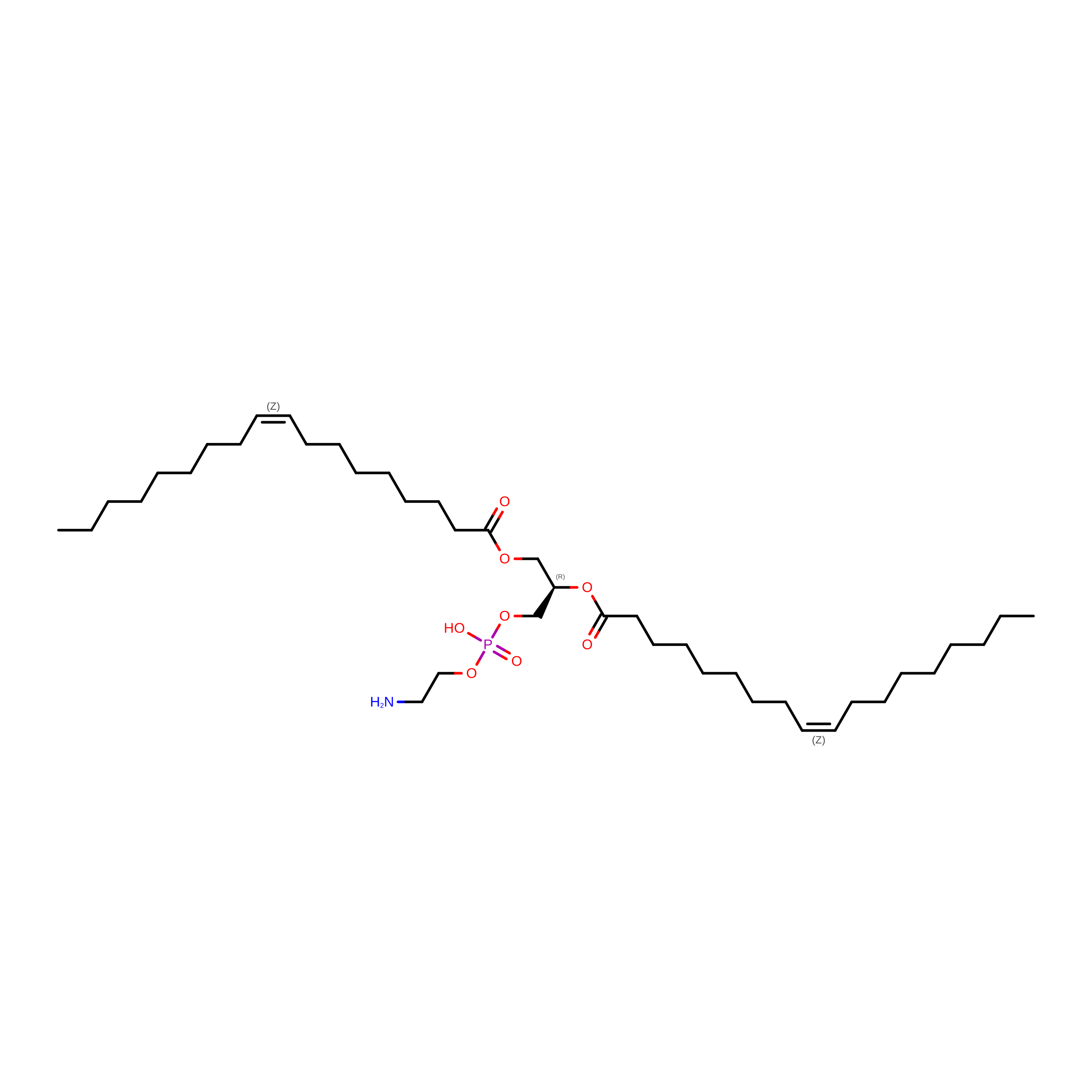
Volume-regulated anion channels (VRACs) are ubiquitously expressed vertebrate ion channels that open in response to hypotonic swelling. VRACs assemble as heteromers of LRRC8A and LRRC8B-E subunits, with different subunit combinations resulting in channels with different properties. Recent studies have described the structures of LRRC8A:C VRACs, but how other VRACs assemble, and which structural features are conserved or variant across channel assemblies remains unknown. Herein, we used cryo-EM to determine structures of a LRRC8A:D VRAC with a 4:2 subunit stoichiometry, which we captured in two conformations. The presence of LRRC8D subunits widens and increases hydrophobicity of the selectivity filter, which may contribute to the unique substrate selectivity of LRRC8D-containing VRACs. The structures reveal lipids bound inside the channel pore, similar to those observed in LRRC8A:C VRACs. We observe that LRRC8D subunit incorporation disrupts packing of the cytoplasmic LRR domains, increasing channel dynamics and opening lateral intersubunit gaps, which we speculate are necessary for pore lipid evacuation and channel activation. Molecular dynamics simulations show that lipids can reside stably within the pore to close the channel. Using electrophysiological experiments, we confirmed that pore lipids block conduction in the closed state, demonstrating that lipid-gating is a general property of VRACs.
- Department of Molecular and Cell Biology, University of California, Berkeley, CA, USA.
Organizational Affiliation: