Download Mendeley
Discovery and computational characterization of a novel cryptic pocket in human farnesyl pyrophosphate synthase.
Pandya, V., Wilson, K.A., Leung, C.Y., Tsantrizos, Y.S., Park, J.(2026) J Struct Biol 218: 108316-108316
- PubMed: 41865847 Search on PubMed
- DOI: https://doi.org/10.1016/j.jsb.2026.108316
- Primary Citation Related Structures:
4XQR, 9CY2, 9CYZ, 9CZ4, 9CZ5 - PubMed Abstract:
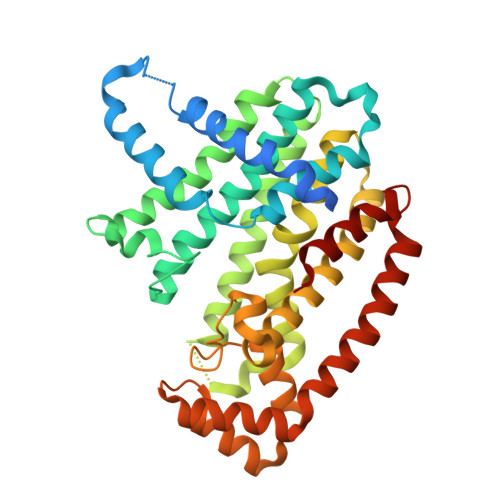
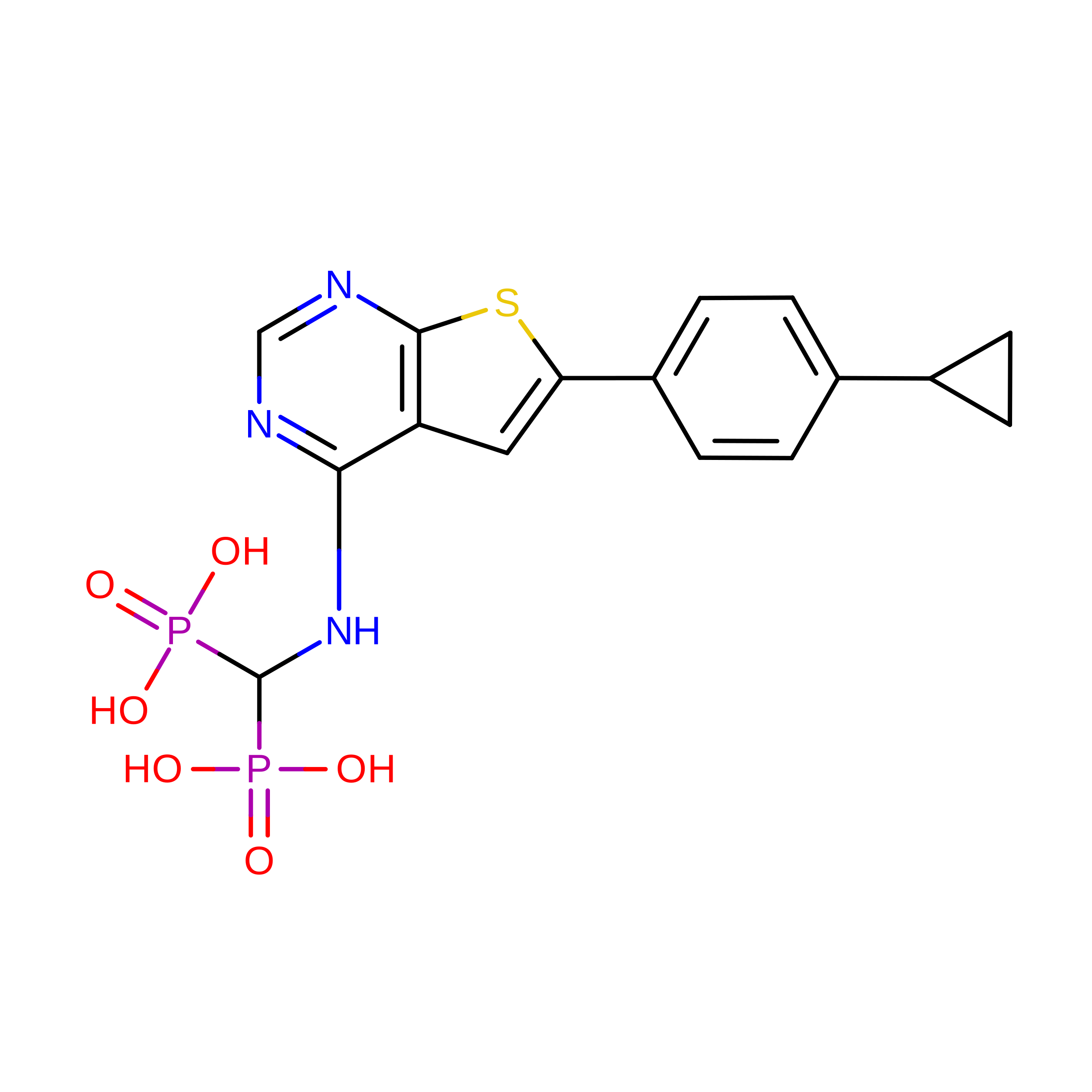
The mevalonate pathway provides isoprenoid building blocks required for the biosynthesis of more complex downstream products, including cholesterol, as well as for the posttranslational prenylation of membrane-associated proteins. Farnesyl pyrophosphate synthase (FPPS) is a key regulatory enzyme in this pathway and an established drug target for bone-resorption disorders, with more recent interest in its inhibition as a potential anticancer strategy. In addition to classical active-site inhibitors such as nitrogen-containing bisphosphonates, several chemically distinct small molecules inhibit FPPS via an allosteric site involved in a product-mediated feedback regulation. Here, we report the discovery of a previously unrecognized ligand-binding site in FPPS. Crystallographic analysis reveals that several bisphosphonate compounds, previously thought to bind to the allosteric site under metal-free conditions, instead bind to a distinct cryptic pocket. Located adjacent to the known allosteric site, this pocket is absent in the native enzyme conformation. Its formation is driven by a conformational rearrangement of the C-terminal helix, which alternates between opening the allosteric pocket and the cryptic pocket in a mutually exclusive manner. Molecular dynamics simulations indicate that the cryptic pocket does not open spontaneously from the native state on the simulated timescale and likely requires ligand binding. Once induced, the open conformation is stabilized by residues Phe239 and Ile348. Together, these findings expand the known conformational landscape of FPPS and identify a new ligandable site that may be relevant for future chemical biology and drug discovery efforts.
- Department of Biochemistry, Memorial University of Newfoundland, 45 Arctic Avenue, St. John's, Newfoundland and Labrador A1C 5S7, Canada.
Organizational Affiliation: