9CUJ | pdb_00009cuj

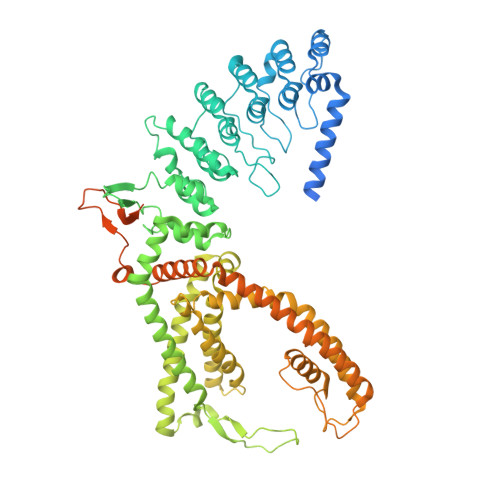
Structure of human full-length derived TRPV6 channel in apo open state

  • Classification: MEMBRANE PROTEIN
  • Organism(s): Homo sapiens
  • Expression System: Homo sapiens
  • Mutation(s): No 
  • Membrane Protein: Yes  PDBTMMemProtMD

  • Deposited: 2024-07-26 Released: 2024-11-13 
  • Deposition Author(s): Neuberger, A., Nadezhdin, K.D., Sobolevsky, A.I.
  • Funding Organization(s): National Institutes of Health/National Institute of Arthritis and Musculoskeletal and Skin Diseases (NIH/NIAMS), National Institutes of Health/National Cancer Institute (NIH/NCI), National Institutes of Health/National Institute of Neurological Disorders and Stroke (NIH/NINDS), German Research Foundation (DFG)

Experimental Data Snapshot

  • Method: ELECTRON MICROSCOPY
  • Resolution: 2.78 Å
  • Aggregation State: PARTICLE 
  • Reconstruction Method: SINGLE PARTICLE 

wwPDB Validation 3D Report Full Report

Validation slider image for 9CUJ

This is version 1.2 of the entry. See complete history

Literature

Structure-function analyses of human TRPV6 ancestral and derived haplotypes.

Neuberger, A.Shalygin, A.Trofimov, Y.A.Veretenenko, I.I.Nadezhdin, K.D.Krylov, N.A.Gudermann, T.Efremov, R.G.Chubanov, V.Sobolevsky, A.I.

(2025) Structure 33: 91-103.e5

  • DOI: https://doi.org/10.1016/j.str.2024.10.018
  • Primary Citation Related Structures: 
    9CUH, 9CUI, 9CUJ, 9CUK

  • PubMed Abstract: 

    TRPV6 is a Ca 2+ selective channel that mediates calcium uptake in the gut and contributes to the development and progression of human cancers. TRPV6 is represented by the ancestral and derived haplotypes that differ by three non-synonymous polymorphisms, located in the N-terminal ankyrin repeat domain (C157R), S1-S2 extracellular loop (M378V), and C-terminus (M681T). The ancestral and derived haplotypes were proposed to serve as genomic factors causing a different outcome for cancer patients of African ancestry. We solved cryoelectron microscopy (cryo-EM) structures of ancestral and derived TRPV6 in the open and calmodulin (CaM)-bound inactivated states. Neither state shows substantial structural differences caused by the non-synonymous polymorphisms. Functional properties assessed by electrophysiological recordings and Ca 2+ uptake measurements, and water and ion permeation evaluated by molecular modeling also appear similar between the haplotypes. Therefore, ancestral and derived TRPV6 have similar structure and function, implying that other factors are responsible for the differences in susceptibility to cancer.


  • Organizational Affiliation
    • Department of Biochemistry and Molecular Biophysics, Columbia University, New York, NY 10032, USA.

Macromolecule Content 

  • Total Structure Weight: 395.48 kDa 
  • Atom Count: 21,557 
  • Modeled Residue Count: 2,440 
  • Deposited Residue Count: 3,060 
  • Unique protein chains: 1

Macromolecules

Find similar proteins by:|  3D Structure
Entity ID: 1
MoleculeChains  Sequence LengthOrganismDetailsImage
Transient receptor potential cation channel subfamily V member 6
A, B, C, D
765Homo sapiensMutation(s): 0 
Gene Names: TRPV6ECAC2
Membrane Entity: Yes 
UniProt & NIH Common Fund Data Resources
Find proteins for Q9H1D0 (Homo sapiens)
Explore Q9H1D0 
Go to UniProtKB:  Q9H1D0
PHAROS:  Q9H1D0
GTEx:  ENSG00000165125 
Entity Groups
Sequence Clusters30% Identity50% Identity70% Identity90% Identity95% Identity100% Identity
UniProt GroupQ9H1D0
Sequence Annotations
Expand
Reference Sequence

Small Molecules

Ligands 4 Unique
IDChains Name / Formula / InChI Key2D Diagram3D Interactions
PCW

Query on PCW


Download:Ideal Coordinates CCD File
AB [auth C]
BB [auth D]
EA [auth B]
EB [auth D]
FA [auth B]
AB [auth C],
BB [auth D],
EA [auth B],
EB [auth D],
FA [auth B],
GA [auth B],
HA [auth B],
KA [auth B],
L [auth A],
M [auth A],
N [auth A],
O [auth A],
OB [auth D],
PB [auth D],
QB [auth D],
R [auth A],
UA [auth C],
VA [auth C],
WA [auth C],
XA [auth C]
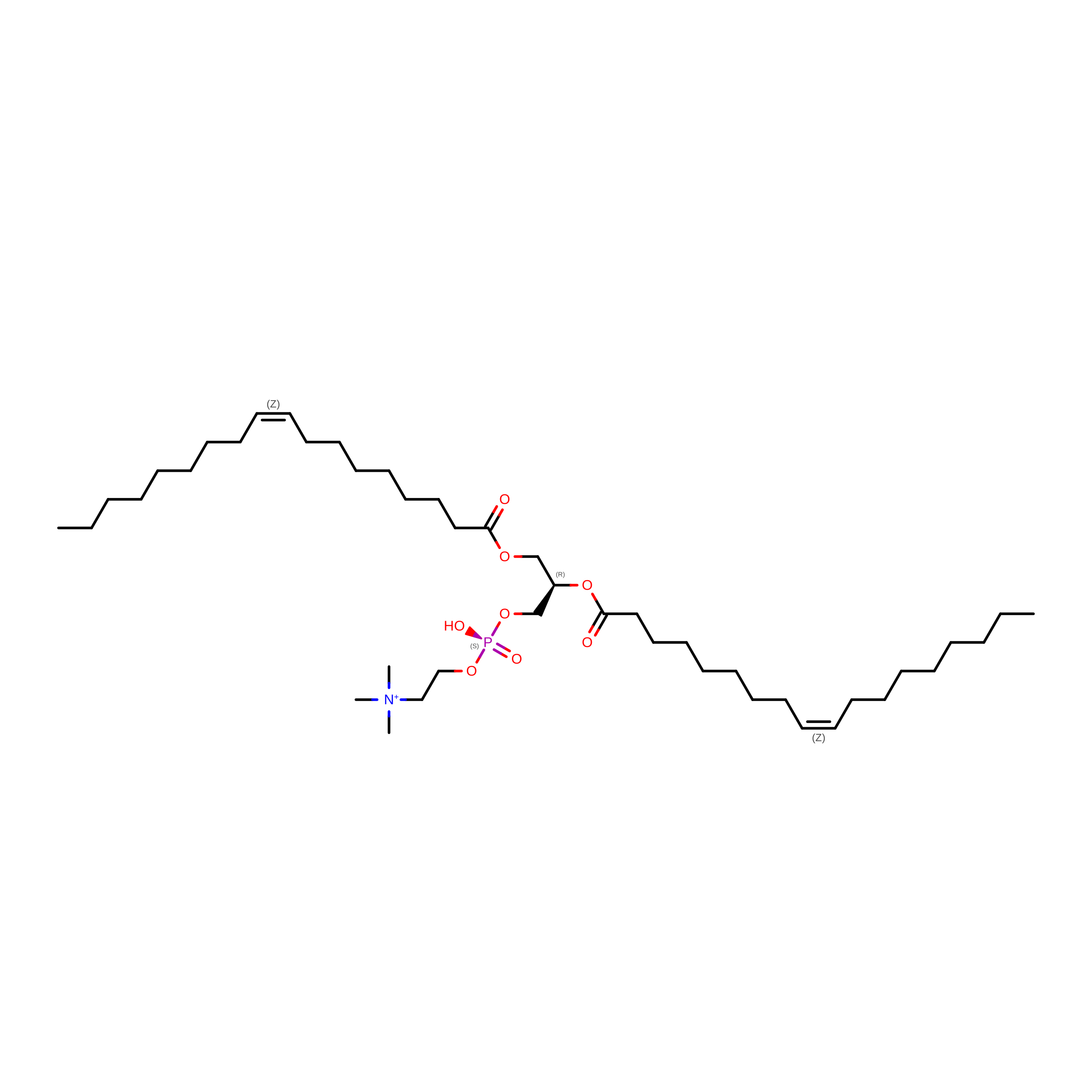
1,2-DIOLEOYL-SN-GLYCERO-3-PHOSPHOCHOLINE
C44 H85 N O8 P
SNKAWJBJQDLSFF-NVKMUCNASA-O
POV

Query on POV


Download:Ideal Coordinates CCD File
AA [auth B]
BA [auth B]
CA [auth B]
CB [auth D]
DA [auth B]
AA [auth B],
BA [auth B],
CA [auth B],
CB [auth D],
DA [auth B],
DB [auth D],
G [auth A],
GB [auth D],
H [auth A],
I [auth A],
IA [auth B],
J [auth A],
JA [auth B],
JB [auth D],
K [auth A],
KB [auth D],
LB [auth D],
MA [auth C],
MB [auth D],
NB [auth D],
P [auth A],
PA [auth C],
Q [auth A],
QA [auth C],
RA [auth C],
SA [auth C],
T [auth A],
TA [auth C],
W [auth B],
YA [auth C],
Z [auth B],
ZA [auth C]
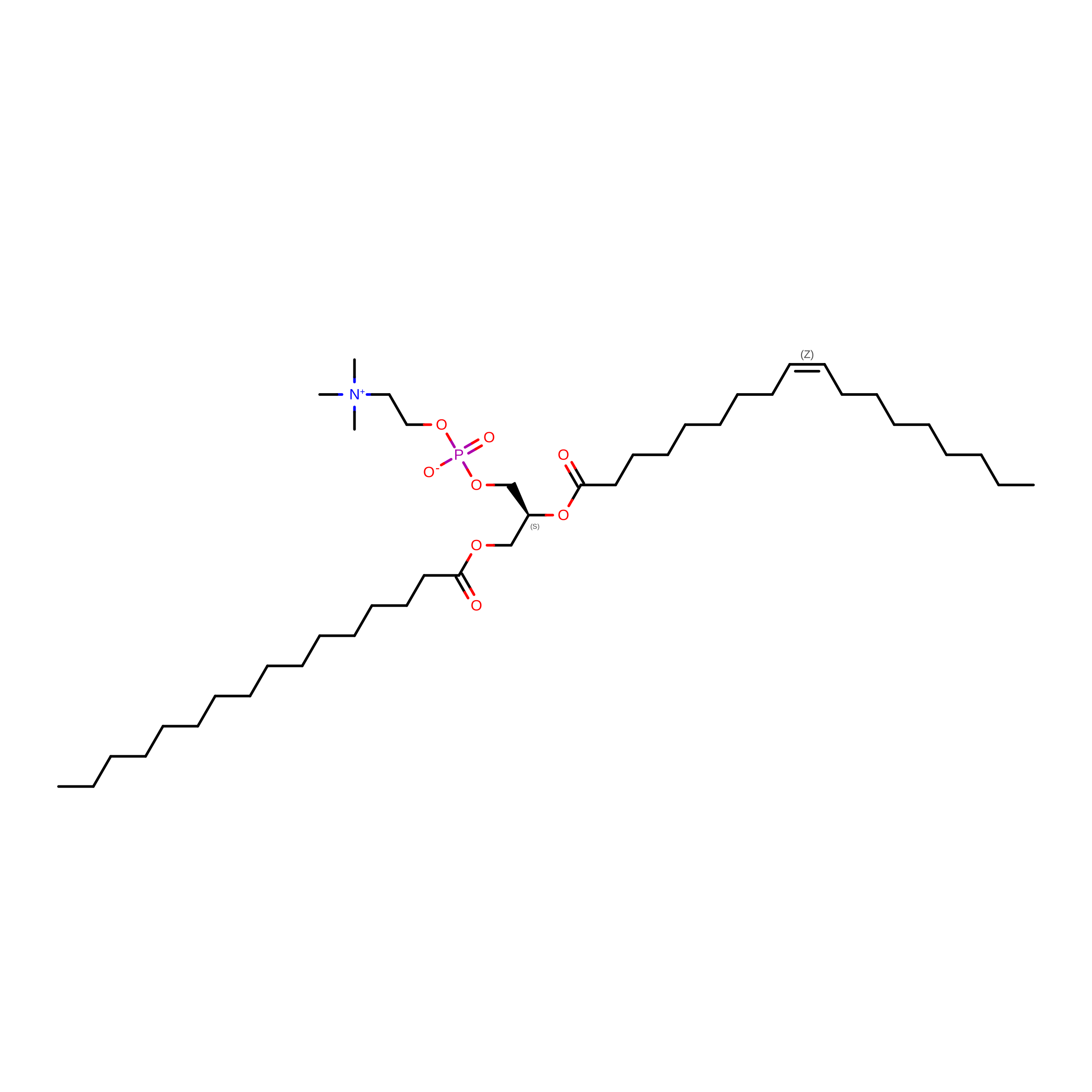
(2S)-3-(hexadecanoyloxy)-2-[(9Z)-octadec-9-enoyloxy]propyl 2-(trimethylammonio)ethyl phosphate
C42 H82 N O8 P
WTJKGGKOPKCXLL-PFDVCBLKSA-N
Y01

Query on Y01


Download:Ideal Coordinates CCD File
E [auth A]
F [auth A]
FB [auth D]
HB [auth D]
IB [auth D]
E [auth A],
F [auth A],
FB [auth D],
HB [auth D],
IB [auth D],
LA [auth C],
NA [auth C],
OA [auth C],
S [auth A],
V [auth B],
X [auth B],
Y [auth B]
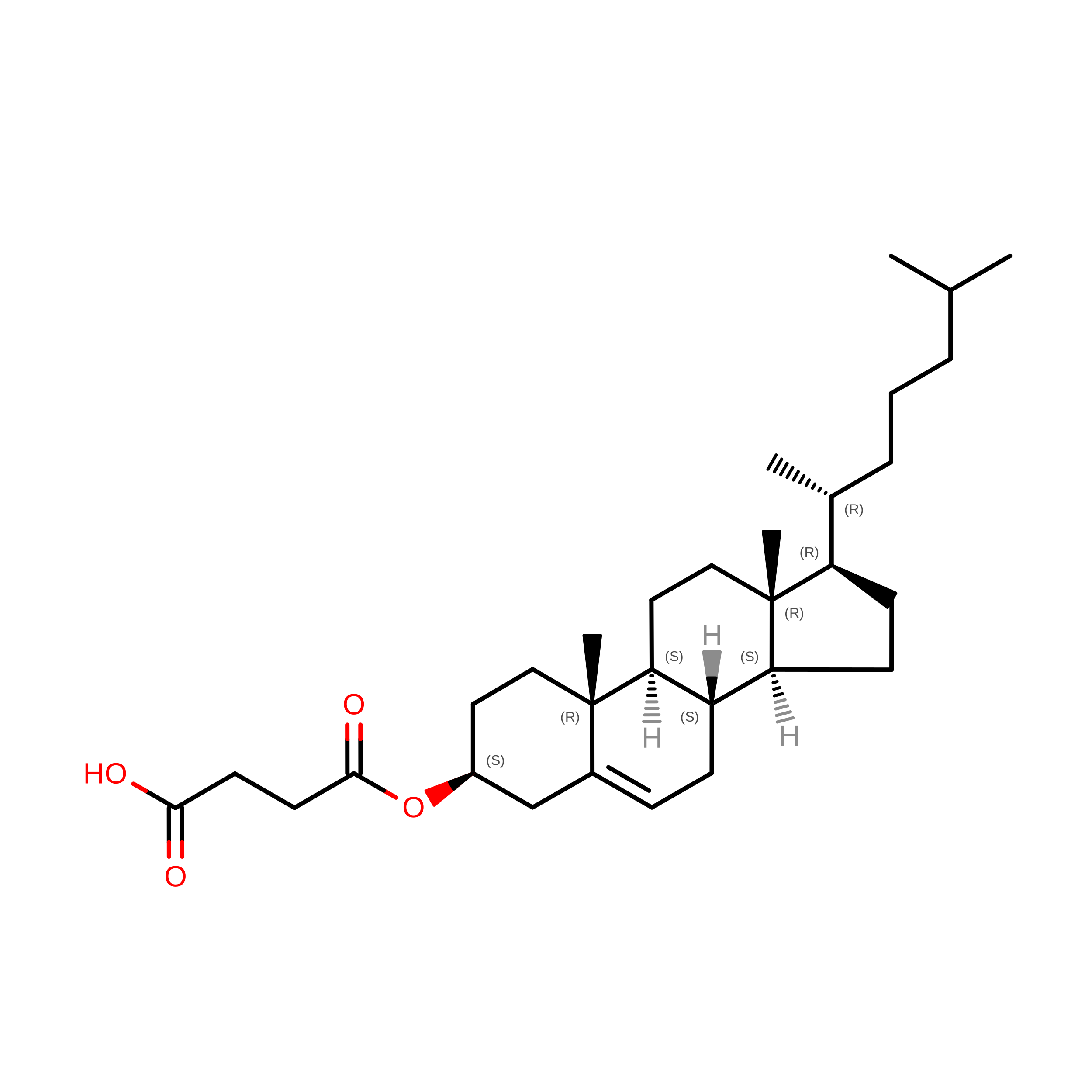
CHOLESTEROL HEMISUCCINATE
C31 H50 O4
WLNARFZDISHUGS-MIXBDBMTSA-N
CA

Query on CA


Download:Ideal Coordinates CCD File
U [auth A]CALCIUM ION
Ca
BHPQYMZQTOCNFJ-UHFFFAOYSA-N

Experimental Data & Validation

Experimental Data

  • Method: ELECTRON MICROSCOPY
  • Resolution: 2.78 Å
  • Aggregation State: PARTICLE 
  • Reconstruction Method: SINGLE PARTICLE 
EM Software:
TaskSoftware PackageVersion
MODEL REFINEMENTPHENIX1.18

Structure Validation

View Full Validation Report


Entry History 

& Funding Information

Deposition Data


Funding OrganizationLocationGrant Number
National Institutes of Health/National Institute of Arthritis and Musculoskeletal and Skin Diseases (NIH/NIAMS)United StatesR01 AR078814
National Institutes of Health/National Cancer Institute (NIH/NCI)United StatesR01 CA206573
National Institutes of Health/National Institute of Neurological Disorders and Stroke (NIH/NINDS)United StatesR01 NS083660
National Institutes of Health/National Institute of Neurological Disorders and Stroke (NIH/NINDS)United StatesR01 NS107253
German Research Foundation (DFG)Germany464295817

Revision History  (Full details and data files)

  • Version 1.0: 2024-11-13
    Type: Initial release
  • Version 1.1: 2024-11-20
    Changes: Data collection, Database references
  • Version 1.2: 2025-01-15
    Changes: Data collection, Database references