Download Mendeley
A Plasmodium-derived nanoparticle vaccine elicits sterile protection against malaria in mice.
Shi, D., Ma, R., Gupta, R., Dickey, T.H., Patel, P.N., Salinas, N.D., Tang, W.K., Queen, A., Singleton, M., Delbe, N., Conteh, S., Lambert, L.E., Duffy, P.E., Tolia, N.H.(2026) Nat Microbiol 11: 67-80
- PubMed: 41420060 Search on PubMedSearch on PubMed Central
- DOI: https://doi.org/10.1038/s41564-025-02209-y
- Primary Citation Related Structures:
9CCA - PubMed Abstract:
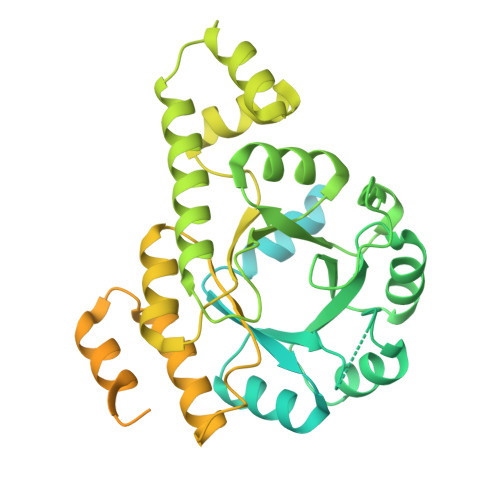
Protein nanoparticles in infectious disease vaccines enable protection through the periodic arrangement of antigens on their surface. These nanoparticles arise from organisms unrelated to the target disease, limiting their role as presentation platforms. Nanoparticles may also be compromised by pre-existing immunity to the nanoparticle carrier and may induce autoimmunity if conserved epitopes exist. Here we developed a potent multivalent malaria vaccine using an engineered Plasmodium falciparum pyridoxal 5'-phosphate (PLP) synthase as a nanoparticle that presents a designed P. falciparum circumsporozoite protein (CSP) and the Plasmodium vivax cell-transversal protein for ookinetes and sporozoites (CelTOS). These engineered vaccines elicited high titres of anti-CSP and anti-CelTOS antibodies, and three doses provided complete sterile protection against malaria in a mouse model. Cryogenic electron microscopy resolved a 2.95-Å resolution structure of the PLP nanoparticle including amino acid changes engineered to stabilize the nanoparticle. PLP synthase has no identifiable human ortholog limiting its propensity for autoimmunity or pre-existing immunity, and the engineered nanoparticles possess desirable manufacturing characteristics. These studies established an effective nanoparticle platform for malaria and infectious disease vaccines.
- Host-Pathogen Interactions and Structural Vaccinology Section, Laboratory of Malaria Immunology and Vaccinology, National Institute of Allergy and Infectious Diseases, National Institutes of Health, Bethesda, MD, USA.
Organizational Affiliation: