Download Mendeley
A highly active Burkholderia polyketoacyl-CoA thiolase for production of triacetic acid lactone.
Wang, Z., Cheong, S., Pereira, J.H., Hu, W., Guo, Y., DeGiovanni, A., Lan, G., Kim, J., Haushalter, R.W., Lee, T.S., Adams, P.D., Keasling, J.D.(2025) Nat Commun 16: 10990-10990
- PubMed: 41365852 Search on PubMedSearch on PubMed Central
- DOI: https://doi.org/10.1038/s41467-025-65946-y
- Primary Citation Related Structures:
9BWK, 9BWL, 9BWO, 9BWP - PubMed Abstract:
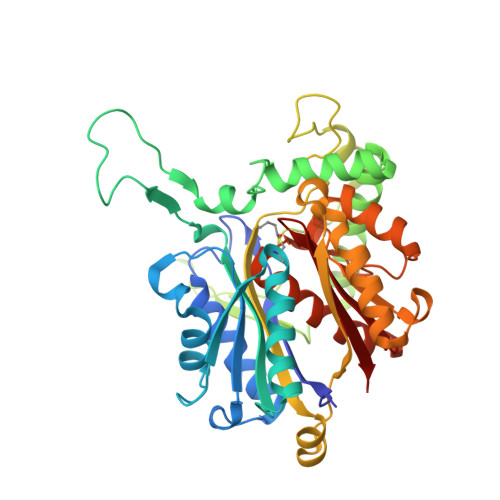
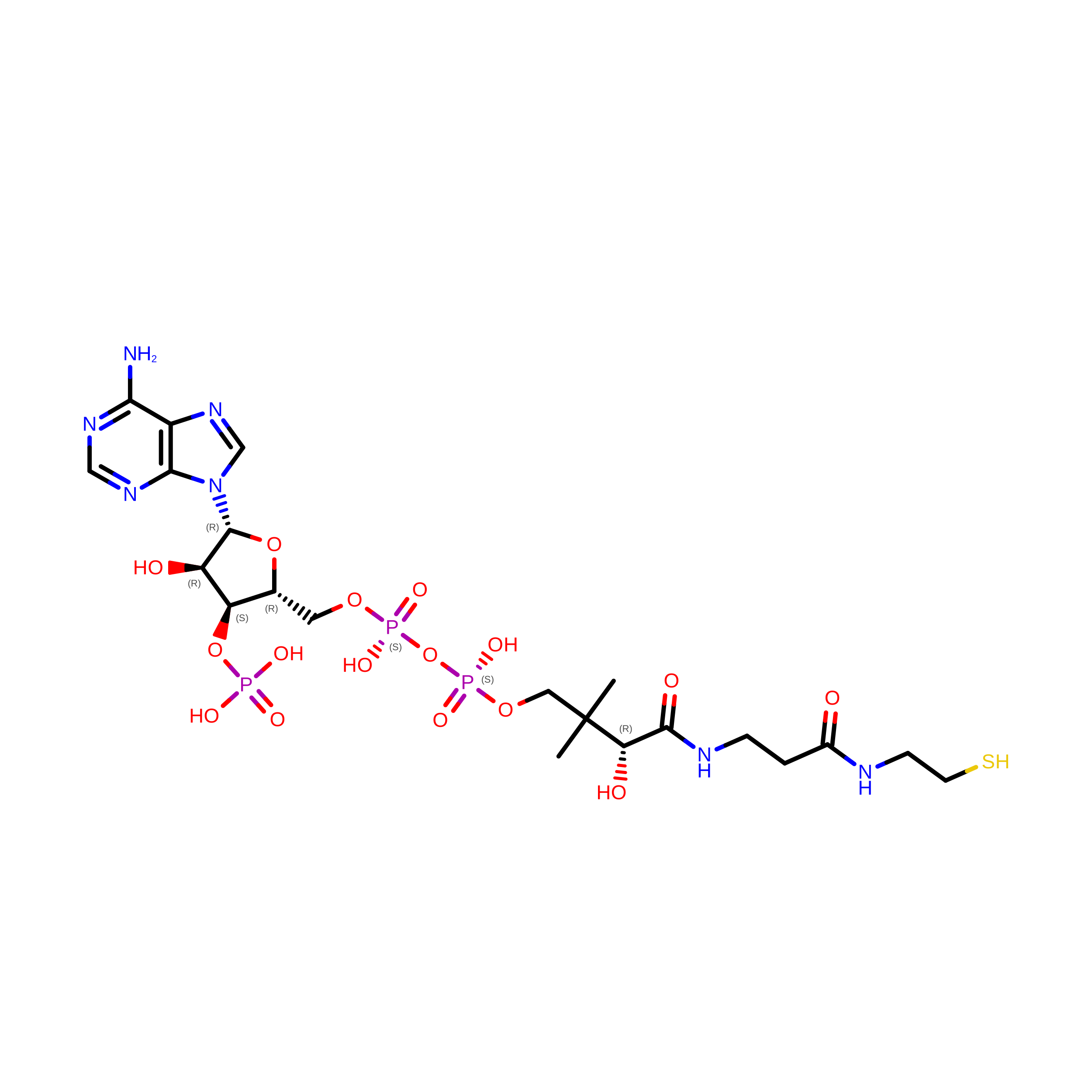
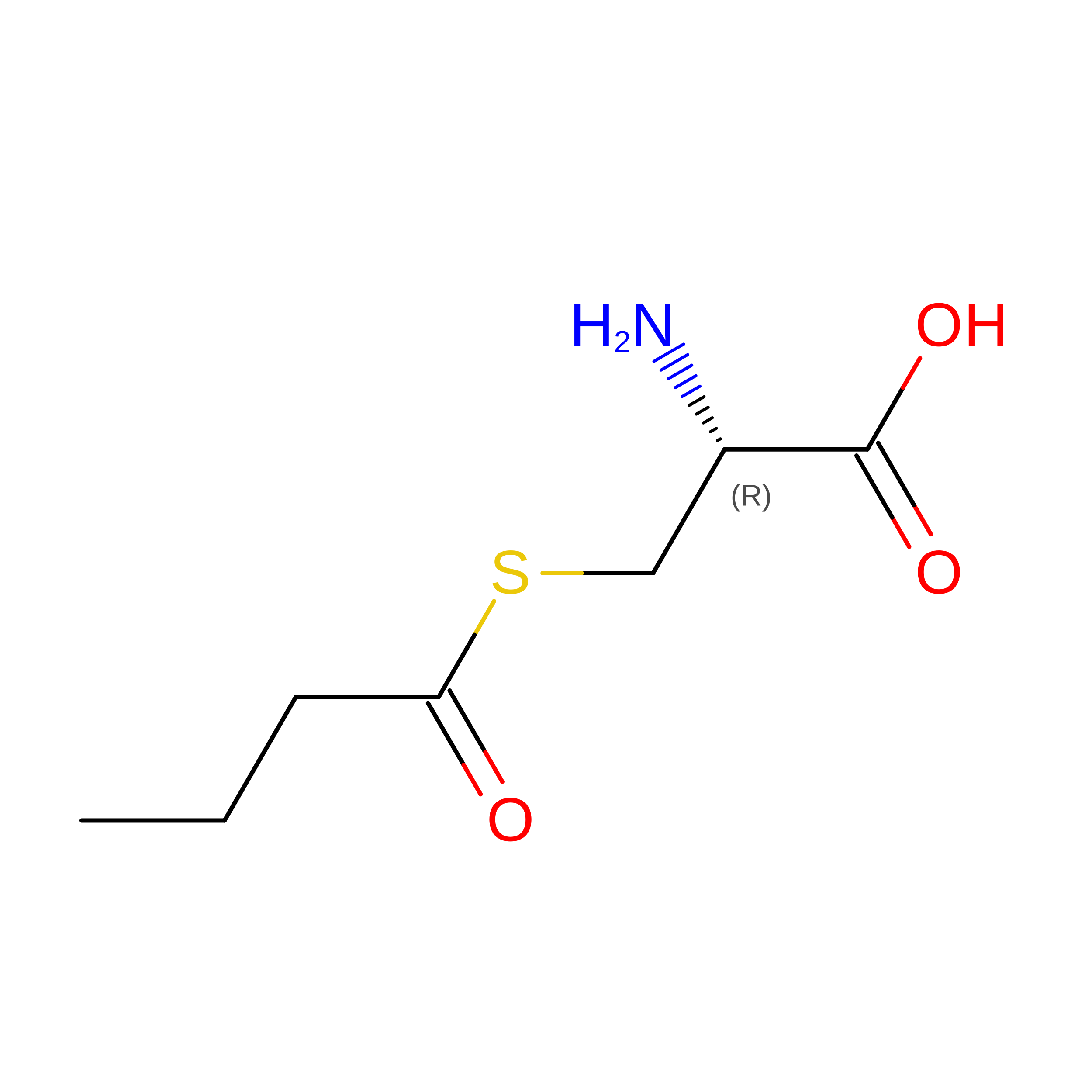
Triacetic acid lactone (TAL) is a versatile platform chemical traditionally biosynthesized via decarboxylative Claisen condensation by 2-pyrone synthase. However, this route is limited by poor efficiency and dependence on malonyl-CoA. Here, we show that non-decarboxylative Claisen condensation by polyketoacyl-CoA thiolases offers a more efficient alternative. Through mining homologs of a previously reported enzyme from Cupriavidus necator, we identify five thiolases with TAL production activity. One candidate, BktBbr from Burkholderia sp. RF2-non_BP3, exhibits approximately 30-fold higher activity in vitro and supports 30-fold higher TAL titers in Escherichia coli compared to the original enzyme. Fed-batch fermentation achieves titers up to 2.8 g L⁻¹. Structural analysis of BktBbr co-crystallized with CoA esters guides rational engineering to further enhance performance. Our discovery of a highly active thiolase establishes an alternative enzymatic route to produce TAL efficiently, providing a scalable foundation for sustainable biomanufacturing.
- Joint BioEnergy Institute, Emeryville, CA, USA.
Organizational Affiliation: