Download Mendeley
A metagenomic 'dark matter' enzyme catalyses oxidative cellulose conversion.
Santos, C.A., Morais, M.A.B., Mandelli, F., Lima, E.A., Miyamoto, R.Y., Higasi, P.M.R., Araujo, E.A., Paixao, D.A.A., Junior, J.M., Motta, M.L., Streit, R.S.A., Morao, L.G., Silva, C.B.C., Wolf, L.D., Terrasan, C.R.F., Bulka, N.R., Diogo, J.A., Fuzita, F.J., Colombari, F.M., Santos, C.R., Rodrigues, P.T., Silva, D.B., Grisel, S., Bernardes, J.S., Terrapon, N., Lombard, V., Filho, A.J.C., Henrissat, B., Bissaro, B., Berrin, J.G., Persinoti, G.F., Murakami, M.T.(2025) Nature 639: 1076-1083
- PubMed: 39939775 Search on PubMedSearch on PubMed Central
- DOI: https://doi.org/10.1038/s41586-024-08553-z
- Primary Citation Related Structures:
9BWF, 9BWH, 9BWI - PubMed Abstract:
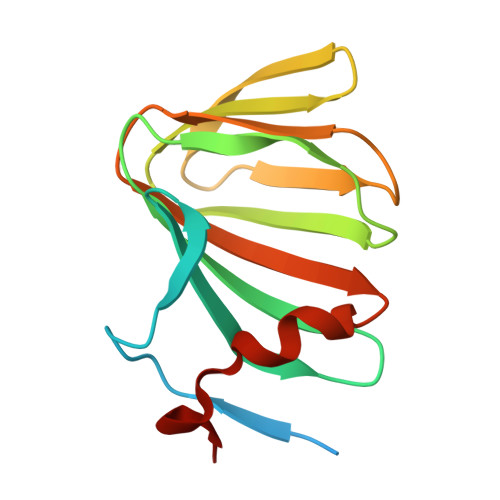
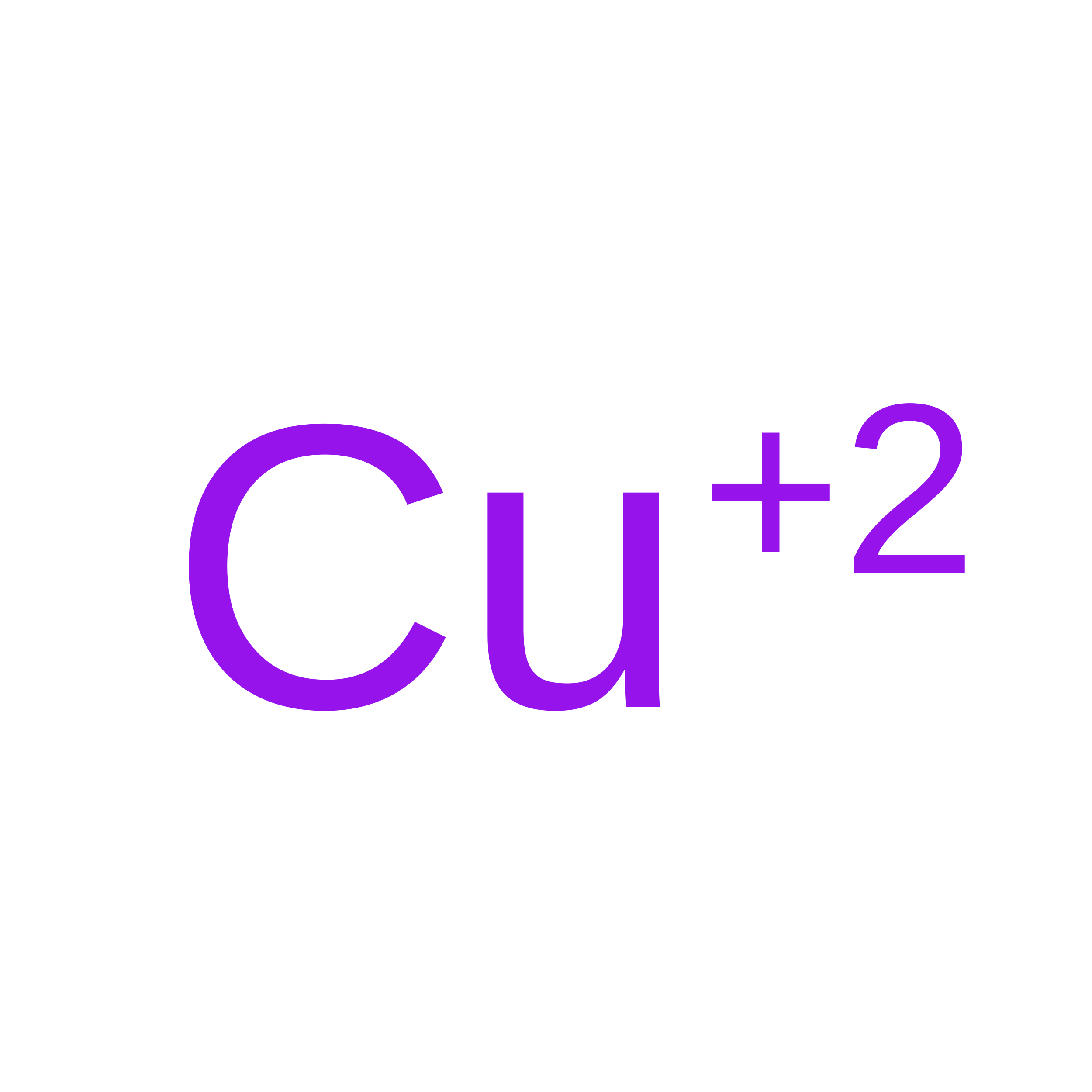
The breakdown of cellulose is one of the most important reactions in nature 1,2 and is central to biomass conversion to fuels and chemicals 3 . However, the microfibrillar organization of cellulose and its complex interactions with other components of the plant cell wall poses a major challenge for enzymatic conversion 4 . Here, by mining the metagenomic 'dark matter' (unclassified DNA with unknown function) of a microbial community specialized in lignocellulose degradation, we discovered a metalloenzyme that oxidatively cleaves cellulose. This metalloenzyme acts on cellulose through an exo-type mechanism with C1 regioselectivity, resulting exclusively in cellobionic acid as a product. The crystal structure reveals a catalytic copper buried in a compact jelly-roll scaffold that features a flattened cellulose binding site. This metalloenzyme exhibits a homodimeric configuration that enables in situ hydrogen peroxide generation by one subunit while the other is productively interacting with cellulose. The secretome of an engineered strain of the fungus Trichoderma reesei expressing this metalloenzyme boosted the glucose release from pretreated lignocellulosic biomass under industrially relevant conditions, demonstrating its biotechnological potential. This discovery modifies the current understanding of bacterial redox enzymatic systems devoted to overcoming biomass recalcitrance 5-7 . Furthermore, it enables the conversion of agro-industrial residues into value-added bioproducts, thereby contributing to the transition to a sustainable and bio-based economy.
- Brazilian Biorenewables National Laboratory (LNBR), Brazilian Center for Research in Energy and Materials (CNPEM), Campinas, Brazil.
Organizational Affiliation: