9B65 | pdb_00009b65

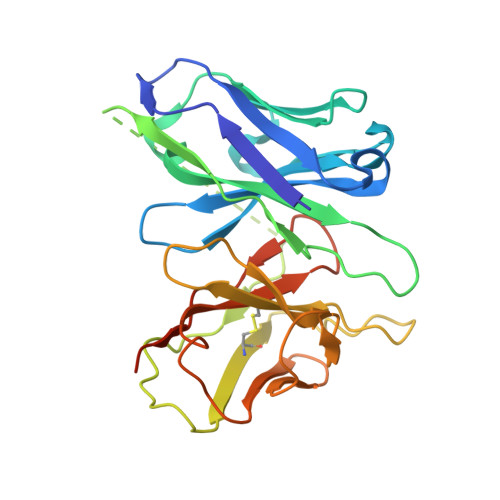
Biased agonist bound CB1-Gi structure


Experimental Data Snapshot

  • Method: ELECTRON MICROSCOPY
  • Resolution: 3.03 Å
  • Aggregation State: PARTICLE 
  • Reconstruction Method: SINGLE PARTICLE 

wwPDB Validation   3D Report Full Report


This is version 1.2 of the entry. See complete history


Literature

A cryptic pocket in CB1 drives peripheral and functional selectivity.

Rangari, V.A.O'Brien, E.S.Powers, A.S.Slivicki, R.A.Bertels, Z.Appourchaux, K.Aydin, D.Ramos-Gonzalez, N.Mwirigi, J.Lin, L.Mangutov, E.Sobecks, B.L.Awad-Agbaria, Y.Uphade, M.B.Aguilar, J.Peddada, T.N.Shiimura, Y.Huang, X.P.Folarin-Hines, J.Payne, M.Kalathil, A.Varga, B.R.Kobilka, B.K.Pradhan, A.A.Cameron, M.D.Kumar, K.K.Dror, R.O.Gereau 4th, R.W.Majumdar, S.

(2025) Nature 640: 265-273

  • DOI: https://doi.org/10.1038/s41586-025-08618-7
  • Primary Citation of Related Structures:  
    9B54, 9B65

  • PubMed Abstract: 

    The current opioid overdose epidemic highlights the urgent need to develop safer and more effective treatments for chronic pain 1 . Cannabinoid receptor type 1 (CB1) is a promising non-opioid target for pain relief, but its clinical use has been limited by centrally mediated psychoactivity and tolerance. We overcame both issues by designing peripherally restricted CB1 agonists that minimize arrestin recruitment. We achieved these goals by computationally designing positively charged derivatives of the potent CB1 agonist MDMB-Fubinaca 2 . We designed these ligands to occupy a cryptic pocket identified through molecular dynamics simulations-an extended binding pocket that opens rarely and leads to the conserved signalling residue D 2.50 (ref. 3 ). We used structure determination, pharmacological assays and molecular dynamics simulations to verify the binding modes of these ligands and to determine the molecular mechanism by which they achieve this dampening of arrestin recruitment. Our lead ligand, VIP36, is highly peripherally restricted and demonstrates notable efficacy in three mouse pain models, with 100-fold dose separation between analgesic efficacy and centrally mediated side effects. VIP36 exerts analgesic efficacy through peripheral CB1 receptors and shows limited analgesic tolerance. These results show how targeting a cryptic pocket in a G-protein-coupled receptor can lead to enhanced peripheral selectivity, biased signalling, desired in vivo pharmacology and reduced adverse effects. This has substantial implications for chronic pain treatment but could also revolutionize the design of drugs targeting other G-protein-coupled receptors.


  • Organizational Affiliation
    • Center for Clinical Pharmacology, University of Health Sciences and Pharmacy and Washington University School of Medicine, St. Louis, MO, USA.

Macromolecules
Find similar proteins by:  (by identity cutoff)  |  3D Structure
Entity ID: 1
MoleculeChains Sequence LengthOrganismDetailsImage
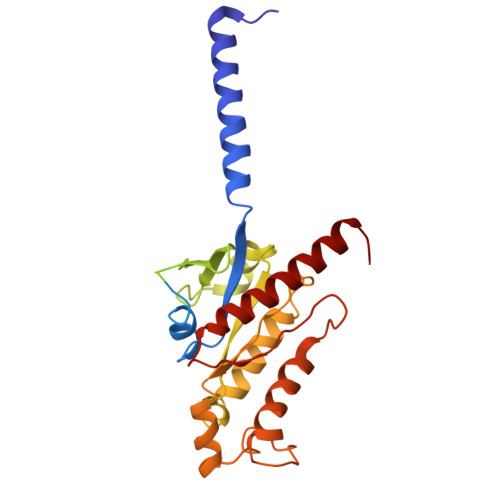
Guanine nucleotide-binding protein G(i) subunit alpha-1354Homo sapiensMutation(s): 0 
Gene Names: GNAI1
EC: 3.6.5
Membrane Entity: Yes 
UniProt & NIH Common Fund Data Resources
Find proteins for P63096 (Homo sapiens)
Explore P63096 
Go to UniProtKB:  P63096
PHAROS:  P63096
GTEx:  ENSG00000127955 
Entity Groups  
Sequence Clusters30% Identity50% Identity70% Identity90% Identity95% Identity100% Identity
UniProt GroupP63096
Sequence Annotations
Expand
  • Reference Sequence
Find similar proteins by:  (by identity cutoff)  |  3D Structure
Entity ID: 2
MoleculeChains Sequence LengthOrganismDetailsImage
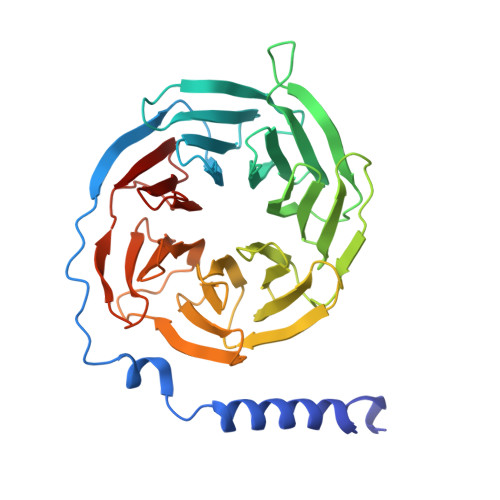
Guanine nucleotide-binding protein G(I)/G(S)/G(T) subunit beta-1344Homo sapiensMutation(s): 0 
Gene Names: GNB1
UniProt & NIH Common Fund Data Resources
Find proteins for P62873 (Homo sapiens)
Explore P62873 
Go to UniProtKB:  P62873
PHAROS:  P62873
GTEx:  ENSG00000078369 
Entity Groups  
Sequence Clusters30% Identity50% Identity70% Identity90% Identity95% Identity100% Identity
UniProt GroupP62873
Sequence Annotations
Expand
  • Reference Sequence
Find similar proteins by:  (by identity cutoff)  |  3D Structure
Entity ID: 3
MoleculeChains Sequence LengthOrganismDetailsImage
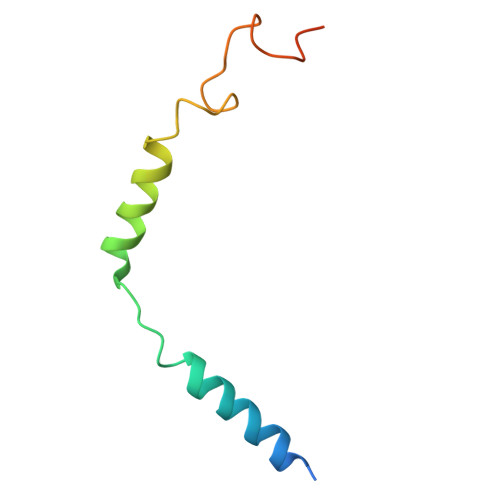
Guanine nucleotide-binding protein G(I)/G(S)/G(O) subunit gamma-271Homo sapiensMutation(s): 0 
Gene Names: GNG2
Membrane Entity: Yes 
UniProt & NIH Common Fund Data Resources
Find proteins for P59768 (Homo sapiens)
Explore P59768 
Go to UniProtKB:  P59768
PHAROS:  P59768
GTEx:  ENSG00000186469 
Entity Groups  
Sequence Clusters30% Identity50% Identity70% Identity90% Identity95% Identity100% Identity
UniProt GroupP59768
Sequence Annotations
Expand
  • Reference Sequence
Find similar proteins by:  (by identity cutoff)  |  3D Structure
Entity ID: 4
MoleculeChains Sequence LengthOrganismDetailsImage
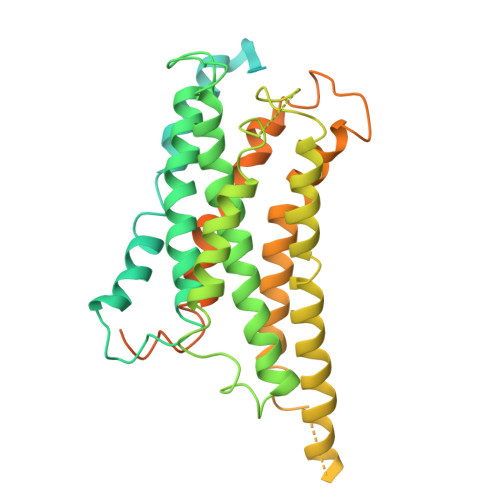
Cannabinoid receptor 1D [auth R]495Homo sapiensMutation(s): 0 
Gene Names: CNR1CNR
Membrane Entity: Yes 
UniProt & NIH Common Fund Data Resources
Find proteins for P21554 (Homo sapiens)
Explore P21554 
Go to UniProtKB:  P21554
PHAROS:  P21554
GTEx:  ENSG00000118432 
Entity Groups  
Sequence Clusters30% Identity50% Identity70% Identity90% Identity95% Identity100% Identity
UniProt GroupP21554
Sequence Annotations
Expand
  • Reference Sequence
Find similar proteins by:  (by identity cutoff)  |  3D Structure
Entity ID: 5
MoleculeChains Sequence LengthOrganismDetailsImage
scFv16E [auth S]259Mus musculusMutation(s): 0 
Entity Groups  
Sequence Clusters30% Identity50% Identity70% Identity90% Identity95% Identity100% Identity
Sequence Annotations
Expand
  • Reference Sequence
Small Molecules
Ligands 1 Unique
IDChains Name / Formula / InChI Key2D Diagram3D Interactions
KCA
Query on KCA

Download Ideal Coordinates CCD File 
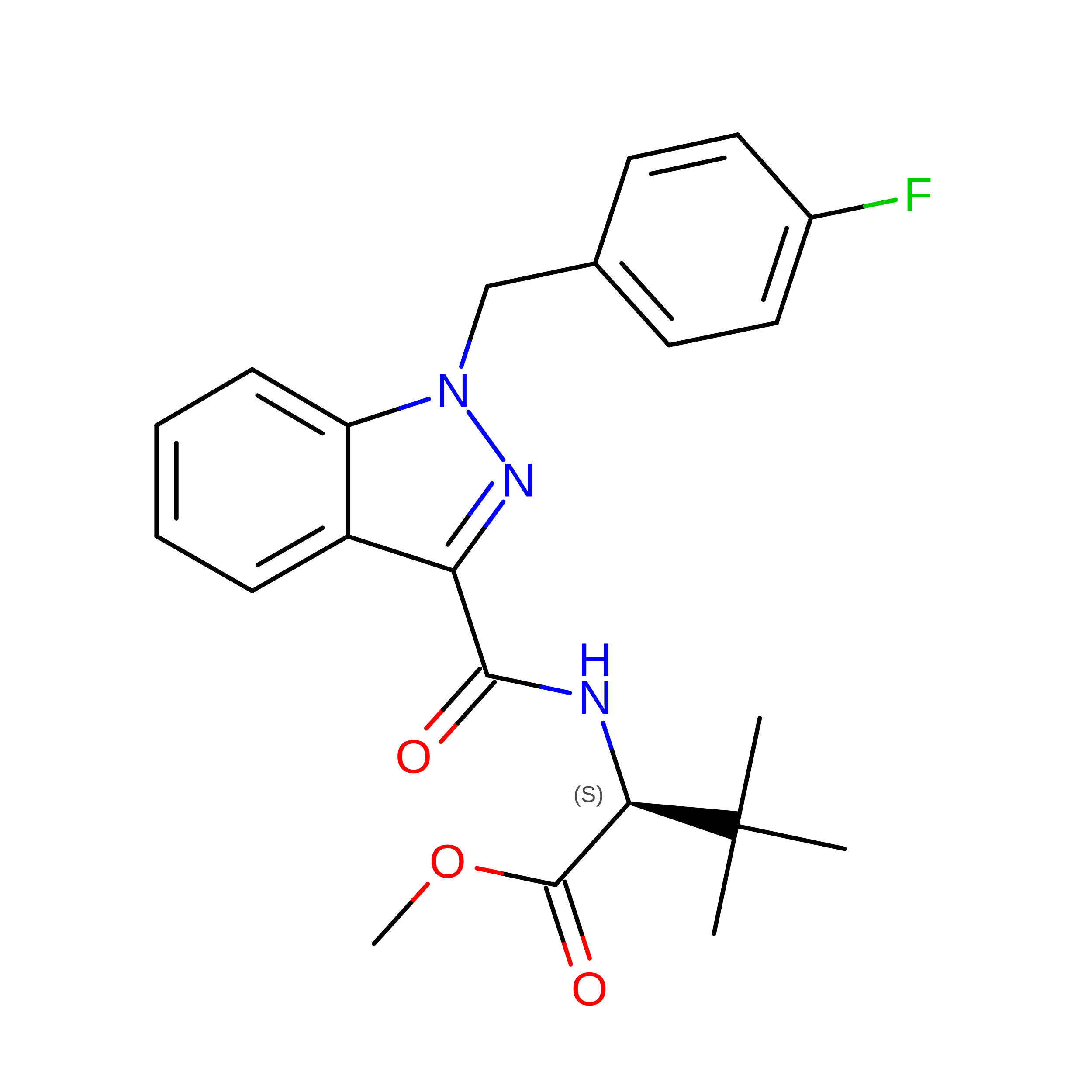
F [auth R]methyl N-{1-[(4-fluorophenyl)methyl]-1H-indazole-3-carbonyl}-3-methyl-L-valinate
C22 H24 F N3 O3
RFCDVEHNYDVCMU-LJQANCHMSA-N
Experimental Data & Validation

Experimental Data

  • Method: ELECTRON MICROSCOPY
  • Resolution: 3.03 Å
  • Aggregation State: PARTICLE 
  • Reconstruction Method: SINGLE PARTICLE 

Structure Validation

View Full Validation Report


Entry History & Funding Information

Deposition Data


Funding OrganizationLocationGrant Number
National Institutes of Health/National Institute of Neurological Disorders and Stroke (NIH/NINDS)United StatesR34NS126036

Revision History  (Full details and data files)

  • Version 1.0: 2025-03-05
    Type: Initial release
  • Version 1.1: 2025-03-19
    Changes: Data collection, Database references
  • Version 1.2: 2025-04-16
    Changes: Data collection, Database references