Download Mendeley
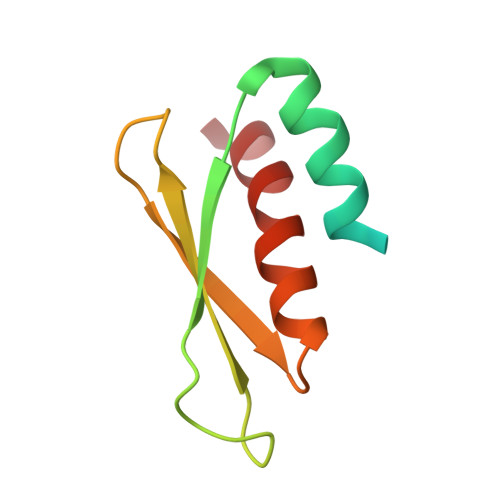
PACT prevents aberrant activation of PKR by endogenous dsRNA without sequestration.
Ahmad, S., Zou, T., Hwang, J., Zhao, L., Wang, X., Davydenko, A., Buchumenski, I., Zhuang, P., Fishbein, A.R., Capcha-Rodriguez, D., Orgel, A., Levanon, E.Y., Myong, S., Chou, J., Meyerson, M., Hur, S.(2025) Nat Commun 16: 3325-3325
- PubMed: 40199855 Search on PubMedSearch on PubMed Central
- DOI: https://doi.org/10.1038/s41467-025-58433-x
- Primary Citation Related Structures:
8ZU6 - PubMed Abstract:
The innate immune sensor PKR for double-stranded RNA (dsRNA) is critical for antiviral defense, but its aberrant activation by cellular dsRNA is linked to various diseases. The dsRNA-binding protein PACT plays a critical yet controversial role in this pathway. We show that PACT directly suppresses PKR activation by endogenous dsRNA ligands, such as inverted-repeat Alu RNAs, which robustly activate PKR in the absence of PACT. Instead of competing for dsRNA binding, PACT prevents PKR from scanning along dsRNA-a necessary step for PKR molecules to encounter and phosphorylate each other for activation. While PKR favors longer dsRNA for increased co-occupancy and scanning-mediated activation, longer dsRNA is also more susceptible to PACT-mediated regulation due to increased PACT-PKR co-occupancy. Unlike viral inhibitors that constitutively suppress PKR, this RNA-dependent mechanism allows PACT to fine-tune PKR activation based on dsRNA length and quantity, ensuring self-tolerance without sequestering most cellular dsRNA.
- Howard Hughes Medical Institute and Program in Cellular and Molecular Medicine, Boston Children's Hospital, Boston, MA, USA.
Organizational Affiliation: