8ZSG | pdb_00008zsg

CryoEM Helical Structure of resting KomBC complex


Experimental Data Snapshot

  • Method: ELECTRON MICROSCOPY
  • Resolution: 3.66 Å
  • Aggregation State: HELICAL ARRAY 
  • Reconstruction Method: HELICAL 

wwPDB Validation 3D Report Full Report

Validation slider image for 8ZSG

This is version 1.1 of the entry. See complete history. 

Literature

Filament-mediated repurposing of toxic dITP for immunity in the Kongming system.

Feng, H., Shao, K., Zeng, Z., Tan, E.Y.J., Hu, Z., Zhao, R., Rao, J., Shi, J., Chen, Z., Redondo, R.P., Wu, B., Han, W., Luo, M.

(2026) Mol Cell 86: 1148-1163.e5

  • DOI: https://doi.org/10.1016/j.molcel.2026.01.027
  • Primary Citation Related Structures: 
    8ZSF, 8ZSG, 8ZSH, 9XVC

  • PubMed Abstract: 

    Abortive infection systems protect bacteria by triggering self-destruction in response to phage attack. Most known systems rely on stable cyclic nucleotides that accumulate to stoichiometric levels to activate effectors; the Kongming (Kom) system employs the toxic metabolite deoxyinosine triphosphate (dITP) as its signaling molecule. Here, we show that the Escherichia coli KomB-KomC (KomBC) complex forms a preassembled filament that remains inactive until dITP binding induces cooperative allosteric activation. KomB, a homolog of the nucleotide-hydrolyzing enzyme HAM1, has lost catalytic activity but evolved a high-affinity, hydrolysis-resistant binding pocket for dITP. Interestingly, substoichiometric dITP binding is sufficient to activate adjacent KomC NADase domains, which propagate activation cooperatively along the filament. This filament-based architecture enables ultrasensitive, long-range allosteric signaling in response to a low-abundance and short-lived metabolite. Our findings reveal an ultrasensitive immune strategy that transforms a toxic byproduct into a robust antiviral trigger, expanding the known repertoire of bacterial defense strategies.


  • Organizational Affiliation: 
    • Department of Biological Sciences, Faculty of Science, National University of Singapore, Singapore 117543, Singapore.

Macromolecule Content 

  • Total Structure Weight: 619.02 kDa 
  • Atom Count: 43,668 
  • Modeled Residue Count: 5,376 
  • Deposited Residue Count: 5,376 
  • Unique protein chains: 2

Macromolecules

Find similar proteins by:|  3D Structure
Entity ID: 1
MoleculeChains  Sequence LengthOrganismDetailsImage
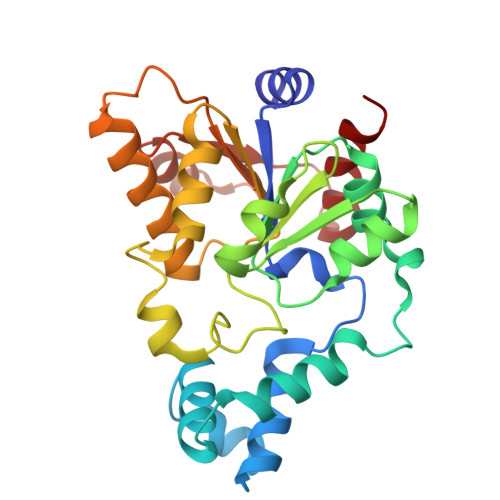
KomC, SIR2 domain protein, NADase264Escherichia coliMutation(s): 0 
Gene Names: GRW56_02060, GRW57_01895
UniProt
Find proteins for K8WJ15 (Providencia sneebia DSM 19967)
Explore K8WJ15 
Go to UniProtKB:  K8WJ15
Entity Groups
Sequence Clusters30% Identity50% Identity70% Identity90% Identity95% Identity100% Identity
UniProt GroupK8WJ15
Sequence Annotations
Expand
Reference Sequence
Find similar proteins by:|  3D Structure
Entity ID: 2
MoleculeChains  Sequence LengthOrganismDetailsImage
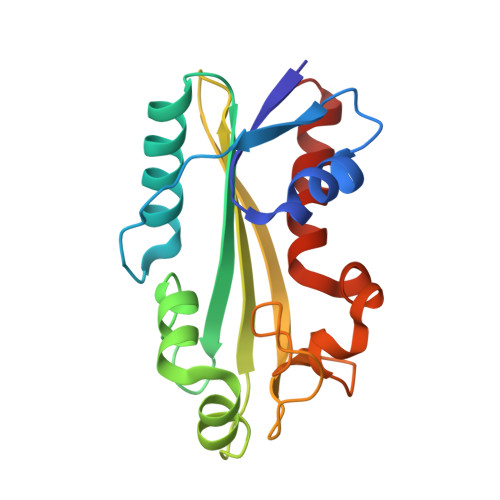
KomB, HAM-like protein, non-canonical purine NTP pyrophosphatase184Escherichia coliMutation(s): 0 
Gene Names: GRW56_02065, GRW57_01900
UniProt
Find proteins for K8WC63 (Providencia sneebia DSM 19967)
Explore K8WC63 
Go to UniProtKB:  K8WC63
Entity Groups
Sequence Clusters30% Identity50% Identity70% Identity90% Identity95% Identity100% Identity
UniProt GroupK8WC63
Sequence Annotations
Expand
Reference Sequence

Experimental Data & Validation

Experimental Data

  • Method: ELECTRON MICROSCOPY
  • Resolution: 3.66 Å
  • Aggregation State: HELICAL ARRAY 
  • Reconstruction Method: HELICAL 
EM Software:
TaskSoftware PackageVersion
MODEL REFINEMENTPHENIX

Structure Validation

View Full Validation Report


Entry History 

& Funding Information

Deposition Data


Funding OrganizationLocationGrant Number
Ministry of Education (MoE, Singapore)Singapore--

Revision History  (Full details and data files)

  • Version 1.0: 2025-12-10
    Type: Initial release
  • Version 1.1: 2026-06-24
    Changes: Data collection, Database references, Structure summary