Download Mendeley
Ocr-mediated suppression of BrxX unveils a phage counter-defense mechanism.
Li, S., Xu, T., Meng, X., Yan, Y., Zhou, Y., Duan, L., Tang, Y., Zhu, L., Sun, L.(2024) Nucleic Acids Res 52: 8580-8594
- PubMed: 38989624 Search on PubMedSearch on PubMed Central
- DOI: https://doi.org/10.1093/nar/gkae608
- Primary Citation Related Structures:
8ZEK - PubMed Abstract:
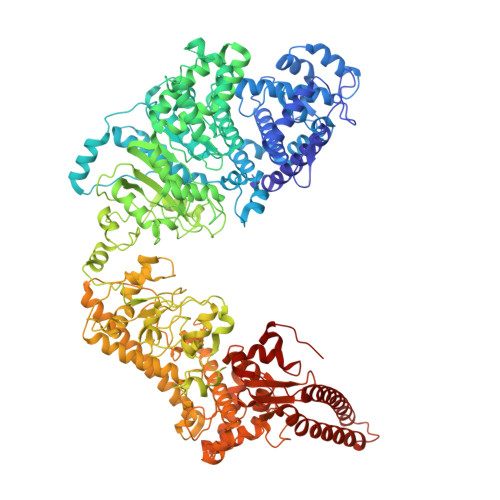
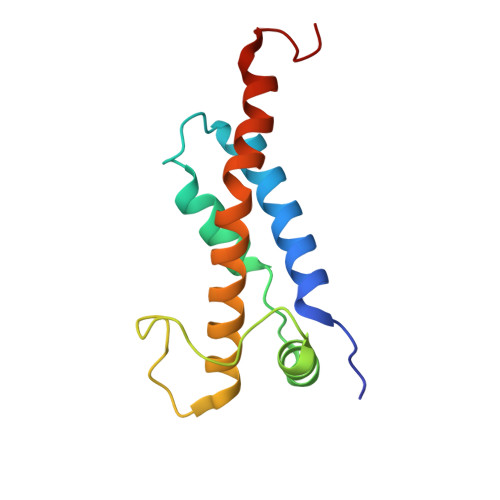
The burgeoning crisis of antibiotic resistance has directed attention to bacteriophages as natural antibacterial agents capable of circumventing bacterial defenses. Central to this are the bacterial defense mechanisms, such as the BREX system, which utilizes the methyltransferase BrxX to protect against phage infection. This study presents the first in vitro characterization of BrxX from Escherichia coli, revealing its substrate-specific recognition and catalytic activity. We demonstrate that BrxX exhibits nonspecific DNA binding but selectively methylates adenine within specific motifs. Kinetic analysis indicates a potential regulation of BrxX by the concentration of its co-substrate, S-adenosylmethionine, and suggests a role for other BREX components in modulating BrxX activity. Furthermore, we elucidate the molecular mechanism by which the T7 phage protein Ocr (Overcoming classical restriction) inhibits BrxX. Despite low sequence homology between BrxX from different bacterial species, Ocr effectively suppresses BrxX's enzymatic activity through high-affinity binding. Cryo-electron microscopy and biophysical analyses reveal that Ocr, a DNA mimic, forms a stable complex with BrxX, highlighting a conserved interaction interface across diverse BrxX variants. Our findings provide insights into the strategic counteraction by phages against bacterial defense systems and offer a foundational understanding of the complex interplay between phages and their bacterial hosts, with implications for the development of phage therapy to combat antibiotic resistance.
- Shenzhen Key Laboratory of Pathogenic Microbes and Biosafety, School of Public Health (Shenzhen), Shenzhen Campus of Sun Yat-sen University, Sun Yat-sen University, Shenzhen 518107, China.
Organizational Affiliation: