Find PDB structures and Computed Structure Models (CSM) by combining queries from tools in this suite: Attribute Search, Sequence Similarity, Sequence Motif, 3D Similarity, and 3D Motif with 'AND' logic.
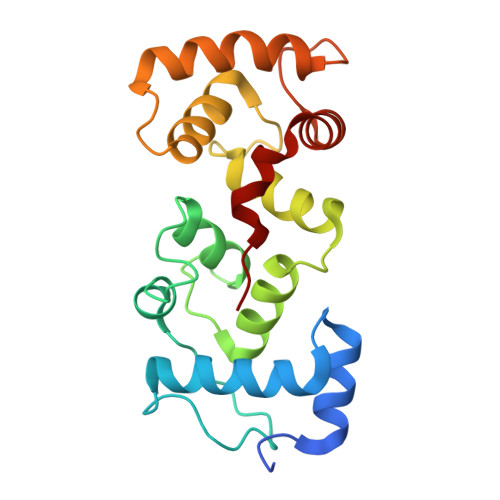
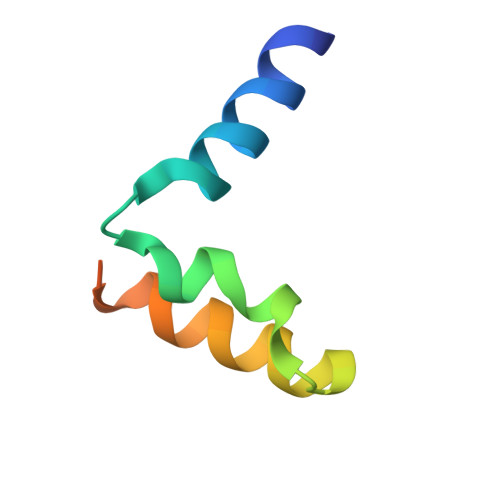
TMC1, a unique causative gene associated with deafness, exhibits variants with autosomal dominant and recessive inheritance patterns. TMC1 codes for the transmembrane channel-like protein 1 (TMC1), a key component of the mechano-electrical transduction (MET) machinery for hearing. However, the molecular mechanism of Ca 2+ regulation in MET remains unclear. Calcium and integrin-binding protein 2 (CIB2), another MET component associated with deafness, can bind with Ca 2+ . Our study shows that TMC1-CIB2 complex undergoes a Ca 2+ -induced conformational change. We identified a vertebrate-specific binding site on TMC1 that interacts with apo CIB2, linked with hearing loss. Using an ex vivo mouse organotypic cochlea model, we demonstrated that disruption of the calcium-binding site of CIB2 perturbs the MET channel conductivity. After systematically analyzing the hearing loss variants, we observed dominant mutations of TMC1 cluster around the putative ion pore or at the binding interfaces with CIB2. These findings elucidate the molecular mechanisms underlying TMC1-linked hearing loss.
Organizational Affiliation:
Bio-X Institutes, Key Laboratory for the Genetics of Developmental and Neuropsychiatric Disorders, Ministry of Education, Shanghai Jiao Tong University, Shanghai 200030, China.
Shanghai Institute for Advanced Immunochemical Studies, ShanghaiTech University, Shanghai 201210, China; Innovation Center for AI and Drug Discovery, School of Pharmacy, East China Normal University, Shanghai 200062, China.
Shandong Provincial Key Laboratory of Animal Cells and Developmental Biology and Key Laboratory for Experimental Teratology of the Ministry of Education, School of Life Sciences, Shandong University, Qingdao, Shandong 266237, China.
Senior Department of Otolaryngology, Head and Neck Surgery, Department of Audiology and Vestibular Medicine, Chinese PLA Institute of Otolaryngology, Chinese PLA General Hospital, Medical School of Chinese PLA, Beijing 100853, China.
Chinese Institute for Brain Research, Beijing 102206, China.
Department of Otolaryngology-Head and Neck Surgery, Shanghai Ninth People's Hospital, Shanghai Jiao Tong University School of Medicine, Shanghai, China; Ear Institute, Shanghai Jiao Tong University School of Medicine, Shanghai, China; Shanghai Key Laboratory of Translational Medicine on Ear and Nose Diseases, Shanghai, China.
National Facility for Protein Science in Shanghai, Shanghai Advanced Research Institute, Chinese Academy of Science, Zhangjiang Lab, Shanghai 201210, China.
Senior Department of Otolaryngology, Head and Neck Surgery, Department of Audiology and Vestibular Medicine, Chinese PLA Institute of Otolaryngology, Chinese PLA General Hospital, Medical School of Chinese PLA, Beijing 100853, China. Electronic address: wqcr301@vip.sina.com.
Shandong Provincial Key Laboratory of Animal Cells and Developmental Biology and Key Laboratory for Experimental Teratology of the Ministry of Education, School of Life Sciences, Shandong University, Qingdao, Shandong 266237, China. Electronic address: xuzg@sdu.edu.cn.
Shanghai Institute for Advanced Immunochemical Studies, ShanghaiTech University, Shanghai 201210, China; School of Information Science and Technology, ShanghaiTech University, Shanghai 201210, China; Shanghai Clinical Research and Trial Center, Shanghai 201210, China; School of Life Science and Technology, ShanghaiTech University, Shanghai 201210, China. Electronic address: baifang@shanghaitech.edu.cn.
Bio-X Institutes, Key Laboratory for the Genetics of Developmental and Neuropsychiatric Disorders, Ministry of Education, Shanghai Jiao Tong University, Shanghai 200030, China; Department of Otolaryngology-Head and Neck Surgery, Shanghai Ninth People's Hospital, Shanghai Jiao Tong University School of Medicine, Shanghai, China; Ear Institute, Shanghai Jiao Tong University School of Medicine, Shanghai, China; Shanghai Key Laboratory of Translational Medicine on Ear and Nose Diseases, Shanghai, China. Electronic address: luqing67@sjtu.edu.cn.

 Download Mendeley