Download Mendeley
Carboxymethylcytosine is a natural base modification and a handle for bacteriophage DNA hypermodification.
Yang, Q., Zhang, L., Liang, Y., Ma, H., Song, L., Luo, L., Tan, J., Hu, Y., Ma, K., Chen, Y., Tong, Y., Zhang, C., Zhao, S., Wang, M., Zhang, L., Wei, Y., Zhang, Y.(2025) Nat Commun 17: 281-281
- PubMed: 41354841 Search on PubMedSearch on PubMed Central
- DOI: https://doi.org/10.1038/s41467-025-66999-9
- Primary Citation Related Structures:
8YF3 - PubMed Abstract:
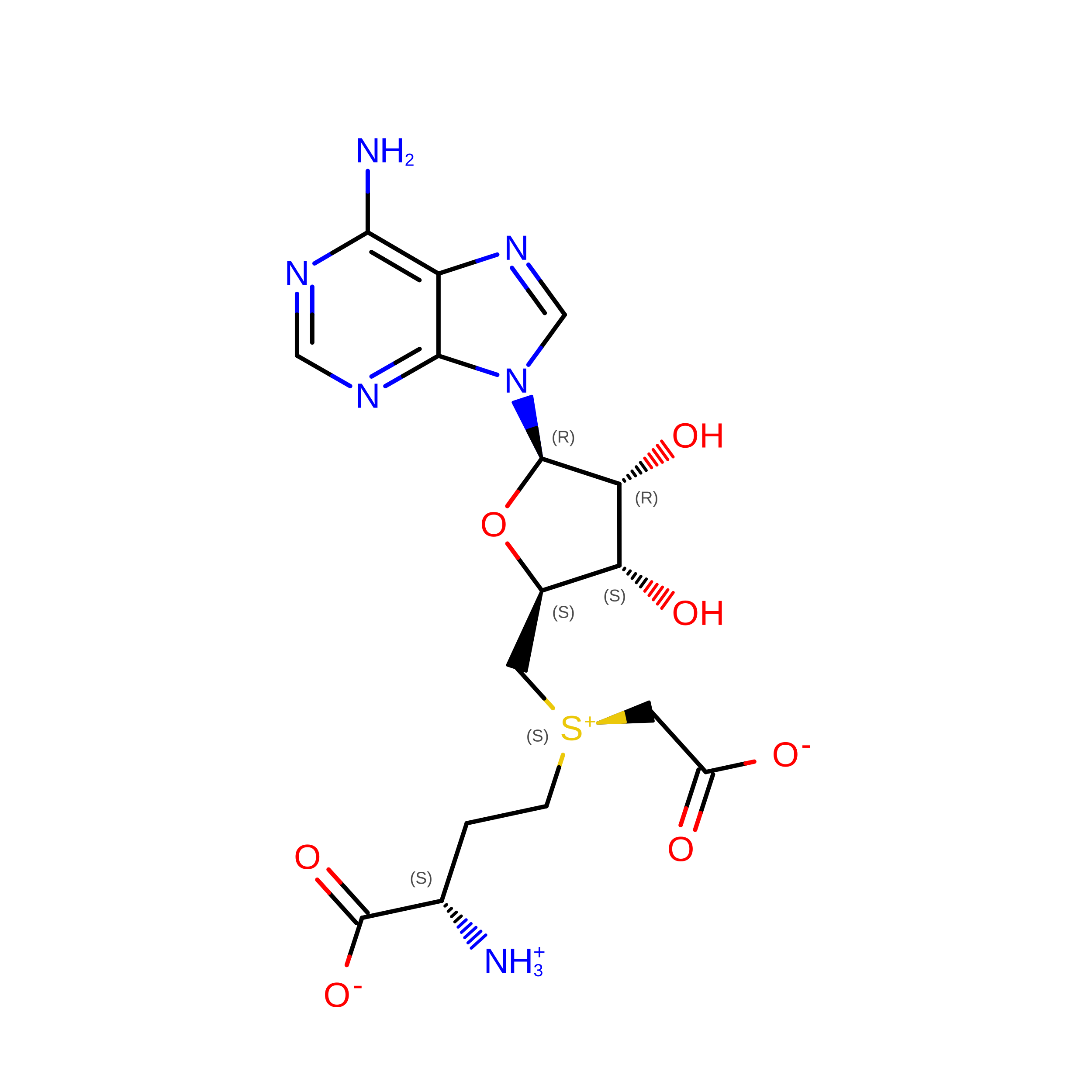
Bacteriophages possess a wide array of DNA modifications, with many acting as molecular camouflage to evade host immune defenses. Sequence databases contain numerous bacteriophage enzymes of unknown function, with some potentially involved in yet to be identified DNA modifications. Here we report the discovery of a DNA cytosine C5-carboxymethyltransferase (CmoX) in Synechococcus phage S-B43, which catalyzes the formation of a 5-carboxymethylcytosine (5cxmC), previously reported as an unnatural DNA modification formed by an engineered cytosine methyltransferase. The carboxy-S-adenosyl-L-methionine (Cx-SAM) cofactor required by CmoX is provided by a phage-encoded Cx-SAM synthase (CmoA), a homolog of the bacterial CmoA involved in tRNA modification. A crystal structure of CmoX in complex with Cx-SAM revealed the basis for its substrate selectivity, involving a key Arg residue interacting with the substrate carboxy group. In addition, we characterize a phage-encoded ATP-dependent amide ligase, CmoY that catalyzes the formation of 5cxmC-glycine amide. CmoA is present in many bacteriophage genomes, typically alongside CmoX and homologs of CmoY, suggesting that 5cxmC modification is a widespread naturally occurring DNA modification serving as a handle for further hypermodifications in bacteriophages. Our study underscores the ability of bacteriophages to repurpose RNA modification enzymes to expand their repertoire of DNA modifications.
- New Cornerstone Science Laboratory, School of Pharmaceutical Science and Technology, Tianjin University, Tianjin, China.
Organizational Affiliation: