Find PDB structures and Computed Structure Models (CSM) by combining queries from tools in this suite: Attribute Search, Sequence Similarity, Sequence Motif, 3D Similarity, and 3D Motif with 'AND' logic.
Primary Citation Related Structures: 8W8Q, 8W8R, 8W8S
PubMed Abstract:
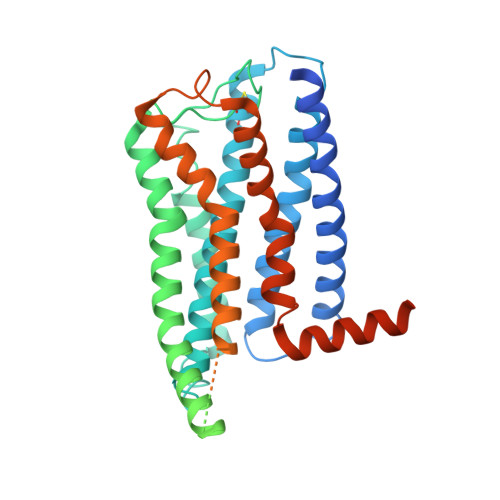
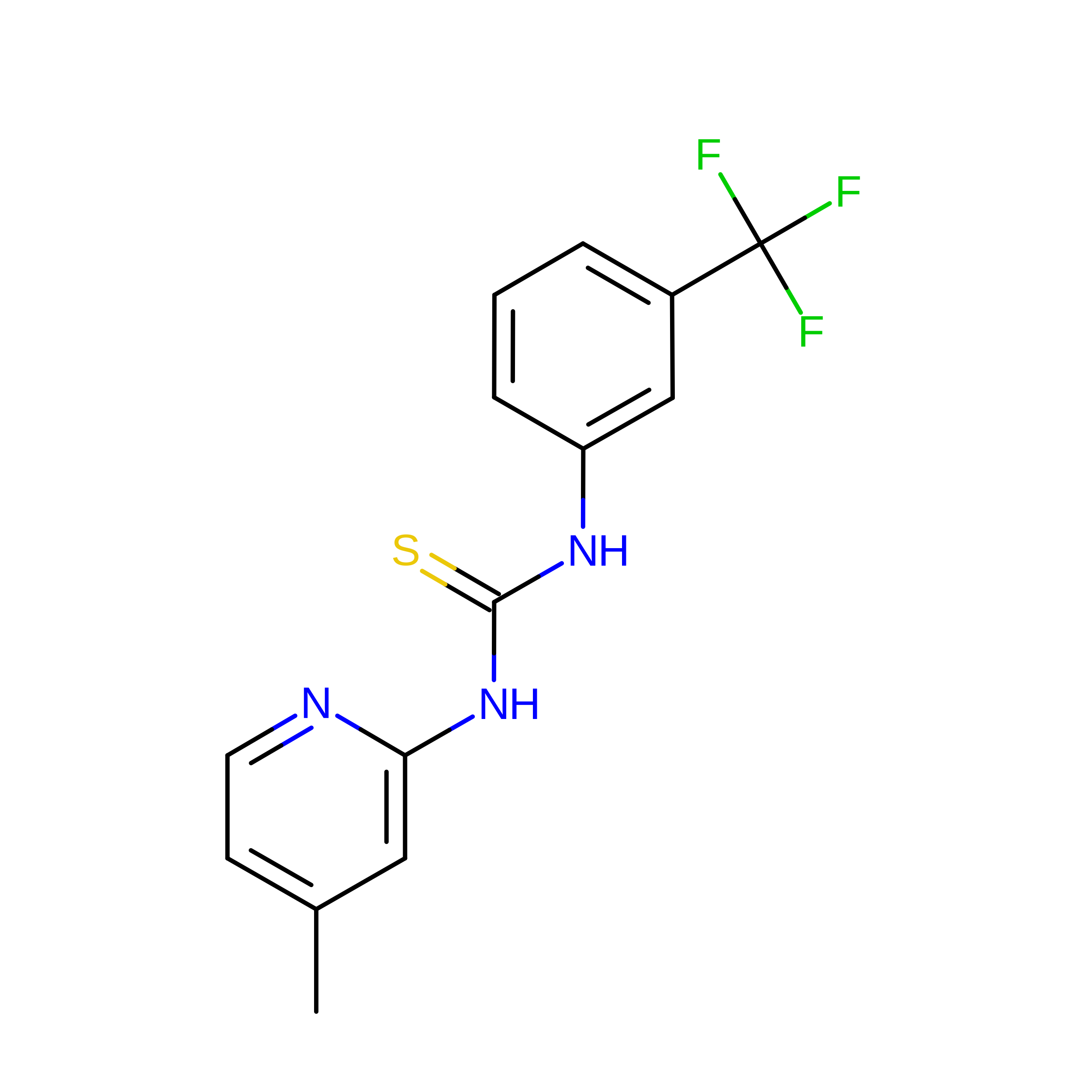
GPR101 is an orphan G protein-coupled receptor actively participating in energy homeostasis. Here we report the cryo-electron microscopy structure of GPR101 constitutively coupled to Gs heterotrimer, which reveals unique features of GPR101, including the interaction of extracellular loop 2 within the 7TM bundle, a hydrophobic chain packing-mediated activation mechanism and the structural basis of disease-related mutants. Importantly, a side pocket is identified in GPR101 that facilitates in silico screening to identify four small-molecule agonists, including AA-14. The structure of AA-14-GPR101-Gs provides direct evidence of the AA-14 binding at the side pocket. Functionally, AA-14 partially restores the functions of GH/IGF-1 axis and exhibits several rejuvenating effects in wild-type mice, which are abrogated in Gpr101-deficient mice. In summary, we provide a structural basis for the constitutive activity of GPR101. The structure-facilitated identification of GPR101 agonists and functional analysis suggest that targeting this orphan receptor has rejuvenating potential.
Organizational Affiliation:
NHC Key Laboratory of Otorhinolaryngology, Qilu Hospital of Shandong University, and Department of Biochemistry and Molecular Biology, School of Basic Medical Sciences, Cheeloo College of Medicine, Shandong University, Jinan, China.
Beijing Key Laboratory of Cardiovascular Receptors Research, Beijing, China.
Advanced Medical Research Institute, Meili Lake Translational Research Park, Cheeloo College of Medicine, Shandong University, Jinan, China.
Key Laboratory Experimental Teratology of the Ministry of Education, Department of Physiology, School of Basic Medical Sciences, Cheeloo College of Medicine, Shandong University, Jinan, China.
State Key Laboratory of Membrane Biology, Peking-Tsinghua Joint Center for Life Sciences, School of Life Sciences, Peking University, Beijing, China.
Department of General Surgery, Qilu Hospital of Shandong University, Jinan, China.
Key Laboratory of Molecular Cardiovascular Science, Department of Physiology and Pathophysiology, School of Basic Medical Sciences, Peking University, Ministry of Education, Beijing, China.
Key Laboratory of Infection and Immunity of Shandong Province, Department of Pharmacology, School of Basic Medical Sciences, Shandong University, Jinan, China.
National Key Laboratory for Innovation and Transformation of Luobing Theory, Key Laboratory of Cardiovascular Remodeling and Function Research, Chinese Ministry of Education, Chinese National Health Commission and Chinese Academy of Medical Sciences, Department of Cardiology, Qilu Hospital of Shandong University, Jinan, China.
iHuman Institute, ShanghaiTech University, Shanghai, China.
Shenzhen Key Laboratory for Systemic Aging and Intervention (SKL-SAI), School of Basic Medical Sciences, Shenzhen University, Shenzhen, China.
School of Biological Science and Technology, University of Jinan, Jinan, China.
Key Laboratory Experimental Teratology of the Ministry of Education, Department of Physiology, School of Basic Medical Sciences, Cheeloo College of Medicine, Shandong University, Jinan, China. yuxiao@sdu.edu.cn.
State Key Laboratory of Membrane Biology, Peking-Tsinghua Joint Center for Life Sciences, School of Life Sciences, Peking University, Beijing, China. gaon@pku.edu.cn.
NHC Key Laboratory of Otorhinolaryngology, Qilu Hospital of Shandong University, and Department of Biochemistry and Molecular Biology, School of Basic Medical Sciences, Cheeloo College of Medicine, Shandong University, Jinan, China. sunjinpeng@sdu.edu.cn.
Beijing Key Laboratory of Cardiovascular Receptors Research, Beijing, China. sunjinpeng@sdu.edu.cn.
Advanced Medical Research Institute, Meili Lake Translational Research Park, Cheeloo College of Medicine, Shandong University, Jinan, China. sunjinpeng@sdu.edu.cn.
Key Laboratory of Molecular Cardiovascular Science, Department of Physiology and Pathophysiology, School of Basic Medical Sciences, Peking University, Ministry of Education, Beijing, China. sunjinpeng@sdu.edu.cn.

 Download Mendeley