8VQ8 | pdb_00008vq8

Immune receptor complex


Experimental Data Snapshot

  • Method: X-RAY DIFFRACTION
  • Resolution: 2.01 Å
  • R-Value Free: 
    0.215 (Depositor), 0.214 (DCC) 
  • R-Value Work: 
    0.187 (Depositor), 0.187 (DCC) 
  • R-Value Observed: 
    0.188 (Depositor) 

Starting Model: experimental
View more details

wwPDB Validation 3D Report Full Report

Validation slider image for 8VQ8

Ligand Structure Quality Assessment 


This is version 1.1 of the entry. See complete history

Literature

LCK-co-receptor association ensures T cell lineage fidelity and maximizes epitope-specific TCR diversity.

Zhang, J.B.Chaurasia, P.Nguyen, A.Huang, Z.Nguyen, T.T.Xu, H.Tran, M.T.Reid, H.H.Jones, C.M.Schattgen, S.A.Thiele, D.Thomas, P.G.Rientjes, J.Good-Jacobson, K.L.Ruscher, R.Littler, D.R.Rossjohn, J.Zareie, P.La Gruta, N.L.

(2025) Sci Immunol 10: eadp5016-eadp5016

  • DOI: https://doi.org/10.1126/sciimmunol.adp5016
  • Primary Citation Related Structures: 
    8VQ8, 9AUD

  • PubMed Abstract: 

    The interaction between the CD4/CD8 co-receptors and LCK (an Src family tyrosine kinase) is thought to augment T cell activation upon recognition of peptide-loaded major histocompatibility complexes (pMHCs). How this interaction influences antigen-specific T cell development is unclear however, as is its impact on naïve and immune antigen-specific T cell repertoires. In mice expressing mutated endogenous LCK unable to bind co-receptors (LCK FREE mice), we show that influenza A virus (IAV)-derived pMHC-specific CD8 and CD4 T cell responses had a significantly narrowed T cell receptor (TCR) repertoire, favoring high-affinity TCRs. This narrowing was established during T cell development and was exacerbated after viral infection. The dissociation of LCK from co-receptors also resulted in the redirection of CD4-fated T cells to the CD8 lineage, with expanded pMHCII-specific cytotoxic CD8 T cells observed after IAV infection. Thus, LCK-co-receptor association is critical for ensuring T cell lineage fidelity and maximizing antigen-specific T cell repertoire diversity.


  • Organizational Affiliation
    • Immunity Program and Department of Biochemistry and Molecular Biology, Biomedicine Discovery Institute, Monash University, Clayton, VIC, Australia.

Macromolecule Content 

  • Total Structure Weight: 99.32 kDa 
  • Atom Count: 6,625 
  • Modeled Residue Count: 777 
  • Deposited Residue Count: 866 
  • Unique protein chains: 4

Macromolecules

Find similar proteins by:|  3D Structure
Entity ID: 1
MoleculeChains  Sequence LengthOrganismDetailsImage
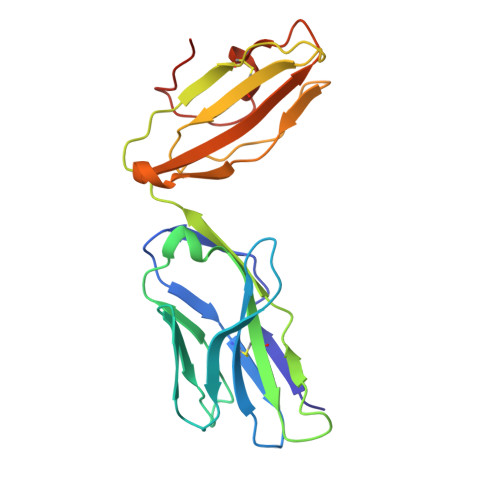
T cell receptor - LCK1-1 TRAV6-5 alpha chain207Mus musculusMutation(s): 0 
Find similar proteins by:|  3D Structure
Entity ID: 2
MoleculeChains  Sequence LengthOrganismDetailsImage
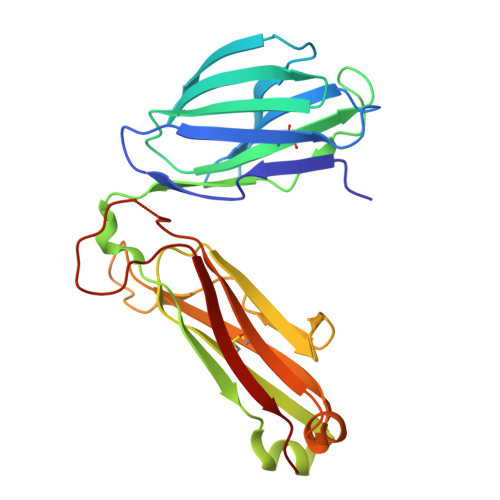
T cell receptor - LCK1-1 TRBV1 Beta chain243Mus musculusMutation(s): 0 
Find similar proteins by:|  3D Structure
Entity ID: 3
MoleculeChains  Sequence LengthOrganismDetailsImage
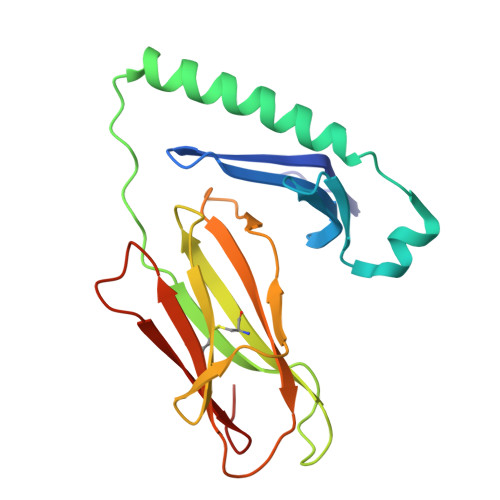
H-2 class II histocompatibility antigen, A-B alpha chain188Mus musculusMutation(s): 0 
Gene Names: H2-Aa
UniProt
Find proteins for P14434 (Mus musculus)
Explore P14434 
Go to UniProtKB:  P14434
Entity Groups
Sequence Clusters30% Identity50% Identity70% Identity90% Identity95% Identity100% Identity
UniProt GroupP14434
Sequence Annotations
Expand
Reference Sequence
Find similar proteins by:|  3D Structure
Entity ID: 4
MoleculeChains  Sequence LengthOrganismDetailsImage
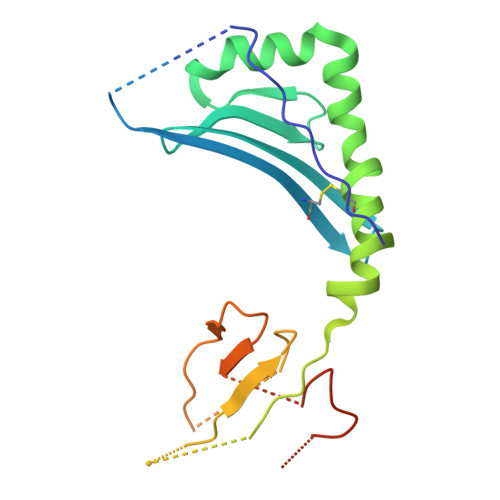
Nucleoprotein,H-2 class II histocompatibility antigen, A beta chain228Influenza A virusMus musculus
This entity is chimeric
Mutation(s): 0 
Gene Names: NPH2-Ab1H2-iabeta
UniProt
Find proteins for P14483 (Mus musculus)
Explore P14483 
Go to UniProtKB:  P14483
Find proteins for P69296 (Influenza A virus (strain A/Shanghai/16/1989 H3N2))
Explore P69296 
Go to UniProtKB:  P69296
Entity Groups
Sequence Clusters30% Identity50% Identity70% Identity90% Identity95% Identity100% Identity
UniProt GroupsP14483P69296
Glycosylation
Glycosylation Sites: 1
Sequence Annotations
Expand
Reference Sequence

Small Molecules

Ligands 2 Unique
IDChains Name / Formula / InChI Key2D Diagram3D Interactions
NAG

Query on NAG


Download:Ideal Coordinates CCD File
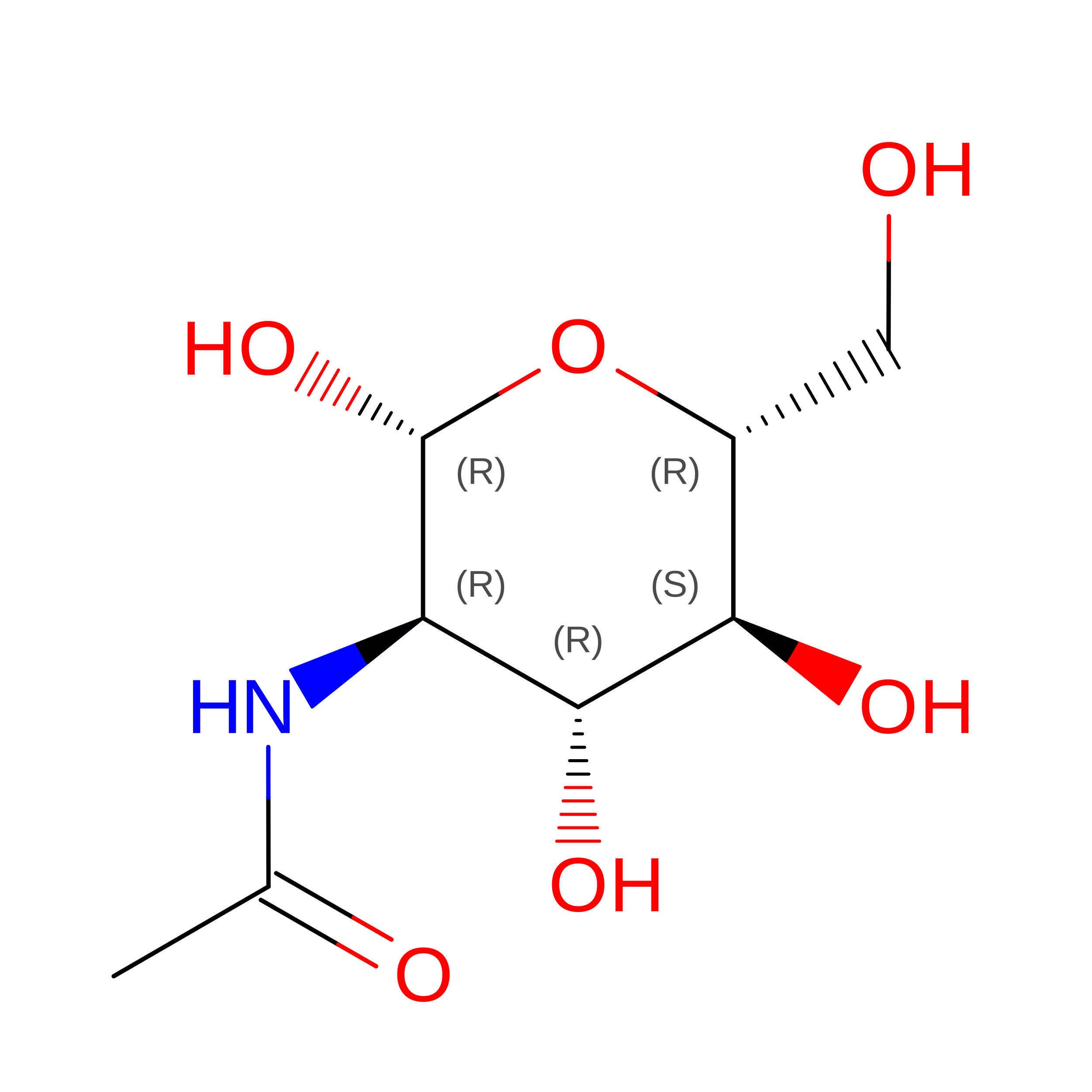
S [auth D]2-acetamido-2-deoxy-beta-D-glucopyranose
C8 H15 N O6
OVRNDRQMDRJTHS-FMDGEEDCSA-N
EDO

Query on EDO


Download:Ideal Coordinates CCD File
E [auth A]
F [auth A]
G [auth B]
H [auth B]
I [auth B]
E [auth A],
F [auth A],
G [auth B],
H [auth B],
I [auth B],
J [auth B],
K [auth B],
L [auth C],
M [auth C],
N [auth C],
O [auth C],
P [auth C],
Q [auth C],
R [auth C],
T [auth D]
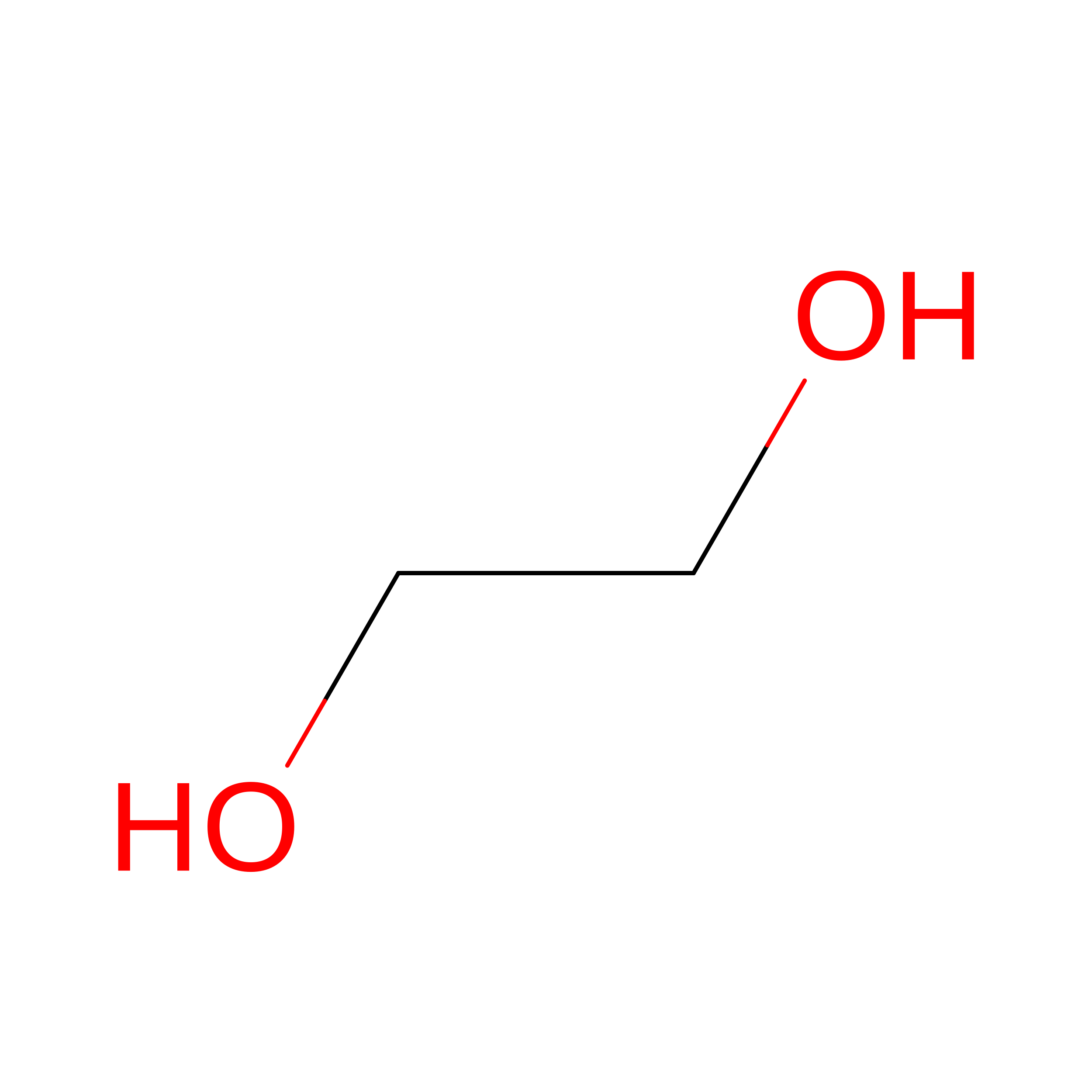
1,2-ETHANEDIOL
C2 H6 O2
LYCAIKOWRPUZTN-UHFFFAOYSA-N

Experimental Data & Validation

Experimental Data

  • Method: X-RAY DIFFRACTION
  • Resolution: 2.01 Å
  • R-Value Free:  0.215 (Depositor), 0.214 (DCC) 
  • R-Value Work:  0.187 (Depositor), 0.187 (DCC) 
  • R-Value Observed: 0.188 (Depositor) 
Space Group: H 3
Unit Cell:
Length ( Å )Angle ( ˚ )
a = 197.604α = 90
b = 197.604β = 90
c = 79.331γ = 120
Software Package:
Software NamePurpose
PHENIXrefinement
PHENIXrefinement
XDSdata reduction
Aimlessdata scaling
PHASERphasing

Structure Validation

View Full Validation Report


Ligand Structure Quality Assessment 


Entry History 

& Funding Information

Deposition Data


Funding OrganizationLocationGrant Number
National Health and Medical Research Council (NHMRC, Australia)Australia--

Revision History  (Full details and data files)

  • Version 1.0: 2025-01-29
    Type: Initial release
  • Version 1.1: 2025-08-13
    Changes: Database references