Download Mendeley
Discovery of KIN-8741, a Highly Selective Type IIb c-Met Kinase Inhibitor with Broad Mutation Coverage and Quality Drug-Like Properties for the Treatment of Cancer.
Ouyang, X.S., Grandinetti, K.B., Boren, M., Chakravorty, S., Chopade, S., Jiang, P., Kanouni, T., Koudriakova, T., Makwana, O., Pack, S.K., Perez, M., Suriben, R., Timple, N., Thohan, S., Uryu, S., Womble, S., Yuan, D., Kania, R.S., Cox, J.M.(2025) J Med Chem 68: 10648-10662
- PubMed: 40459881 Search on PubMed
- DOI: https://doi.org/10.1021/acs.jmedchem.5c00834
- Primary Citation Related Structures:
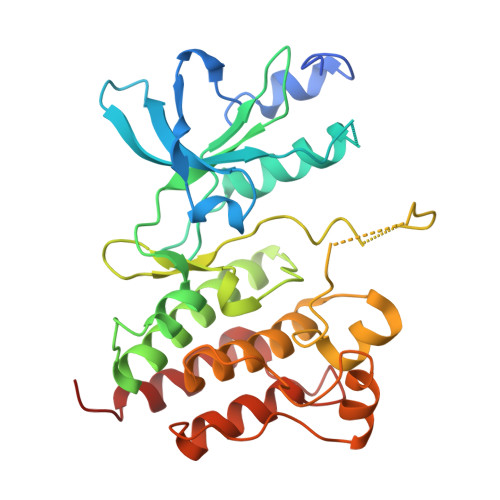
8VI1 - PubMed Abstract:
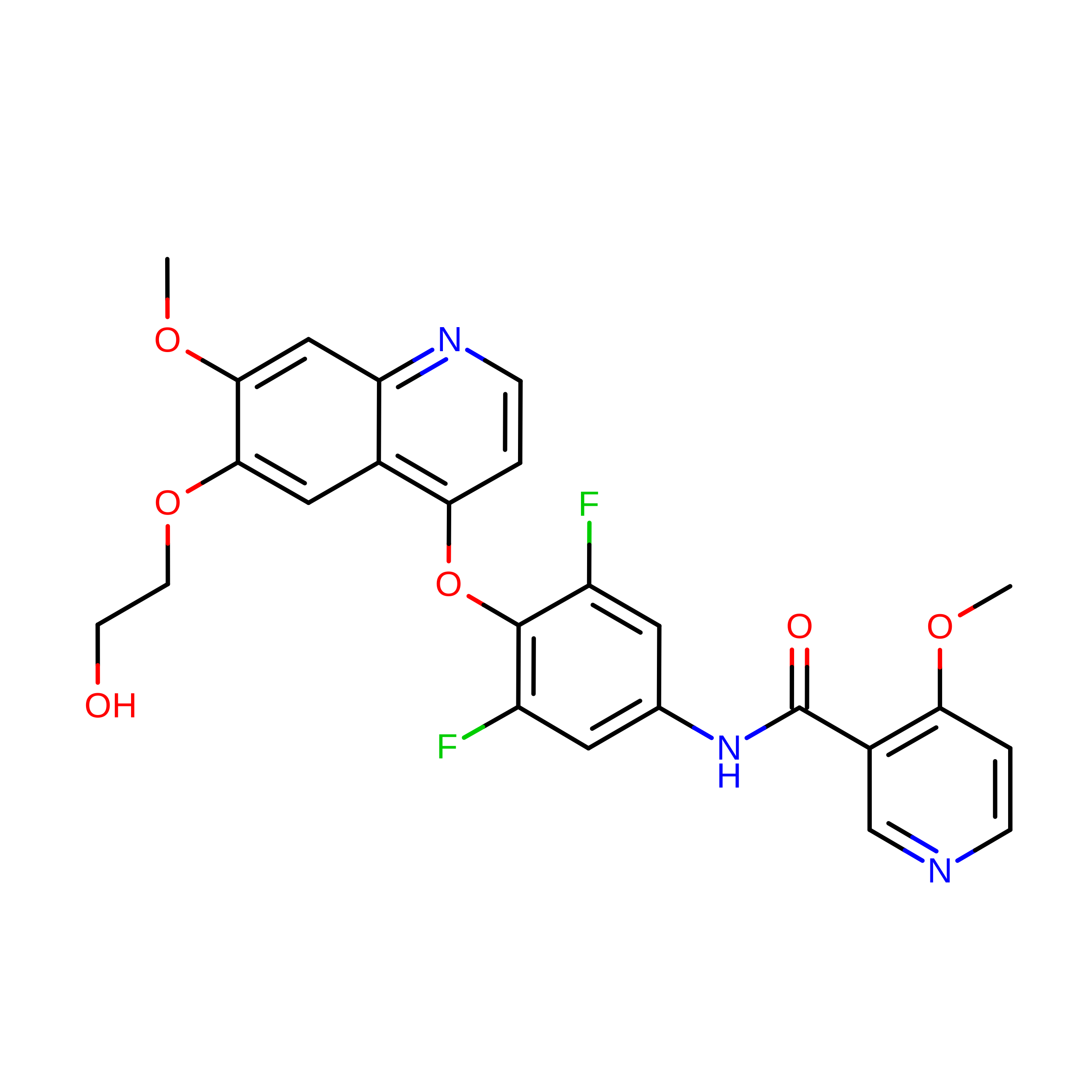
Mesenchymal-epithelial transition factor (c-Met) is a receptor tyrosine kinase belonging to the MET gene family. Aberrant c-Met signaling drives tumorigenesis. Acquired drug resistance to current type I c-Met inhibitors has limited their duration of response. Many type II inhibitors have been developed to address the on-target resistance mutations that render type I inhibitors ineffective. However, type II inhibitors, to date, have not been approved to treat c-Met-driven cancers due to poor selectivity and suboptimal physicochemical properties that limit free drug concentrations. Herein, we describe how structure-based drug design (SBDD) directed at optimization of lipophilic efficiency (LipE) enabled the discovery of a highly selective type IIb c-Met inhibitor with quality drug-like properties. Lead compound KIN-8741 exhibits broad potency against acquired resistance mutations and a desirable safety profile that supported the filing and clearance of an IND for the treatment of cancer.
- Kinnate Biopharma Inc., San Diego, California 92130, United States.
Organizational Affiliation: