Download Mendeley
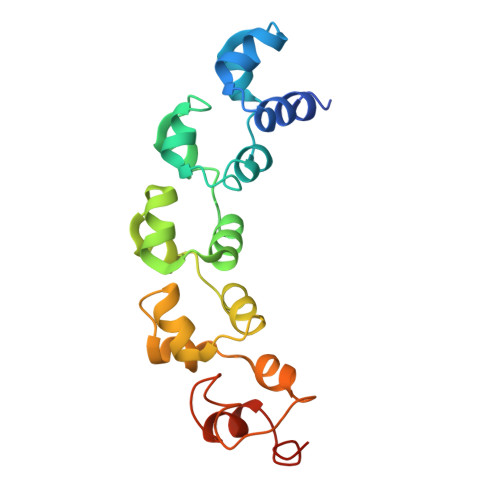
Multistate and functional protein design using RoseTTAFold sequence space diffusion.
Lisanza, S.L., Gershon, J.M., Tipps, S.W.K., Sims, J.N., Arnoldt, L., Hendel, S.J., Simma, M.K., Liu, G., Yase, M., Wu, H., Tharp, C.D., Li, X., Kang, A., Brackenbrough, E., Bera, A.K., Gerben, S., Wittmann, B.J., McShan, A.C., Baker, D.(2025) Nat Biotechnol 43: 1288-1298
- PubMed: 39322764 Search on PubMedSearch on PubMed Central
- DOI: https://doi.org/10.1038/s41587-024-02395-w
- Primary Citation Related Structures:
8VD6, 8VL3, 8VL4 - PubMed Abstract:
Protein denoising diffusion probabilistic models are used for the de novo generation of protein backbones but are limited in their ability to guide generation of proteins with sequence-specific attributes and functional properties. To overcome this limitation, we developed ProteinGenerator (PG), a sequence space diffusion model based on RoseTTAFold that simultaneously generates protein sequences and structures. Beginning from a noised sequence representation, PG generates sequence and structure pairs by iterative denoising, guided by desired sequence and structural protein attributes. We designed thermostable proteins with varying amino acid compositions and internal sequence repeats and cage bioactive peptides, such as melittin. By averaging sequence logits between diffusion trajectories with distinct structural constraints, we designed multistate parent-child protein triples in which the same sequence folds to different supersecondary structures when intact in the parent versus split into two child domains. PG design trajectories can be guided by experimental sequence-activity data, providing a general approach for integrated computational and experimental optimization of protein function.
- Department of Biochemistry, University of Washington, Seattle, WA, USA.
Organizational Affiliation: