Download Mendeley
"Pseudosubstrate Envelope"/Free Energy Perturbation-Guided Design and Mechanistic Investigations of Benzothiazole HIV Capsid Modulators with High Ligand Efficiency.
Xu, S., Wang, S., Zhou, Y., Foley, N., Sun, L., Walsham, L., Tang, K., Shi, D., Shi, X., Zhang, Z., Jiang, X., Gao, S., Liu, X., Pannecouque, C., Goldstone, D.C., Dick, A., Zhan, P.(2024) J Med Chem 67: 19057-19076
- PubMed: 39418501 Search on PubMed
- DOI: https://doi.org/10.1021/acs.jmedchem.4c01544
- Primary Citation Related Structures:
8V17 - PubMed Abstract:
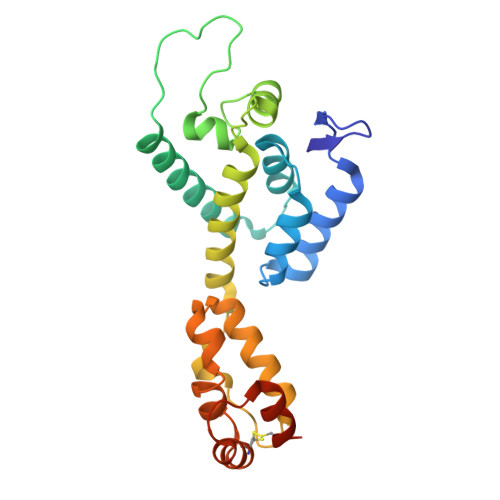
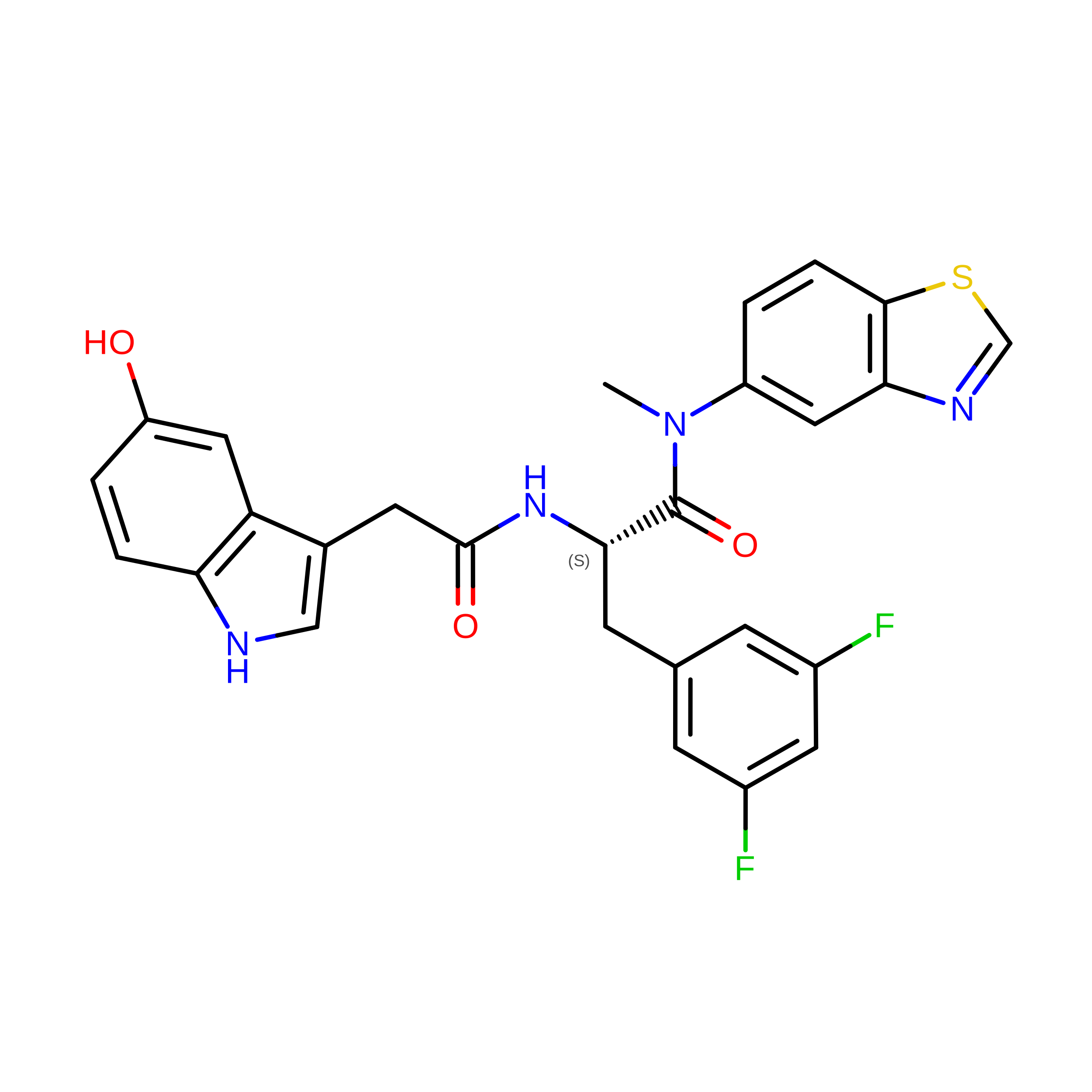
Based on our proposed "pseudosubstrate envelope" concept, 25 benzothiazole-bearing HIV capsid protein (CA) modulators were designed and synthesized under the guidance of free energy perturbation technology. The most potent compound, IC-1k , exhibited an EC 50 of 2.69 nM against HIV-1, being 393 times more potent than the positive control PF74. Notably, IC-1k emerged as the highest ligand efficiency (LE = 0.32) HIV CA modulator, surpassing that of the approved drug lenacapavir (LE = 0.21). Surface plasmon resonance assay and crystallographic analysis confirmed that IC-1k targeted HIV-1 CA within the chemical space of the "pseudosubstrate envelope". Further mechanistic studies revealed a dual-stage inhibition profile: IC-1k disrupted early-stage capsid-host-factor interactions and promoted late-stage capsid misassembly. Preliminary pharmacokinetic evaluations demonstrated significantly improved metabolic stability in human liver microsomes for IC-1k ( T 1/2 = 91.3 min) compared to PF74 ( T 1/2 = 0.7 min), alongside a favorable safety profile. Overall, IC-1k presents a promising lead compound for further optimization.
- Department of Medicinal Chemistry, Key Laboratory of Chemical Biology (Ministry of Education), School of Pharmaceutical Sciences, Shandong University, 44 West Culture Road, Jinan, Shandong 250012, PR China.
Organizational Affiliation: