Download Mendeley
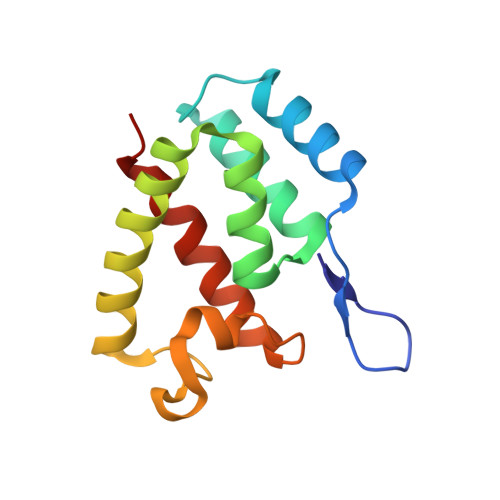
The Human T-cell Leukemia Virus capsid protein is a potential drug target.
Yu, R., Phalora, P., Li, N., Bocking, T., Jacques, D.A.(2025) Nat Commun 16: 10892-10892
- PubMed: 41345105 Search on PubMedSearch on PubMed Central
- DOI: https://doi.org/10.1038/s41467-025-65899-2
- Primary Citation Related Structures:
8ERE, 8ERF, 8ERG, 8ERH, 8ERI, 8TMV, 8TMW - PubMed Abstract:
Human T-cell Leukaemia Virus type 1 (HTLV-1) is an untreatable retrovirus that causes lethal malignancies and degenerative inflammatory conditions. Effective treatments have been delayed by substantial gaps in our knowledge of the fundamental virology, especially when compared to the closely related virus, HIV. A recently developed and highly effective anti-HIV strategy is to target the virus with drugs that interfere with capsid integrity and interactions with the host. Importantly, the first in-class anti-capsid drug approved, lenacapavir, can provide long-acting pre-exposure prophylaxis. Such a property would provide a means to prevent the transmission of HTLV-1, but its capsid has not previously been considered as a drug target. Here we describe high-resolution crystal structures of the HTLV-1 capsid protein, define essential lattice interfaces, and identify a distinct ligand-binding pocket. We show that this pocket is essential for virus infectivity, providing a potential target for future anti-capsid drug development.
- Department of Molecular Medicine, School of Biomedical Sciences, University of New South Wales, Sydney, NSW, Australia.
Organizational Affiliation: