Download Mendeley
Plant pathogenic fungi hijack phosphate signaling with conserved enzymatic effectors.
McCombe, C.L., Wegner, A., Wirtz, L., Zamora, C.S., Casanova, F., Aditya, S., Greenwood, J.R., de Paula, S., England, E., Shang, S., Ericsson, D.J., Oliveira-Garcia, E., Williams, S.J., Schaffrath, U.(2025) Science 387: 955-962
- PubMed: 40014726 Search on PubMed
- DOI: https://doi.org/10.1126/science.adl5764
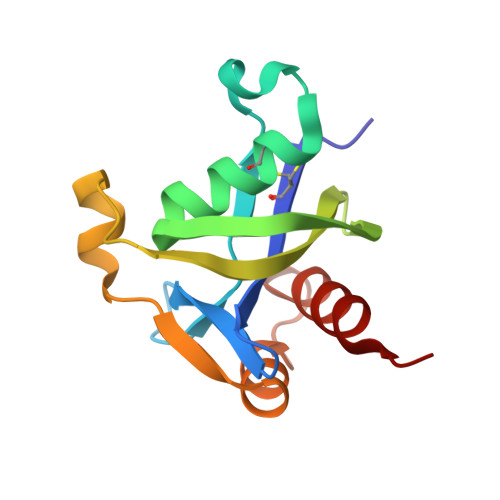
- Primary Citation Related Structures:
8SXS - PubMed Abstract:
Inorganic phosphate (Pi) is essential for life, and plant cells monitor Pi availability by sensing inositol pyrophosphate (PP-InsP) levels. In this work, we describe the hijacking of plant phosphate sensing by a conserved family of Nudix hydrolase effectors from pathogenic Magnaporthe and Colletotrichum fungi. Structural and enzymatic analyses of the Nudix effector family demonstrate that they selectively hydrolyze PP-InsP. Gene deletion experiments of Nudix effectors in Magnaporthe oryzae , Colletotrichum higginsianum , and Colletotrichum graminicola indicate that PP-InsP hydrolysis substantially enhances disease symptoms in diverse pathosystems. Further, we show that this conserved effector family induces phosphate starvation signaling in plants. Our study elucidates a molecular mechanism, used by multiple phytopathogenic fungi, that manipulates the highly conserved plant phosphate sensing pathway to exacerbate disease.
- Research School of Biology, The Australian National University, Canberra, ACT, Australia.
Organizational Affiliation: