8SWA | pdb_00008swa

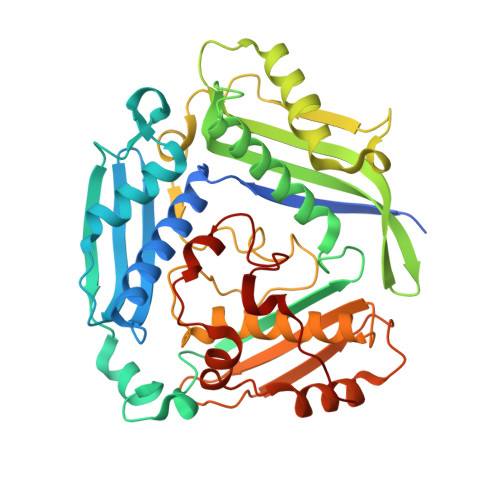
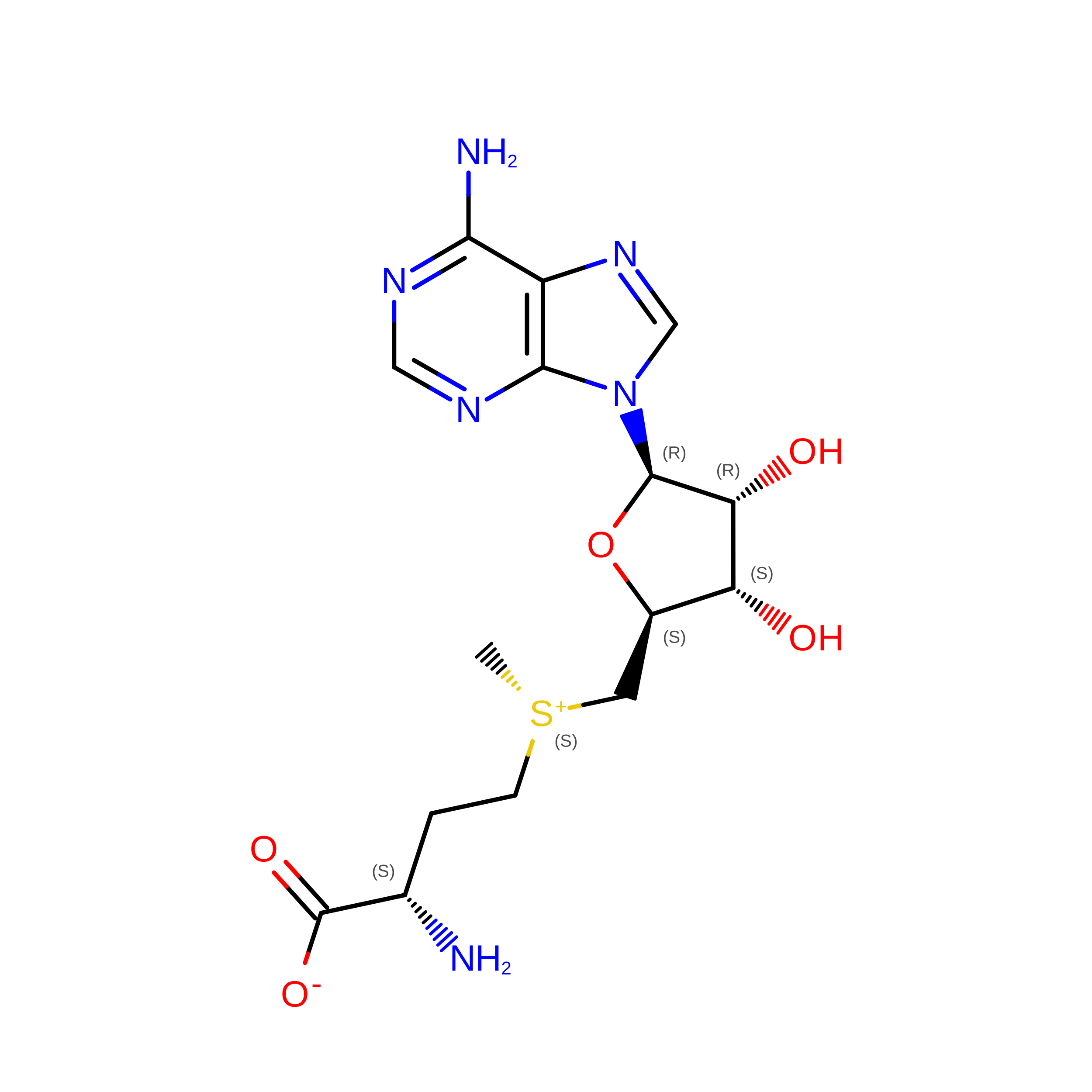
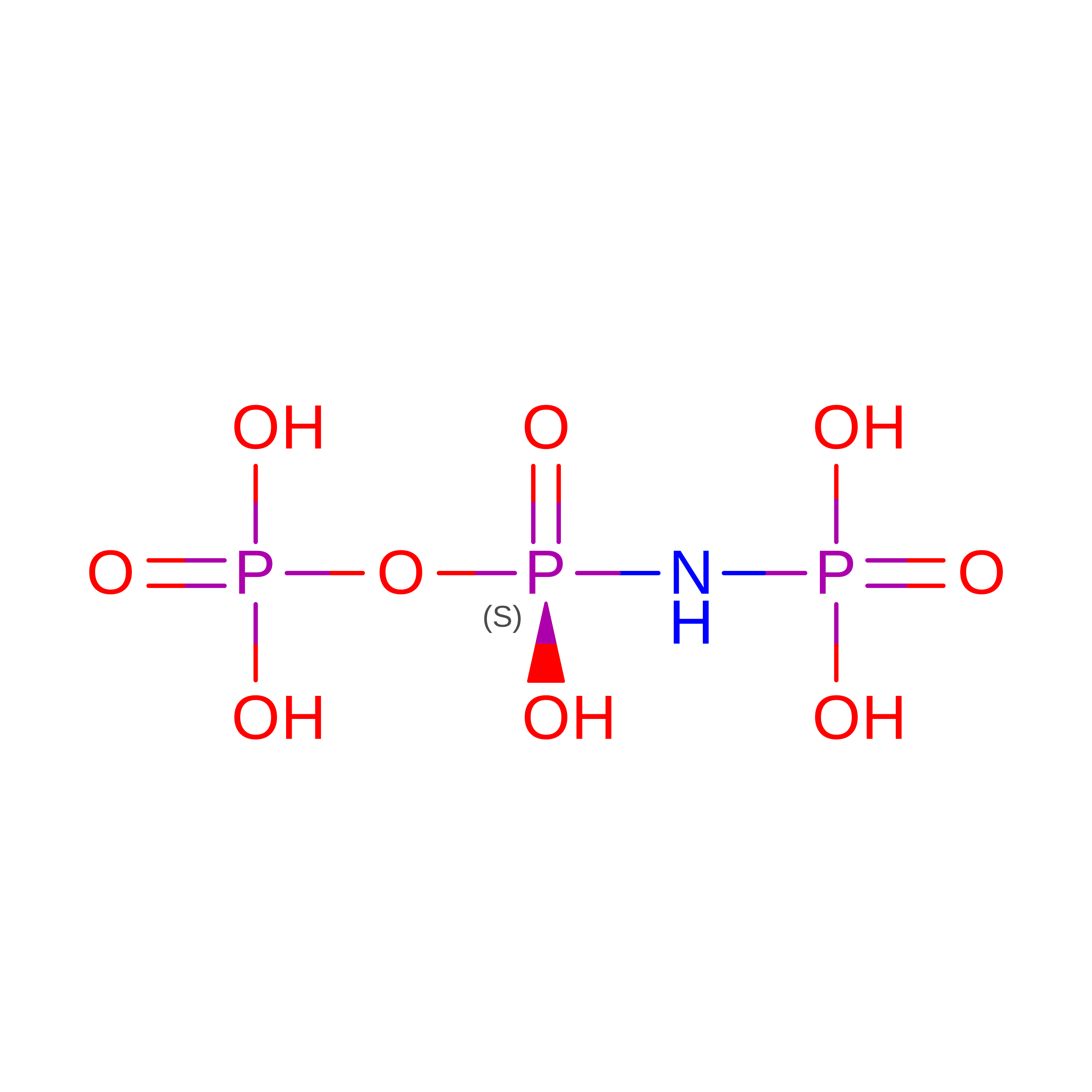
Crystal structure of the human S-adenosylmethionine synthetase 1 in complex with SAM and PPNP


Experimental Data Snapshot

  • Method: X-RAY DIFFRACTION
  • Resolution: 2.00 Å
  • R-Value Free: 
    0.194 (Depositor), 0.177 (DCC) 
  • R-Value Work: 
    0.143 (Depositor) 
  • R-Value Observed: 
    0.147 (Depositor) 

Starting Model: experimental
View more details

wwPDB Validation 3D Report Full Report

Validation slider image for 8SWA

Ligand Structure Quality Assessment 


This is version 1.1 of the entry. See complete history

Literature

Formaldehyde regulates S -adenosylmethionine biosynthesis and one-carbon metabolism.

Pham, V.N.Bruemmer, K.J.Toh, J.D.W.Ge, E.J.Tenney, L.Ward, C.C.Dingler, F.A.Millington, C.L.Garcia-Prieto, C.A.Pulos-Holmes, M.C.Ingolia, N.T.Pontel, L.B.Esteller, M.Patel, K.J.Nomura, D.K.Chang, C.J.

(2023) Science 382: eabp9201-eabp9201

  • DOI: https://doi.org/10.1126/science.abp9201
  • Primary Citation Related Structures: 
    8SWA

  • PubMed Abstract: 

    One-carbon metabolism is an essential branch of cellular metabolism that intersects with epigenetic regulation. In this work, we show how formaldehyde (FA), a one-carbon unit derived from both endogenous sources and environmental exposure, regulates one-carbon metabolism by inhibiting the biosynthesis of S -adenosylmethionine (SAM), the major methyl donor in cells. FA reacts with privileged, hyperreactive cysteine sites in the proteome, including Cys120 in S-adenosylmethionine synthase isoform type-1 (MAT1A). FA exposure inhibited MAT1A activity and decreased SAM production with MAT-isoform specificity. A genetic mouse model of chronic FA overload showed a decrease n SAM and in methylation on selected histones and genes. Epigenetic and transcriptional regulation of Mat1a and related genes function as compensatory mechanisms for FA-dependent SAM depletion, revealing a biochemical feedback cycle between FA and SAM one-carbon units.


  • Organizational Affiliation
    • Department of Chemistry, University of California, Berkeley, Berkeley, CA 94720, USA.

Macromolecule Content 

  • Total Structure Weight: 45.58 kDa 
  • Atom Count: 3,230 
  • Modeled Residue Count: 380 
  • Deposited Residue Count: 403 
  • Unique protein chains: 1

Macromolecules

Find similar proteins by:|  3D Structure
Entity ID: 1
MoleculeChains  Sequence LengthOrganismDetailsImage
S-adenosylmethionine synthase isoform type-1403Homo sapiensMutation(s): 0 
Gene Names: MAT1AAMS1MATA1
EC: 2.5.1.6
UniProt & NIH Common Fund Data Resources
Find proteins for Q00266 (Homo sapiens)
Explore Q00266 
Go to UniProtKB:  Q00266
PHAROS:  Q00266
GTEx:  ENSG00000151224 
Entity Groups
Sequence Clusters30% Identity50% Identity70% Identity90% Identity95% Identity100% Identity
UniProt GroupQ00266
Sequence Annotations
Expand
Reference Sequence

Small Molecules

Experimental Data & Validation

Experimental Data

  • Method: X-RAY DIFFRACTION
  • Resolution: 2.00 Å
  • R-Value Free:  0.194 (Depositor), 0.177 (DCC) 
  • R-Value Work:  0.143 (Depositor) 
  • R-Value Observed: 0.147 (Depositor) 
Space Group: I 2 2 2
Unit Cell:
Length ( Å )Angle ( ˚ )
a = 61.698α = 90
b = 100.421β = 90
c = 122.74γ = 90
Software Package:
Software NamePurpose
HKL-2000data scaling
PHENIXrefinement
PDB_EXTRACTdata extraction
HKL-2000data reduction
PHASERphasing

Structure Validation

View Full Validation Report


Ligand Structure Quality Assessment 


Entry History 

& Funding Information

Deposition Data


Funding OrganizationLocationGrant Number
National Institutes of Health/National Institute of Environmental Health Sciences (NIH/NIEHS)United States--

Revision History  (Full details and data files)

  • Version 1.0: 2023-11-15
    Type: Initial release
  • Version 1.1: 2026-03-04
    Changes: Refinement description, Structure summary