Download Mendeley
A high-resolution data set of fatty acid-binding protein structures. I. Dynamics of FABP4 and ligand binding.
Casagrande, F., Ehler, A., Burger, D., Benz, J., Ross, A., Rudolph, M.G.(2025) Acta Crystallogr D Struct Biol 81: 423-435
- PubMed: 40748029 Search on PubMedSearch on PubMed Central
- DOI: https://doi.org/10.1107/S2059798325006242
- Primary Citation Related Structures:
8S1K - PubMed Abstract:
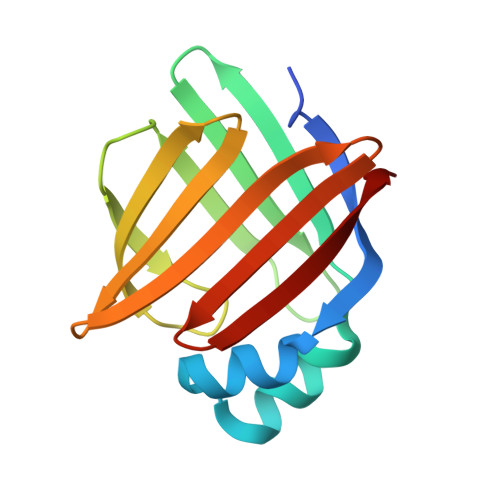
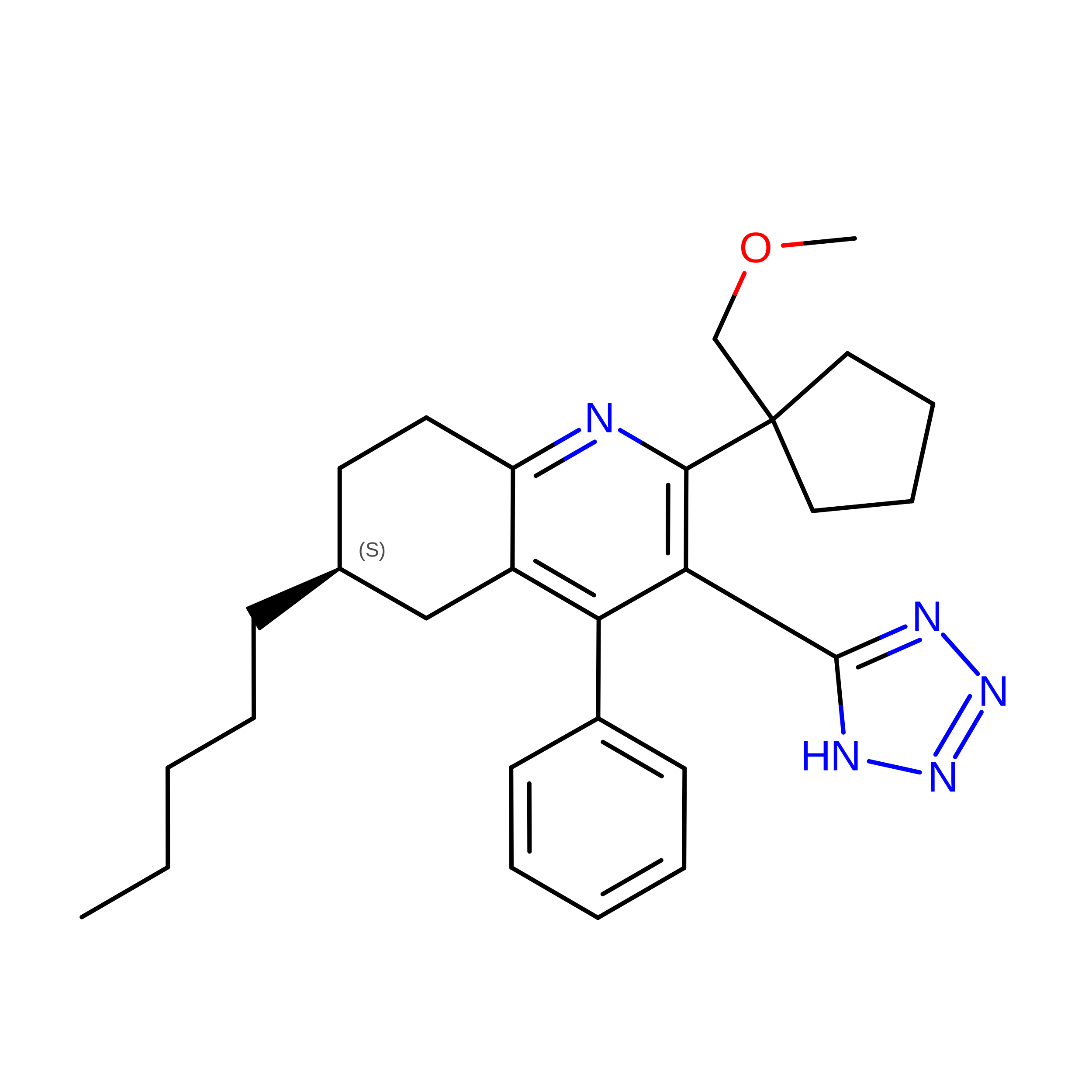
Fatty acid-binding proteins (FABPs) are involved in the uptake and intracellular trafficking of fatty acids for metabolic and gene-regulatory purposes. FABPs are known to associate with membranes and also enter the nucleus. Using NMR and a human FABP4 (hFABP4) preparation completely free of endogenous ligands, we studied the influence of fatty acids and inhibitors on the conformational flexibility and bicelle/membrane association of this isoform. Binding of fatty acids and ligands rigidifies hFABP4, particularly at the portal region where ligands enter the binding site. Depending on the nature of the ligand, hFABP4 stays associated with bicelles via the portal region or segregates into solution, a prerequisite for nuclear import using a nonclassical nuclear localization signal. These results indicate that different ligands can lead to different biological outcomes. One of the major determinants for FABP4 segregation is Phe58, which in X-ray crystal structures adopts different conformations as a function of ligand volume. It is possible that other FABP isoforms use a similar mechanism for ligand-dependent membrane detachment and activation of nuclear import.
- Therapeutic Modalities, Innovation Center Basel, F. Hoffmann-La Roche, Grenzacherstrasse 124, 4070 Basel, Switzerland.
Organizational Affiliation: