8RNH | pdb_00008rnh

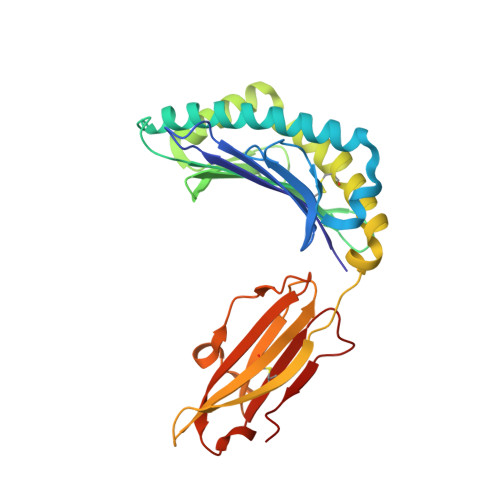
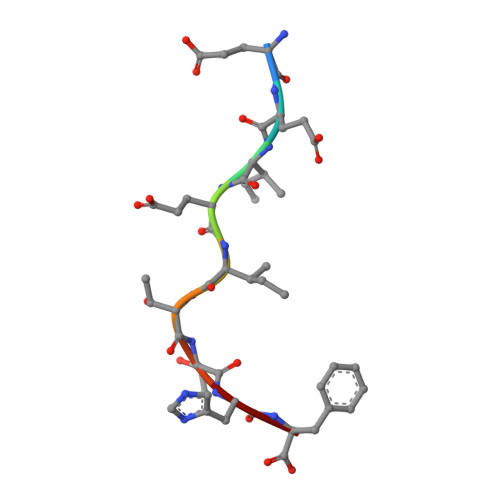
Crystal structure of HLA B*18:01 in complex with EEIEITTHF, an 9-mer epitope from Influenza A


Experimental Data Snapshot

  • Method: X-RAY DIFFRACTION
  • Resolution: 1.60 Å
  • R-Value Free: 
    0.234 (Depositor), 0.234 (DCC) 
  • R-Value Work: 
    0.202 (Depositor), 0.202 (DCC) 
  • R-Value Observed: 
    0.203 (Depositor) 

Starting Model: experimental
View more details

wwPDB Validation 3D Report Full Report

Validation slider image for 8RNH

Ligand Structure Quality Assessment 


This is version 1.2 of the entry. See complete history

Literature

Characterisation of novel influenza-derived HLA-B*18:01-restricted epitopes.

Leong, S.L.Murdolo, L.Maddumage, J.C.Koutsakos, M.Kedzierska, K.Purcell, A.W.Gras, S.Grant, E.J.

(2024) Clin Transl Immunology 13: e1509-e1509

  • DOI: https://doi.org/10.1002/cti2.1509
  • Primary Citation Related Structures: 
    8RNG, 8RNH, 8ROO, 8ROP

  • PubMed Abstract: 

    Seasonal influenza viruses cause roughly 650 000 deaths annually despite available vaccines. CD8 + T cells typically recognise influenza-derived peptides from internal structural and non-structural influenza proteins and are an attractive avenue for future vaccine design as they could reduce the severity of disease following infection with diverse influenza strains. CD8 + T cells recognise peptides presented by the highly polymorphic Human Leukocyte Antigens class I molecules (HLA-I). Each HLA-I variant has distinct peptide binding preferences, representing a significant obstacle for designing vaccines that elicit CD8 + T cell responses across broad populations. Consequently, the rational design of a CD8 + T cell-mediated vaccine would require the identification of highly immunogenic peptides restricted to a range of different HLA molecules. Here, we assessed the immunogenicity of six recently published novel influenza-derived peptides identified by mass-spectrometry and predicted to bind to the prevalent HLA-B*18:01 molecule. Using CD8 + T cell activation assays and protein biochemistry, we showed that 3/6 of the novel peptides were immunogenic in several HLA-B*18:01 + individuals and confirmed their HLA-B*18:01 restriction. We subsequently compared CD8 + T cell responses towards the previously identified highly immunogenic HLA-B*18:01-restricted NP 219 peptide. Using X-ray crystallography, we solved the first crystal structures of HLA-B*18:01 presenting immunogenic influenza-derived peptides. Finally, we dissected the first TCR repertoires specific for HLA-B*18:01 restricted pathogen-derived peptides, identifying private and restricted repertoires against each of the four peptides. Overall the characterisation of these novel immunogenic peptides provides additional HLA-B*18:01-restricted vaccine targets derived from the Matrix protein 1 and potentially the non-structural protein and the RNA polymerase catalytic subunit of influenza viruses.


  • Organizational Affiliation
    • Infection and Immunity Program, La Trobe Institute for Molecular Science (LIMS) La Trobe University Bundoora VIC Australia.

Macromolecule Content 

  • Total Structure Weight: 44.98 kDa 
  • Atom Count: 3,510 
  • Modeled Residue Count: 385 
  • Deposited Residue Count: 385 
  • Unique protein chains: 3

Macromolecules

Find similar proteins by:|  3D Structure
Entity ID: 1
MoleculeChains  Sequence LengthOrganismDetailsImage
MHC class I antigen276Homo sapiensMutation(s): 0 
Gene Names: HLA-B
UniProt
Find proteins for S6AU73 (Homo sapiens)
Explore S6AU73 
Go to UniProtKB:  S6AU73
Entity Groups
Sequence Clusters30% Identity50% Identity70% Identity90% Identity95% Identity100% Identity
UniProt GroupS6AU73
Sequence Annotations
Expand
Reference Sequence
Find similar proteins by:  Sequence   |   3D Structure  
Entity ID: 2
MoleculeChains  Sequence LengthOrganismDetailsImage
RNA-directed RNA polymerase catalytic subunitB [auth C]9Influenza A virus (A/Memphis/18/1978(H3N2))Mutation(s): 0 
EC: 2.7.7.48
UniProt
Find proteins for Q2VNC5 (Influenza A virus (strain A/Memphis/18/1978 H3N2))
Explore Q2VNC5 
Go to UniProtKB:  Q2VNC5
Entity Groups
UniProt GroupQ2VNC5
Sequence Annotations
Expand
Reference Sequence
Find similar proteins by:|  3D Structure
Entity ID: 3
MoleculeChains  Sequence LengthOrganismDetailsImage
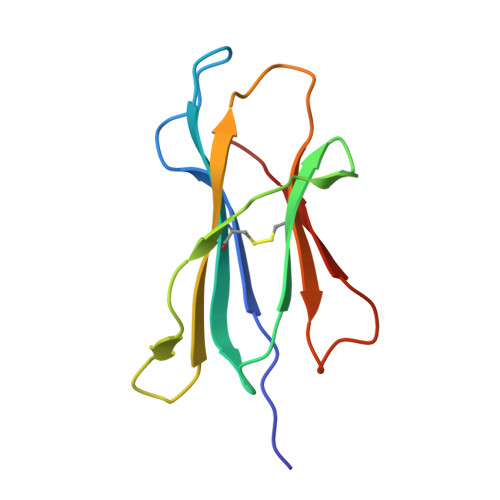
Beta-2-microglobulinC [auth B]100Homo sapiensMutation(s): 0 
Gene Names: B2MCDABP0092HDCMA22P
UniProt & NIH Common Fund Data Resources
Find proteins for P61769 (Homo sapiens)
Explore P61769 
Go to UniProtKB:  P61769
PHAROS:  P61769
GTEx:  ENSG00000166710 
Entity Groups
Sequence Clusters30% Identity50% Identity70% Identity90% Identity95% Identity100% Identity
UniProt GroupP61769
Sequence Annotations
Expand
Reference Sequence

Experimental Data & Validation

Experimental Data

  • Method: X-RAY DIFFRACTION
  • Resolution: 1.60 Å
  • R-Value Free:  0.234 (Depositor), 0.234 (DCC) 
  • R-Value Work:  0.202 (Depositor), 0.202 (DCC) 
  • R-Value Observed: 0.203 (Depositor) 
Space Group: P 21 21 21
Unit Cell:
Length ( Å )Angle ( ˚ )
a = 50.75α = 90
b = 81.627β = 90
c = 110.556γ = 90
Software Package:
Software NamePurpose
PHENIXrefinement
XDSdata reduction
Aimlessdata scaling
PHASERphasing

Structure Validation

View Full Validation Report


Ligand Structure Quality Assessment 


Entry History 

& Funding Information

Deposition Data


Funding OrganizationLocationGrant Number
National Health and Medical Research Council (NHMRC, Australia)Australia--

Revision History  (Full details and data files)

  • Version 1.0: 2024-05-08
    Type: Initial release
  • Version 1.1: 2024-07-24
    Changes: Database references
  • Version 1.2: 2024-11-20
    Changes: Structure summary