Download Mendeley
Tethered heme domains in a triheme cytochrome allow for increased electron transport distances.
Nash, B.W., Fernandes, T.M., Burton, J.A.J., Morgado, L., van Wonderen, J.H., Svistunenko, D.A., Edwards, M.J., Salgueiro, C.A., Butt, J.N., Clarke, T.A.(2024) Protein Sci 33: e5200-e5200
- PubMed: 39470321 Search on PubMedSearch on PubMed Central
- DOI: https://doi.org/10.1002/pro.5200
- Primary Citation Related Structures:
8QJ6, 8QJG, 8QK0 - PubMed Abstract:
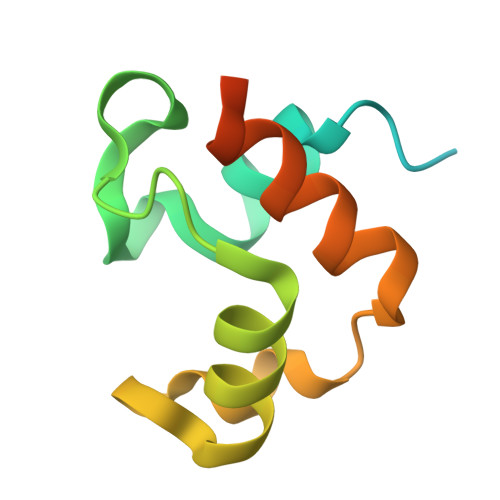
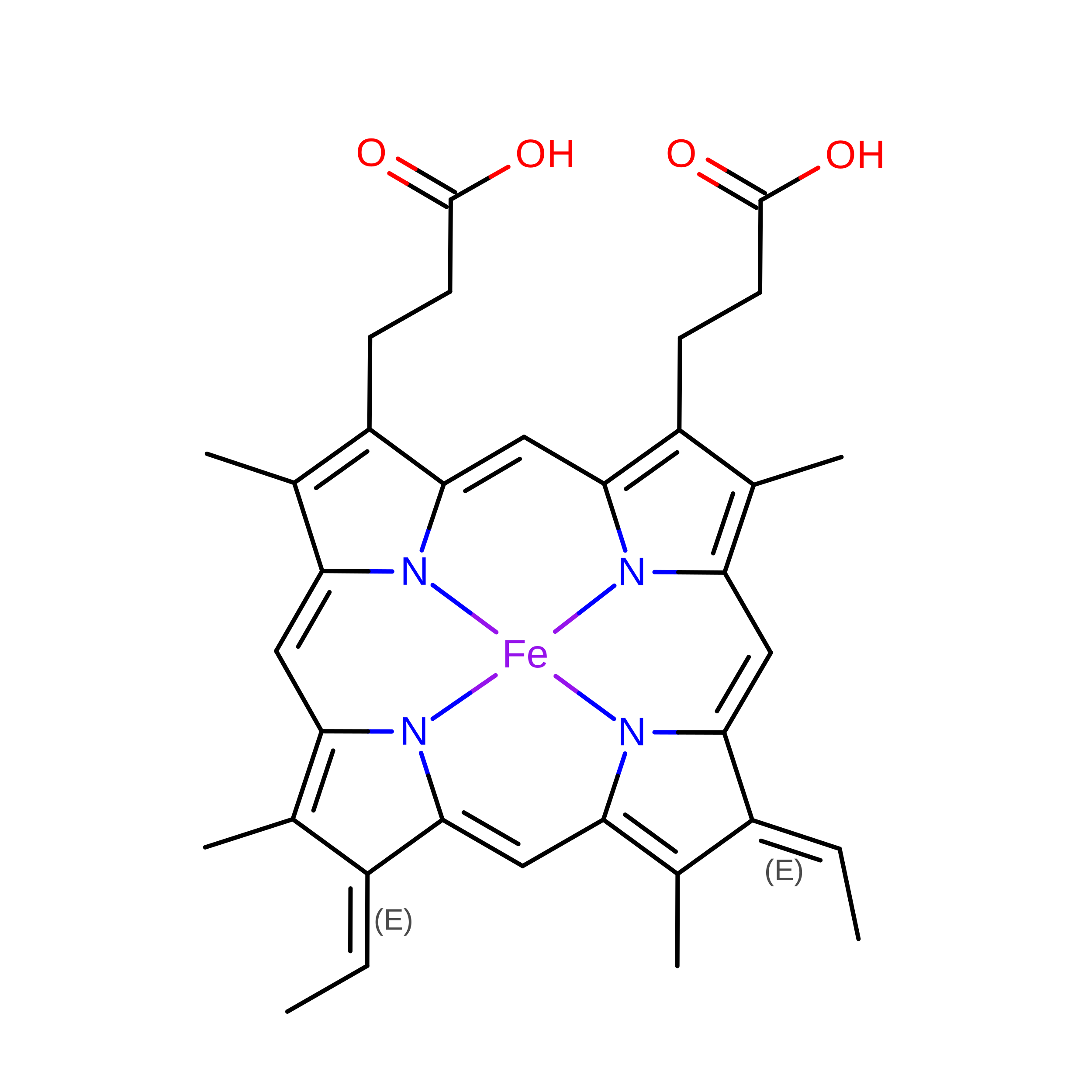
Decades of research describe myriad redox enzymes that contain cofactors arranged in tightly packed chains facilitating rapid and controlled intra-protein electron transfer. Many such enzymes participate in extracellular electron transfer (EET), a process which allows microorganisms to conserve energy in anoxic environments by exploiting mineral oxides and other extracellular substrates as terminal electron acceptors. In this work, we describe the properties of the triheme cytochrome PgcA from Geobacter sulfurreducens. PgcA has been shown to play an important role in EET but is unusual in containing three CXXCH heme binding motifs that are separated by repeated (PT) x motifs, suggested to enhance binding to mineral surfaces. Using a combination of structural, electrochemical, and biophysical techniques, we experimentally demonstrate that PgcA adopts numerous conformations stretching as far as 180 Å between the ends of domains I and III, without a tightly packed cofactor chain. Furthermore, we demonstrate a distinct role for its domain III as a mineral reductase that is recharged by domains I and II. These findings show PgcA to be the first of a new class of electron transfer proteins, with redox centers separated by some nanometers but tethered together by flexible linkers, facilitating electron transfer through a tethered diffusion mechanism rather than a fixed, closely packed electron transfer chain.
- Centre for Molecular and Structural Biochemistry, School of Biological Sciences and School of Chemistry, University of East Anglia, Norwich, UK.
Organizational Affiliation: