Download Mendeley
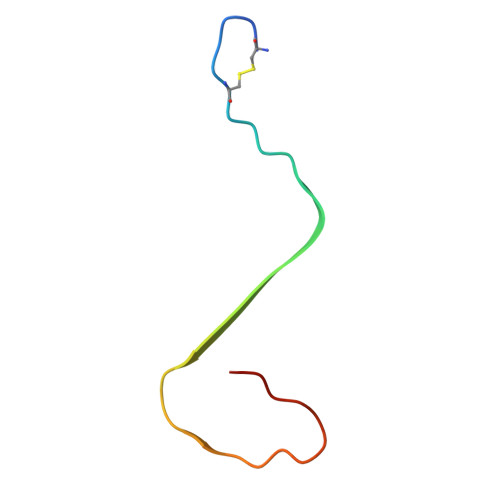
Cryo-EM exposes diverse polymorphism in IAPP mutants to guide the rational design of peptide-based therapeutics.
Ooi, S.A., Valli, D., Kuska, M.I., Mari, H., Chaudhary, H., Wahlgren, W.Y., Westenhoff, S., Tietze, A.A., Novials, A., Servitja, J.M., Maj, M.(2025) J Mol Biol 437: 169405-169405
- PubMed: 40850490 Search on PubMed
- DOI: https://doi.org/10.1016/j.jmb.2025.169405
- Primary Citation Related Structures:
8QJ1, 8QVP, 8QVQ, 8RM8, 8RM9 - PubMed Abstract:
In the pursuit of potential therapeutic agents for type 2 diabetes, non-amyloidogenic forms of the human Islet Amyloid Polypeptide (hIAPP) containing site-specific mutations are of significant interest. In the present study, we dissect the three proline mutations present in the core region of the non-amyloidogenic rat IAPP into single-point mutations at A25P, S28P, and S29P sites. We apply high-resolution cryo-electron microscopy and solve the structures of 6 polymorphs formed by these mutants, revealing the peptide's self-assembly patterns and identifying critical interactions that reinforce these structures in the presence of the β-sheet breaker. A unique trimeric aggregate with C3 symmetry was identified in the A25P mutant, which we resolved with a 3.05 Å resolution, while asymmetric trimeric assemblies were observed in the other mutants. Guided by the high-resolution structural models of A25P and S28P fibrils obtained in our study, we successfully designed novel non-amyloidogenic mutants of IAPP with potential therapeutic value. Our findings demonstrate the immense potential of structure-based approaches in developing effective therapeutics against amyloid diseases.
- Department of Chemistry and Molecular Biology, Medicinaregatan 7B, Gothenburg 413 90, Sweden.
Organizational Affiliation: