Download Mendeley
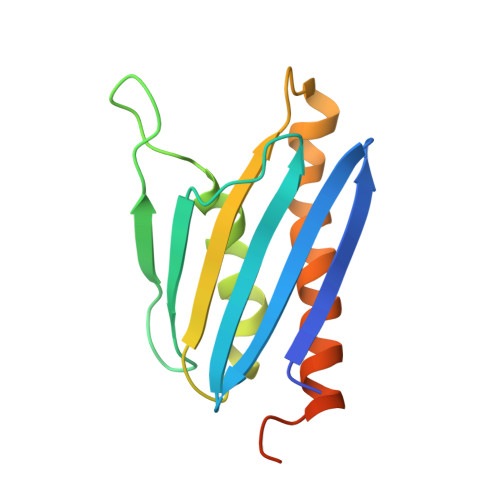
The prFMNH 2 -binding chaperone LpdD assists UbiD decarboxylase activation.
Gahloth, D., Fisher, K., Marshall, S., Leys, D.(2024) J Biol Chem 300: 105653-105653
- PubMed: 38224946 Search on PubMedSearch on PubMed Central
- DOI: https://doi.org/10.1016/j.jbc.2024.105653
- Primary Citation Related Structures:
8P4W, 8PO5, 8PZH, 8PZO - PubMed Abstract:
The UbiD enzyme family of prenylated flavin (prFMN)-dependent reversible decarboxylases is near ubiquitously present in microbes. For some UbiD family members, enzyme activation through prFMNH 2 binding and subsequent oxidative maturation of the cofactor readily occurs, both in vivo in a heterologous host and through in vitro reconstitution. However, isolation of the active holo-enzyme has proven intractable for others, notably the canonical Escherichia coli UbiD. We show that E. coli heterologous expression of the small protein LpdD-associated with the UbiD-like gallate decarboxylase LpdC from Lactobacillus plantarum-unexpectedly leads to 3,4-dihydroxybenzoic acid decarboxylation whole-cell activity. This activity was shown to be linked to endogenous E. coli ubiD expression levels. The crystal structure of the purified LpdD reveals a dimeric protein with structural similarity to the eukaryotic heterodimeric proteasome assembly chaperone Pba3/4. Solution studies demonstrate that LpdD protein specifically binds to reduced prFMN species only. The addition of the LpdD-prFMNH 2 complex supports reconstitution and activation of the purified E. coli apo-UbiD in vitro, leading to modest 3,4-dihydroxybenzoic acid decarboxylation. These observations suggest that LpdD acts as a prFMNH 2 -binding chaperone, enabling apo-UbiD activation through enhanced prFMNH 2 incorporation and subsequent oxidative maturation. Hence, while a single highly conserved flavin prenyltransferase UbiX is found associated with UbiD enzymes, our observations suggest considerable diversity in UbiD maturation, ranging from robust autocatalytic to chaperone-mediated processes. Unlocking the full (de)carboxylation scope of the UbiD-enzyme family will thus require more than UbiX coexpression.
- Manchester Institute of Biotechnology, University of Manchester, Manchester, UK.
Organizational Affiliation: