8ONI | pdb_00008oni

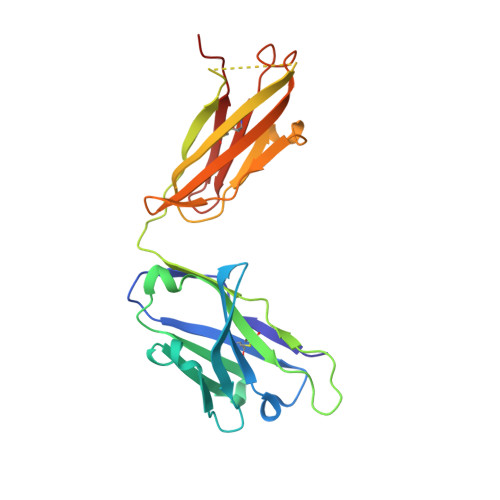
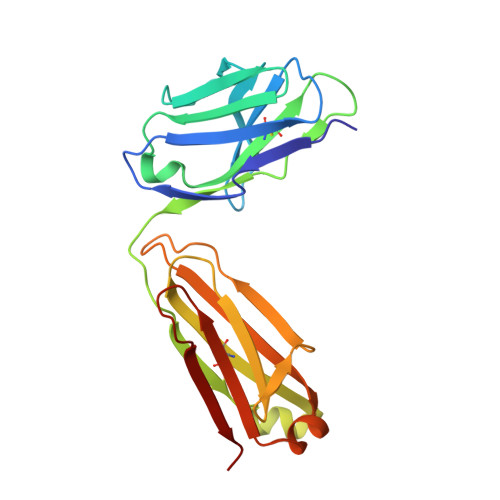
Human insulin in complex with the analytical antibody S1 Fab


Experimental Data Snapshot

  • Method: X-RAY DIFFRACTION
  • Resolution: 2.30 Å
  • R-Value Free: 
    0.237 (Depositor), 0.240 (DCC) 
  • R-Value Work: 
    0.197 (Depositor), 0.200 (DCC) 
  • R-Value Observed: 
    0.200 (Depositor) 

Starting Models: experimental
View more details

wwPDB Validation   3D Report Full Report


Ligand Structure Quality Assessment 


This is version 1.2 of the entry. See complete history


Literature

IgE clonality and aggregation of insulin affect IgE-mediated activation of sensitized basophils.

Christoffersen, S.Baumann, K.Millner, A.H.Toft-Hansen, H.Johansson, E.Thorlaksen, C.Skov, P.S.

(2025) J Allergy Clin Immunol Glob 4: 100502-100502

  • DOI: https://doi.org/10.1016/j.jacig.2025.100502
  • Primary Citation of Related Structures:  
    8ONI, 8ONK

  • PubMed Abstract: 

    Skin prick testing and specific IgE determination do not discriminate between sensitization and clinically relevant insulin allergic reactions, whereas the basophil histamine release assay has proven useful in identifying clinically relevant food and drug allergic reactions. We investigated IgE-mediated allergic reactions to insulin by studying the effect of insulin dimerization, superstructures (aggregates), and IgE clonality on activation of sensitized basophils. Three humanized IgE molecules directed against distinct insulin epitopes were developed, and basophils, alone or in combination, were sensitized with these antibodies. Insulin in monomeric or dimeric form and superstructures in solution or coupled to a Sepharose matrix were used to stimulate histamine release. Different insulin structures were tested on basophils sensitized with sera from 3 diabetic patients with allergic reactions and insulin-specific IgE during insulin treatment. Monoclonal humanized IgE molecules triggered basophil histamine release when insulin was dimerized, presented in a superstructure, or coupled to a Sepharose matrix-but not when insulin was monomeric. Monomeric insulin only induced histamine release when basophils were sensitized with a specific pair of IgE molecules. In basophils sensitized with sera from insulin-allergic patients containing insulin-specific IgE, only insulin in dimer formation, presented in a superstructure or coupled to a Sepharose matrix, could induce robust histamine release. Free monomeric insulin could not. This study illustrates why diagnostic methods for insulin allergy are difficult to correlate to clinical symptoms. Insulin aggregation and IgE clonality may be important factors in developing clinical symptoms of insulin allergy and should be addressed to improve the diagnostic outcome of insulin allergy testing.


  • Organizational Affiliation
    • RefLab ApS, Hvidovre, Denmark.

Macromolecules
Find similar proteins by:  (by identity cutoff)  |  3D Structure
Entity ID: 1
MoleculeChains Sequence LengthOrganismDetailsImage
Heavy chain of analytical antibody S1 FabA [auth H],
C
223Mus musculusMutation(s): 0 
Entity Groups  
Sequence Clusters30% Identity50% Identity70% Identity90% Identity95% Identity100% Identity
Glycosylation
Glycosylation Sites: 2
Sequence Annotations
Expand
  • Reference Sequence
Find similar proteins by:  (by identity cutoff)  |  3D Structure
Entity ID: 2
MoleculeChains Sequence LengthOrganismDetailsImage
Light chain of analytical antibody S1 FabB [auth L],
D
213Mus musculusMutation(s): 0 
Entity Groups  
Sequence Clusters30% Identity50% Identity70% Identity90% Identity95% Identity100% Identity
Sequence Annotations
Expand
  • Reference Sequence

Find similar proteins by:  Sequence   |   3D Structure  

Entity ID: 3
MoleculeChains Sequence LengthOrganismDetailsImage
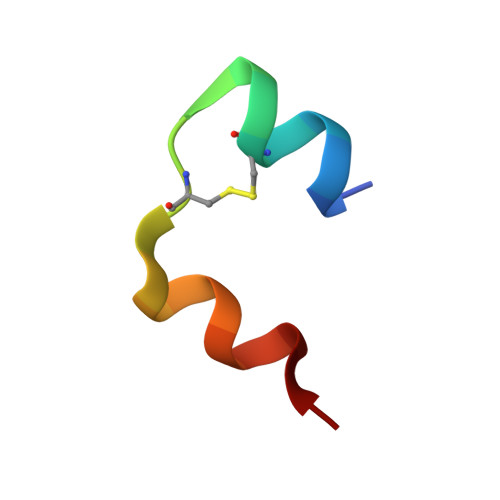
Insulin A chainE [auth I],
G [auth A]
21Homo sapiensMutation(s): 0 
Gene Names: INS
UniProt & NIH Common Fund Data Resources
Find proteins for P01308 (Homo sapiens)
Explore P01308 
Go to UniProtKB:  P01308
PHAROS:  P01308
GTEx:  ENSG00000254647 
Entity Groups  
Sequence Clusters30% Identity50% Identity70% Identity90% Identity95% Identity100% Identity
UniProt GroupP01308
Sequence Annotations
Expand
  • Reference Sequence
Find similar proteins by:  (by identity cutoff)  |  3D Structure
Entity ID: 4
MoleculeChains Sequence LengthOrganismDetailsImage
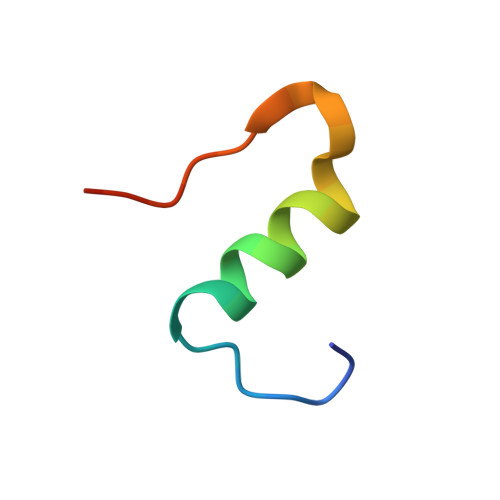
Insulin B chainF [auth B],
H [auth F]
30Homo sapiensMutation(s): 0 
Gene Names: INS
UniProt & NIH Common Fund Data Resources
Find proteins for P01308 (Homo sapiens)
Explore P01308 
Go to UniProtKB:  P01308
PHAROS:  P01308
GTEx:  ENSG00000254647 
Entity Groups  
Sequence Clusters30% Identity50% Identity70% Identity90% Identity95% Identity100% Identity
UniProt GroupP01308
Sequence Annotations
Expand
  • Reference Sequence
Experimental Data & Validation

Experimental Data

  • Method: X-RAY DIFFRACTION
  • Resolution: 2.30 Å
  • R-Value Free:  0.237 (Depositor), 0.240 (DCC) 
  • R-Value Work:  0.197 (Depositor), 0.200 (DCC) 
  • R-Value Observed: 0.200 (Depositor) 
Space Group: P 1 21 1
Unit Cell:
Length ( Å )Angle ( ˚ )
a = 83.307α = 90
b = 71.896β = 112.39
c = 99.64γ = 90
Software Package:
Software NamePurpose
PHENIXrefinement
HKL-2000data reduction
HKL-2000data scaling
PHASERphasing

Structure Validation

View Full Validation Report


Ligand Structure Quality Assessment 


Entry History & Funding Information

Deposition Data


Funding OrganizationLocationGrant Number
Not fundedDenmark--

Revision History  (Full details and data files)

  • Version 1.0: 2024-04-10
    Type: Initial release
  • Version 1.1: 2024-11-13
    Changes: Structure summary
  • Version 1.2: 2025-10-22
    Changes: Database references