Download Mendeley
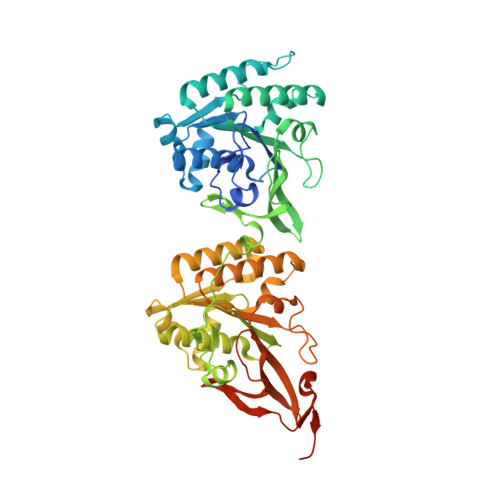
Reconstruction of the ancient cyanobacterial proto-circadian clock system KaiABC.
Li, S., Zhou, Z., Wan, Y., Jia, X., Wang, P., Wang, Y., Zuo, T., Cheng, H., Fang, X., Dong, S., He, J., Yang, Y., Xu, Y., Fu, S., Wang, X., Qin, X., Xie, Q., Xu, X., Zhao, Y., Liang, D., Zhang, P., Zhang, Q., Guo, J.(2025) EMBO J 44: 3025-3046
- PubMed: 40210722 Search on PubMedSearch on PubMed Central
- DOI: https://doi.org/10.1038/s44318-025-00425-0
- Primary Citation Related Structures:
8JON - PubMed Abstract:
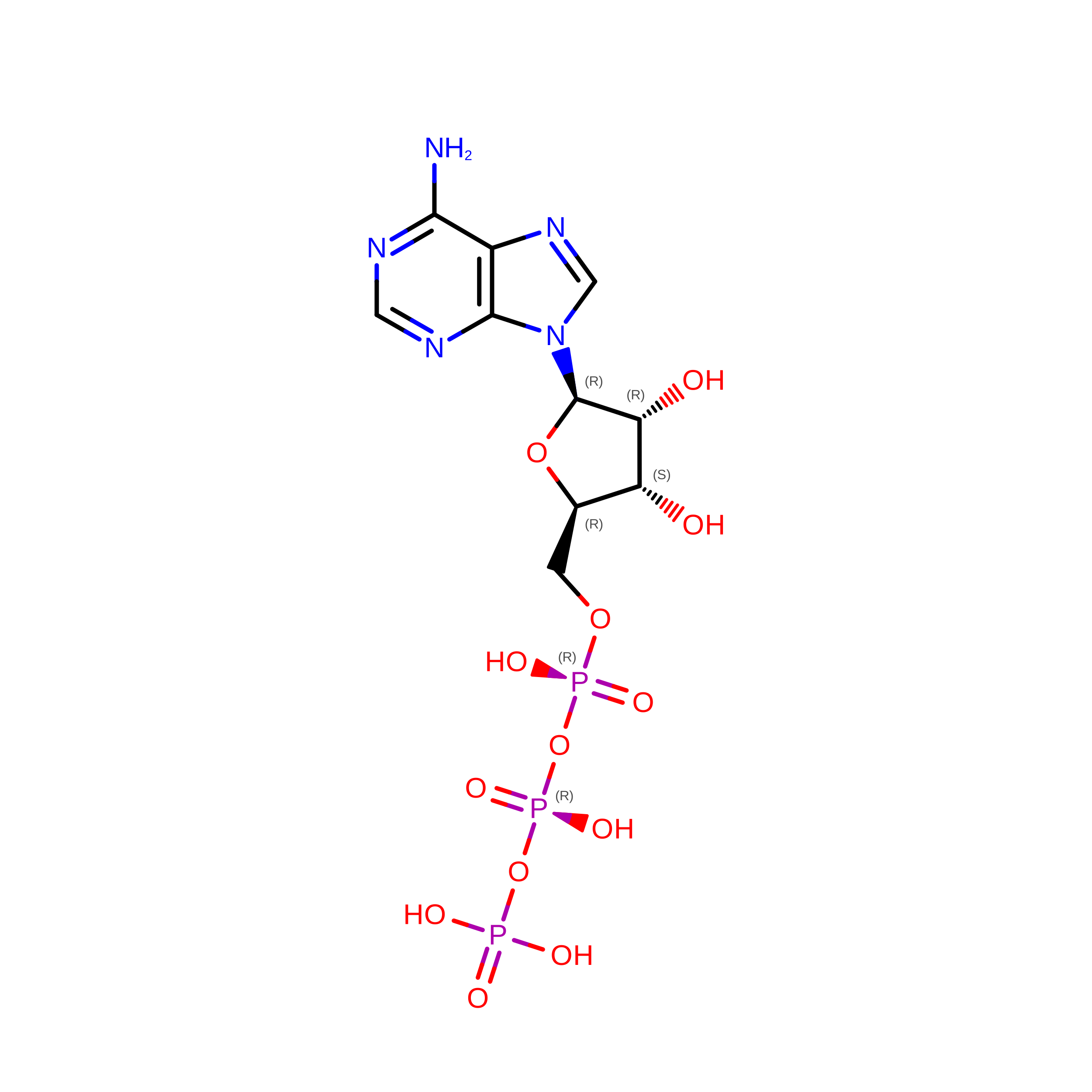
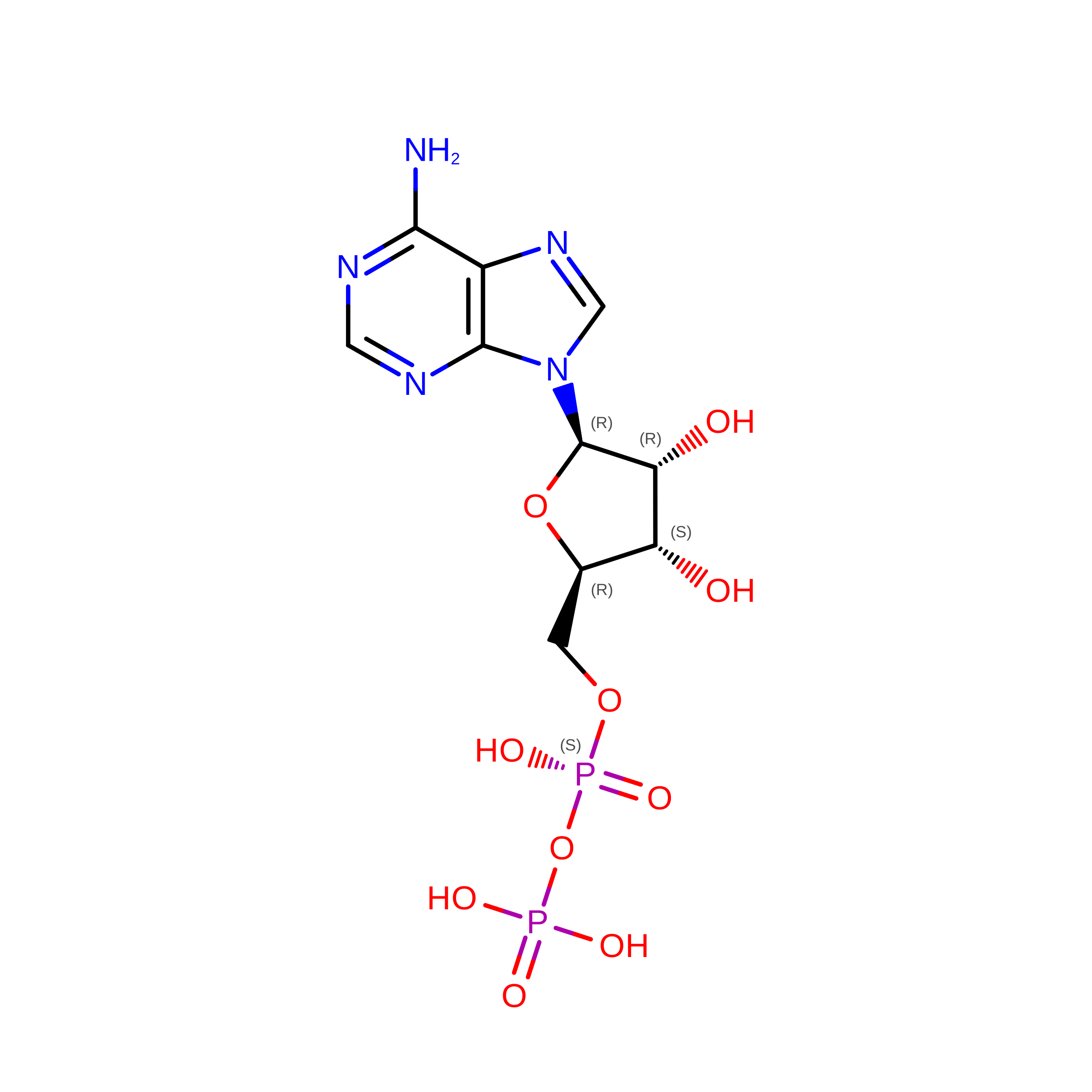
Earlier in its history, the Earth used to spin faster than it does today. How ancient organisms adapted to the short day/night cycles during that time remains unclear. In this study we reconstruct and analyse the ancient circadian clock system KaiABC (anKaiABC) of cyanobacteria that existed ~0.95 billion years ago, when the daily light/dark cycle was ~18 h-long. Compared to their contemporary counterparts, anKaiABC proteins had different structures and interactions. The kinase, phosphatase, and adenosine triphosphatase (ATPase) activities of anKaiC were lower, while the anKaiA and anKaiB proteins were less effective at regulating the KaiC/anKaiC phosphorylation status. We provide evidence indicating that the anKaiABC system does not endogenously oscillate, but it can be entrained by an 18 h-long light/dark cycle. A Synechococcus strain expressing ankaiABC genes exhibits better adaptation to 9-h light/9-h dark cycles (LD9:9) that mimic the ancient 18-h day/night cycles, whereas the kaiABC-expressing strain preferentially adapts to the LD12:12 contemporary conditions. These findings suggest that, despite its lack of self-sustaining circadian oscillation, the proto-circadian system may have mediated adaptation of ancient cyanobacteria to the 18 h-long light/dark cycles present 0.95 billion years ago.
- School of Life Sciences, Key Laboratory of Gene Engineering of the Ministry of Education, Sun Yat-sen University, Guangzhou, China.
Organizational Affiliation: