Download Mendeley
Evolutionary insights into the stereoselectivity of imine reductases based on ancestral sequence reconstruction.
Zhu, X.X., Zheng, W.Q., Xia, Z.W., Chen, X.R., Jin, T., Ding, X.W., Chen, F.F., Chen, Q., Xu, J.H., Kong, X.D., Zheng, G.W.(2024) Nat Commun 15: 10330-10330
- PubMed: 39609402 Search on PubMedSearch on PubMed Central
- DOI: https://doi.org/10.1038/s41467-024-54613-3
- Primary Citation Related Structures:
8HWY, 8JKU - PubMed Abstract:
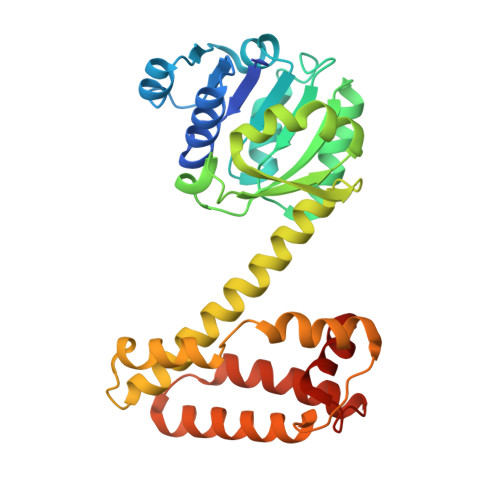
The stereoselectivity of enzymes plays a central role in asymmetric biocatalytic reactions, but there remains a dearth of evolution-driven biochemistry studies investigating the evolutionary trajectory of this vital property. Imine reductases (IREDs) are one such enzyme that possesses excellent stereoselectivity, and stereocomplementary members are pervasive in the family. However, the regulatory mechanism behind stereocomplementarity remains cryptic. Herein, we reconstruct a panel of active ancestral IREDs and trace the evolution of stereoselectivity from ancestors to extant IREDs. Combined with coevolution analysis, we reveal six historical mutations capable of recapitulating stereoselectivity evolution. An investigation of the mechanism with X-ray crystallography shows that they collectively reshape the substrate-binding pocket to regulate stereoselectivity inversion. In addition, we construct an empirical fitness landscape and discover that epistasis is prevalent in stereoselectivity evolution. Our findings emphasize the power of ASR in circumventing the time-consuming large-scale mutagenesis library screening for identifying mutations that change functions and support a Darwinian premise from a molecular perspective that the evolution of biological functions is a stepwise process.
- State Key Laboratory of Bioreactor Engineering, Shanghai Collaborative Innovation Center for Biomanufacturing, East China University of Science and Technology, Shanghai, China.
Organizational Affiliation: