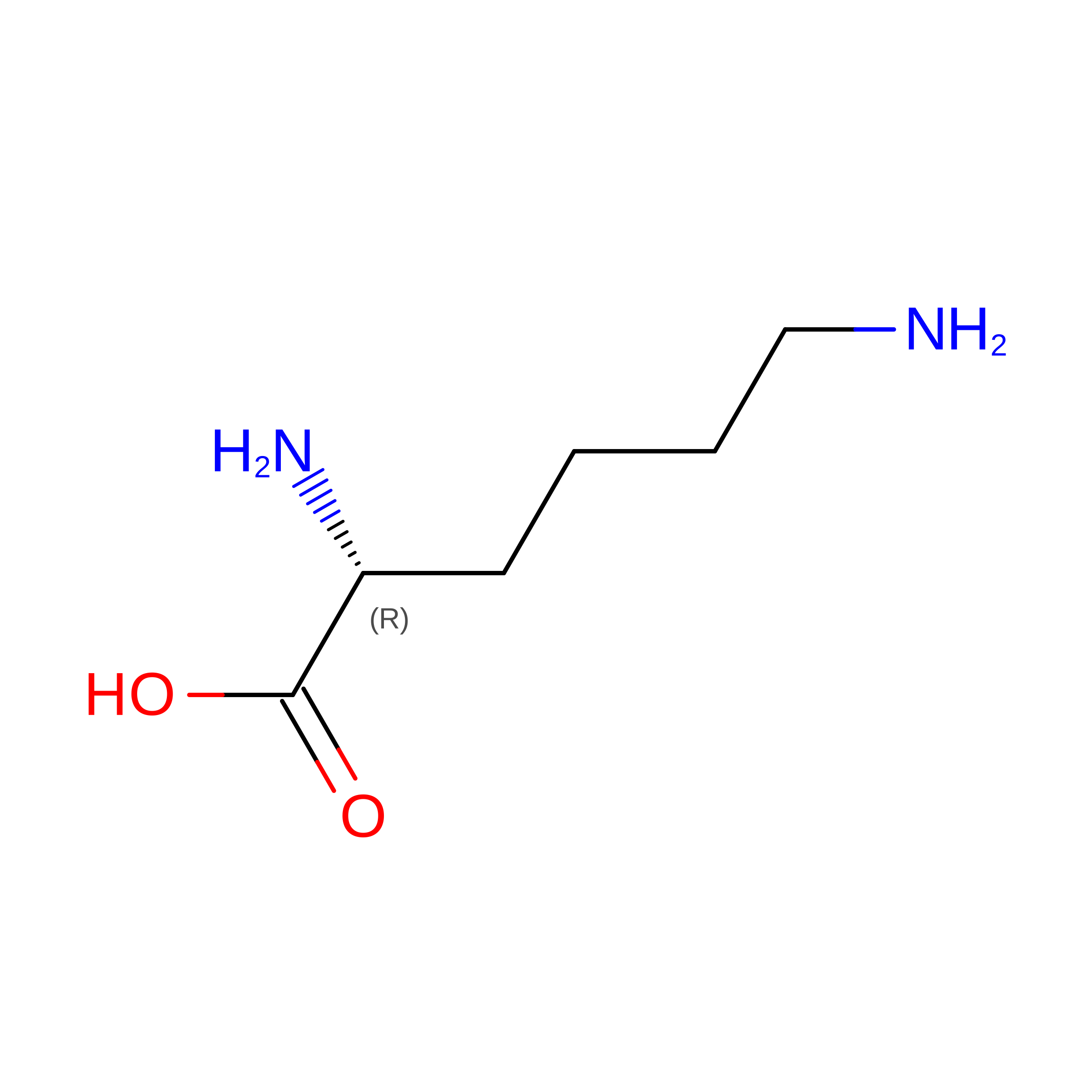
8ANR | pdb_00008anr

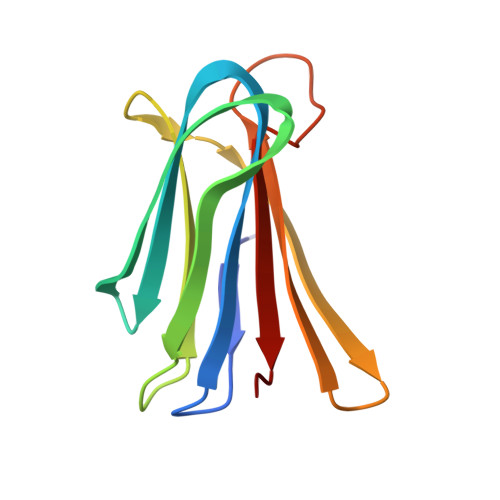
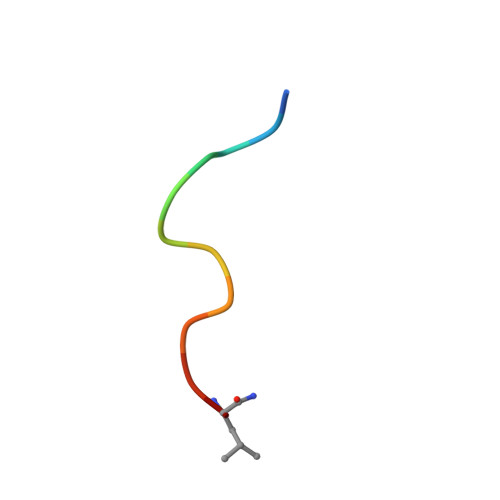
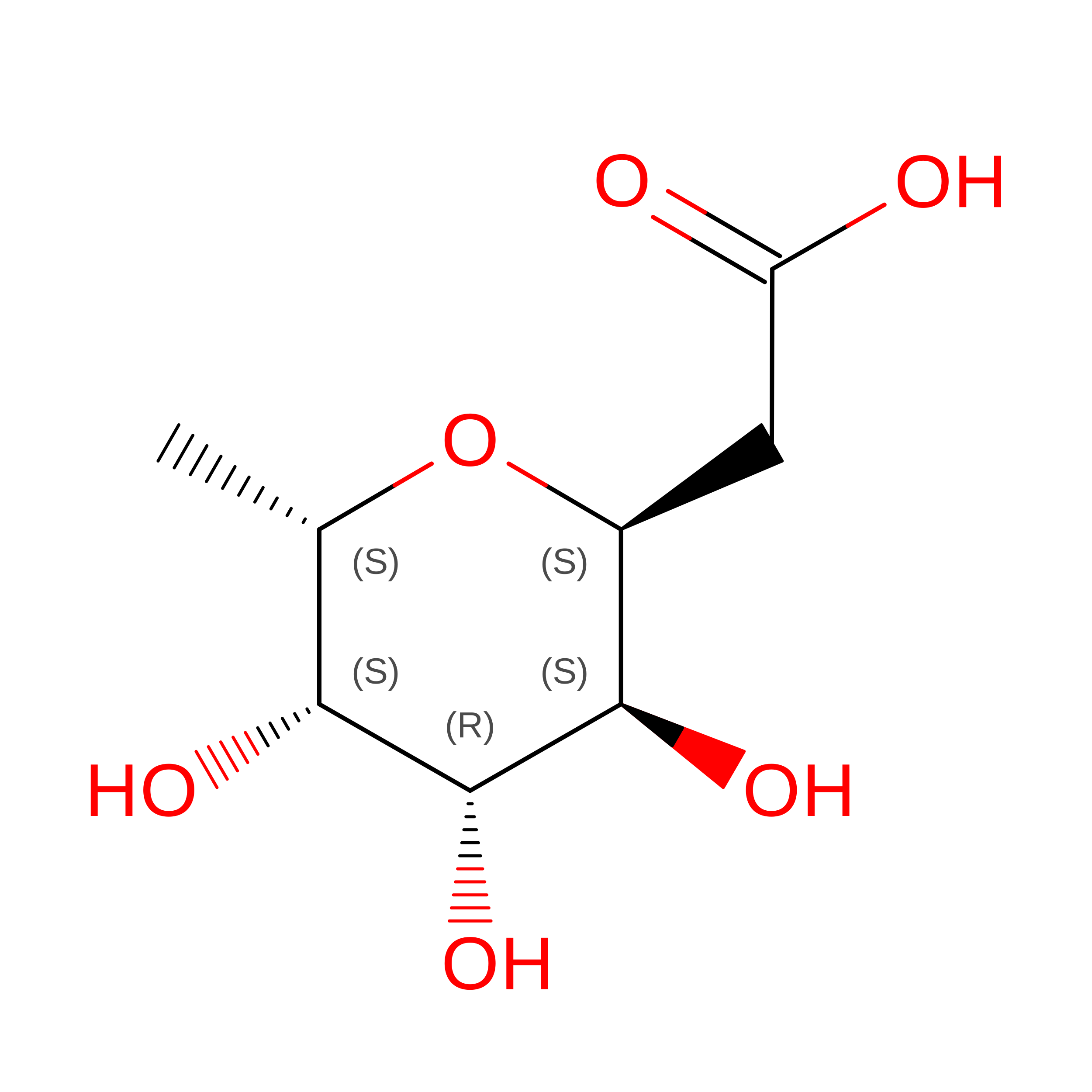
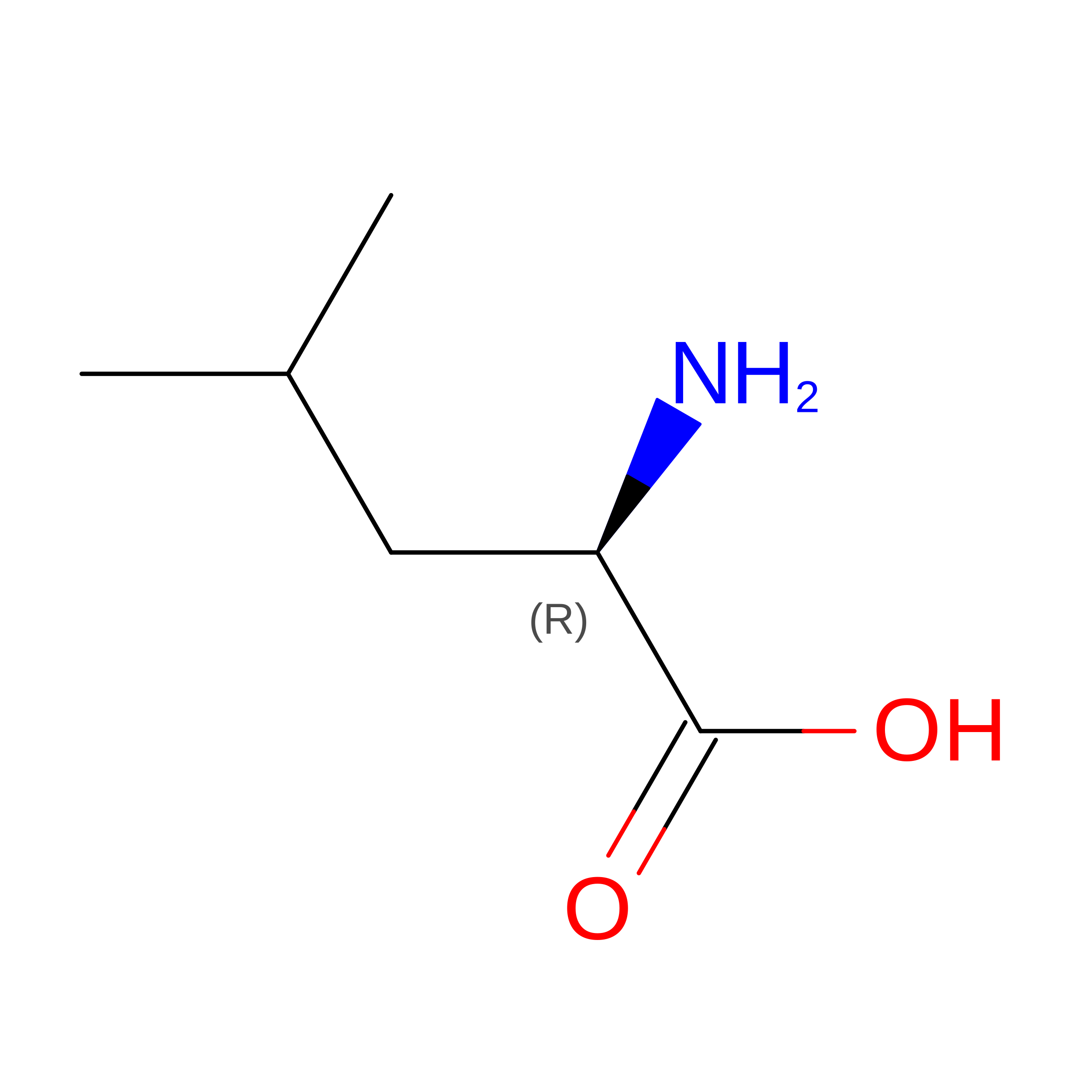
Fucosylated alternate chirality linear peptide FHP30 bound to the fucose binding lectin LecB PA-IIL from Pseudomonas aeruginosa at 1.6 Angstrom resolution.


Experimental Data Snapshot

  • Method: X-RAY DIFFRACTION
  • Resolution: 1.62 Å
  • R-Value Free: 
    0.183 (Depositor), 0.155 (DCC) 
  • R-Value Work: 
    0.148 (Depositor) 
  • R-Value Observed: 
    0.150 (Depositor) 

Starting Model: experimental
View more details

wwPDB Validation 3D Report Full Report

Validation slider image for 8ANR

Ligand Structure Quality Assessment 


This is version 1.4 of the entry. See complete history

Literature

To Fold or Not to Fold: Diastereomeric Optimization of an alpha-Helical Antimicrobial Peptide.

Personne, H.Paschoud, T.Fulgencio, S.Baeriswyl, S.Kohler, T.van Delden, C.Stocker, A.Javor, S.Reymond, J.L.

(2023) J Med Chem 66: 7570-7583

  • DOI: https://doi.org/10.1021/acs.jmedchem.3c00460
  • Primary Citation Related Structures: 
    8AN9, 8ANO, 8ANR, 8AOO

  • PubMed Abstract: 

    Membrane disruptive α-helical antimicrobial peptides (AMPs) offer an opportunity to address multidrug resistance; however, most AMPs are toxic and unstable in serum. These limitations can be partly overcome by introducing D-residues, which often confers protease resistance and reduces toxicity without affecting antibacterial activity, presumably due to lowered α-helicity. Here, we investigated 31 diastereomers of the α-helical AMP KKLLKLLKLLL. Three diastereomers containing two, three, and four D-residues showed increased antibacterial effects, comparable hemolysis, reduced toxicity against HEK293 cells, and excellent serum stability, while another diastereomer with four D-residues additionally displayed lower hemolysis. X-ray crystallography confirmed that high or low α-helicity as measured by circular dichroism indicated α-helical or disordered structures independently of the number of chirality switched residues. In contrast to previous reports, α-helicity across diastereomers correlated with both antibacterial activity and hemolysis and revealed a complex relationship between stereochemistry, activity, and toxicity, highlighting the potential of diastereomers for property optimization.


  • Organizational Affiliation
    • Department of Chemistry, Biochemistry and Pharmaceutical Sciences, University of Bern, Freiestrasse 3, CH-3012 Bern, Switzerland.

Macromolecule Content 

  • Total Structure Weight: 26.69 kDa 
  • Atom Count: 2,134 
  • Modeled Residue Count: 252 
  • Deposited Residue Count: 252 
  • Unique protein chains: 2

Macromolecules

Find similar proteins by:|  3D Structure
Entity ID: 1
MoleculeChains  Sequence LengthOrganismDetailsImage
Fucose-binding lectin PA-IIL
A, B
114Pseudomonas aeruginosa PAO1Mutation(s): 0 
Gene Names: lecBPA3361
UniProt
Find proteins for Q9HYN5 (Pseudomonas aeruginosa (strain ATCC 15692 / DSM 22644 / CIP 104116 / JCM 14847 / LMG 12228 / 1C / PRS 101 / PAO1))
Explore Q9HYN5 
Go to UniProtKB:  Q9HYN5
Entity Groups
Sequence Clusters30% Identity50% Identity70% Identity90% Identity95% Identity100% Identity
UniProt GroupQ9HYN5
Sequence Annotations
Expand
Reference Sequence
Find similar proteins by:  Sequence   |   3D Structure  
Entity ID: 2
MoleculeChains  Sequence LengthOrganismDetailsImage
Fucosylated mixed-chirality linear peptide FHP30
C, D
12synthetic constructMutation(s): 0 

Experimental Data & Validation

Experimental Data

  • Method: X-RAY DIFFRACTION
  • Resolution: 1.62 Å
  • R-Value Free:  0.183 (Depositor), 0.155 (DCC) 
  • R-Value Work:  0.148 (Depositor) 
  • R-Value Observed: 0.150 (Depositor) 
Space Group: P 42 21 2
Unit Cell:
Length ( Å )Angle ( ˚ )
a = 70.691α = 90
b = 70.691β = 90
c = 103.398γ = 90
Software Package:
Software NamePurpose
XDSdata reduction
XSCALEdata scaling
PHASERphasing
PHENIXrefinement
PDB_EXTRACTdata extraction

Structure Validation

View Full Validation Report


Ligand Structure Quality Assessment 


Entry History 

& Funding Information

Deposition Data


Funding OrganizationLocationGrant Number
European Research Council (ERC)European Union--
Swiss National Science FoundationSwitzerland--

Revision History  (Full details and data files)

  • Version 1.0: 2023-05-31
    Type: Initial release
  • Version 1.1: 2023-06-07
    Changes: Database references
  • Version 1.2: 2023-06-21
    Changes: Database references
  • Version 1.3: 2024-02-07
    Changes: Data collection, Refinement description
  • Version 1.4: 2024-11-06
    Changes: Structure summary