Download Mendeley
Major Cat Allergen Fel d 4: Structure and Identification of a Cross-Reactive IgE-Epitope-Containing Area.
Todorovic, N., Trifonova, D., Liu, Z., Curin, M., Schooltink, L., Sagmeister, T., Grininger, C., Kiss, R., Gottstein, N., Gesslbauer, B., Winkler, A., Pavkov-Keller, T., Karaulov, A., Valenta, R., Keller, W.(2025) Allergy
- PubMed: 41286560 Search on PubMed
- DOI: https://doi.org/10.1111/all.70146
- Primary Citation Related Structures:
8AMC, 9I2M - PubMed Abstract:
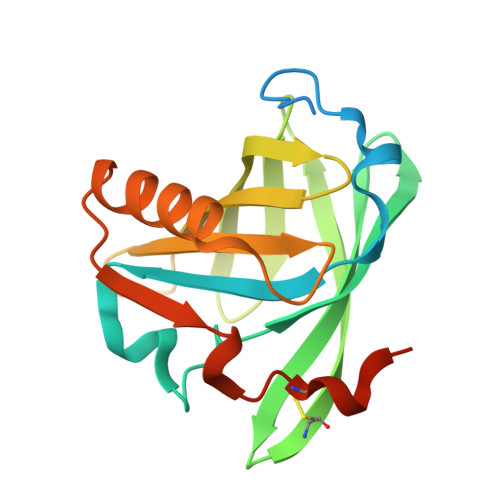
Allergic sensitization to cats and other furry animals is a major cause of asthma and allergic rhinitis in more than 200 million people worldwide. According to the frequency of IgE recognition, allergen-specific IgE levels, and allergenic activity, Fel d 4 is a major allergen in the cat (Felis domesticus). The lipocalin allergen Fel d 4 is highly homologous to dog (Can f 6) and major horse (Equ c 1) allergens. Accordingly, IgE cross-reactivity to these allergens contributes to polysensitization and allergic responses upon exposure to different animals. Fel d 4 was recombinantly produced in two systems, E. coli and Expi293F mammalian cells. Recombinant forms were characterized by circular dichroism and mass spectrometry. The Fel d 4 3D structure was determined using X-ray crystallography. Immunoreactivity, epitope analyses, and cross-reactive properties were assessed by ELISA and basophil release assays using allergic patients' sera. We reveal the rFel d 4 crystal structures and demonstrate that mammalian cells produce an N-glycosylated recombinant Fel d 4 allergen. The C-terminal regions of Fel d 4, Can f 6, and Equ c 1 constitute conformational IgE-epitope-containing areas responsible for cross-reactivity. Uncovering the IgE-binding sites of Fel d 4 and cross-reactive allergens contributes to future rational design of active and passive allergen-specific treatment forms.
- Institute of Molecular Biosciences, University of Graz, Graz, Austria.
Organizational Affiliation: