7ZGC | pdb_00007zgc

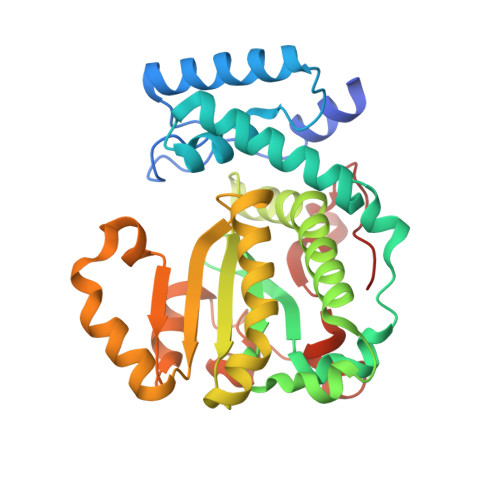
Structure of yeast Sec14p with NPPM481


Experimental Data Snapshot

  • Method: X-RAY DIFFRACTION
  • Resolution: 2.24 Å
  • R-Value Free: 
    0.211 (Depositor), 0.231 (DCC) 
  • R-Value Work: 
    0.184 (Depositor), 0.227 (DCC) 
  • R-Value Observed: 
    0.186 (Depositor) 

Starting Model: experimental
View more details

wwPDB Validation 3D Report Full Report

Validation slider image for 7ZGC

Ligand Structure Quality Assessment 


This is version 1.2 of the entry. See complete history

Literature

Mechanisms by which small molecules of diverse chemotypes arrest Sec14 lipid transfer activity.

Chen, X.R.Poudel, L.Hong, Z.Johnen, P.Katti, S.Tripathi, A.Nile, A.H.Green, S.M.Khan, D.Schaaf, G.Bono, F.Bankaitis, V.A.Igumenova, T.I.

(2023) J Biological Chem 299: 102861-102861

  • DOI: https://doi.org/10.1016/j.jbc.2022.102861
  • Primary Citation Related Structures: 
    7ZG9, 7ZGA, 7ZGB, 7ZGC, 7ZGD

  • PubMed Abstract: 

    Phosphatidylinositol (PtdIns) transfer proteins (PITPs) enhance the activities of PtdIns 4-OH kinases that generate signaling pools of PtdIns-4-phosphate. In that capacity, PITPs serve as key regulators of lipid signaling in eukaryotic cells. Although the PITP phospholipid exchange cycle is the engine that stimulates PtdIns 4-OH kinase activities, the underlying mechanism is not understood. Herein, we apply an integrative structural biology approach to investigate interactions of the yeast PITP Sec14 with small-molecule inhibitors (SMIs) of its phospholipid exchange cycle. Using a combination of X-ray crystallography, solution NMR spectroscopy, and atomistic MD simulations, we dissect how SMIs compete with native Sec14 phospholipid ligands and arrest phospholipid exchange. Moreover, as Sec14 PITPs represent new targets for the development of next-generation antifungal drugs, the structures of Sec14 bound to SMIs of diverse chemotypes reported in this study will provide critical information required for future structure-based design of next-generation lead compounds directed against Sec14 PITPs of virulent fungi.


  • Organizational Affiliation
    • Department of Biochemistry & Biophysics, Texas A&M University, College Station, Texas USA.

Macromolecule Content 

  • Total Structure Weight: 36.51 kDa 
  • Atom Count: 2,389 
  • Modeled Residue Count: 298 
  • Deposited Residue Count: 312 
  • Unique protein chains: 1

Macromolecules

Find similar proteins by:|  3D Structure
Entity ID: 1
MoleculeChains  Sequence LengthOrganismDetailsImage
SEC14 cytosolic factor312Saccharomyces cerevisiae S288CMutation(s): 0 
Gene Names: SEC14PIT1YMR079WYM9582.04
Membrane Entity: Yes 
UniProt
Find proteins for P24280 (Saccharomyces cerevisiae (strain ATCC 204508 / S288c))
Explore P24280 
Go to UniProtKB:  P24280
Entity Groups
Sequence Clusters30% Identity50% Identity70% Identity90% Identity95% Identity100% Identity
UniProt GroupP24280
Sequence Annotations
Expand
Reference Sequence

Small Molecules

Ligands 2 Unique
IDChains Name / Formula / InChI Key2D Diagram3D Interactions
IUO
(Subject of Investigation/LOI)

Query on IUO


Download:Ideal Coordinates CCD File
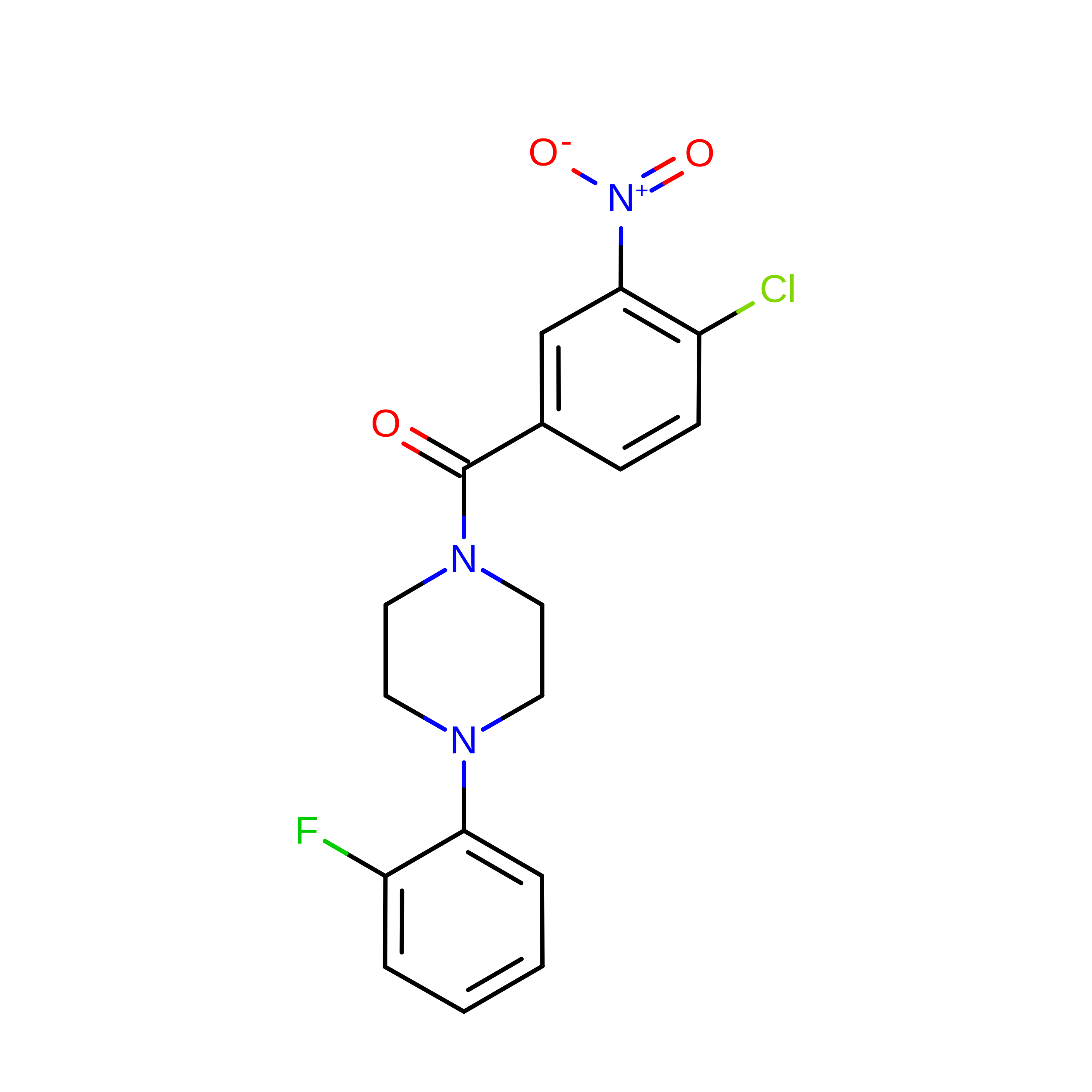
B [auth A](4-chloranyl-3-nitro-phenyl)-[4-(2-fluorophenyl)piperazin-1-yl]methanone
C17 H15 Cl F N3 O3
LSPJXCGEFJDMHA-UHFFFAOYSA-N
PO4

Query on PO4


Download:Ideal Coordinates CCD File
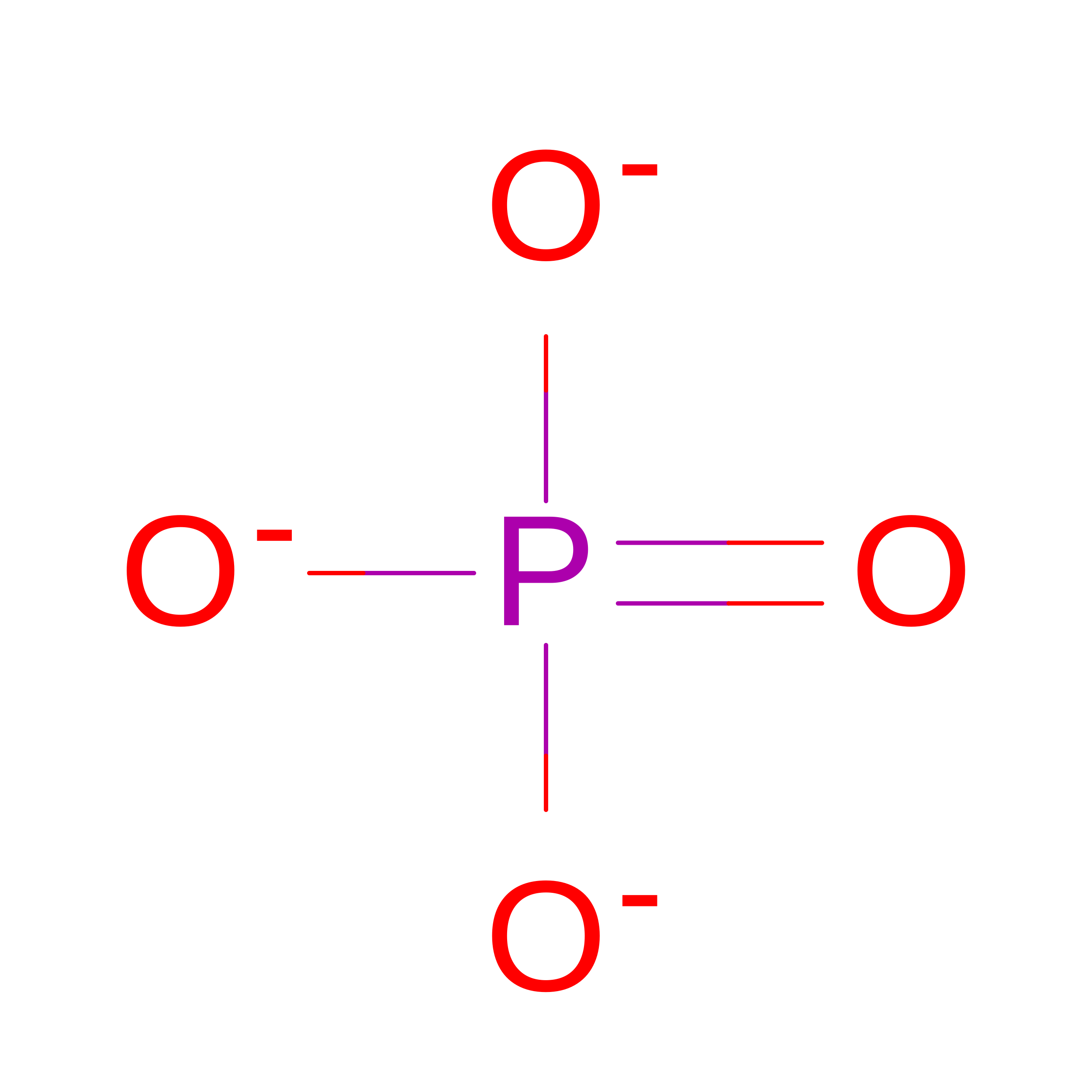
C [auth A]PHOSPHATE ION
O4 P
NBIIXXVUZAFLBC-UHFFFAOYSA-K

Experimental Data & Validation

Experimental Data

  • Method: X-RAY DIFFRACTION
  • Resolution: 2.24 Å
  • R-Value Free:  0.211 (Depositor), 0.231 (DCC) 
  • R-Value Work:  0.184 (Depositor), 0.227 (DCC) 
  • R-Value Observed: 0.186 (Depositor) 
Space Group: P 32 2 1
Unit Cell:
Length ( Å )Angle ( ˚ )
a = 86.217α = 90
b = 86.217β = 90
c = 109.657γ = 120
Software Package:
Software NamePurpose
PHENIXrefinement
XDSdata reduction
XDSdata scaling
PHASERphasing

Structure Validation

View Full Validation Report


Ligand Structure Quality Assessment 


Entry History 

& Funding Information

Deposition Data


Funding OrganizationLocationGrant Number
Not funded--

Revision History  (Full details and data files)

  • Version 1.0: 2023-01-25
    Type: Initial release
  • Version 1.1: 2023-02-08
    Changes: Database references
  • Version 1.2: 2024-02-07
    Changes: Data collection, Refinement description