7SP9 | pdb_00007sp9

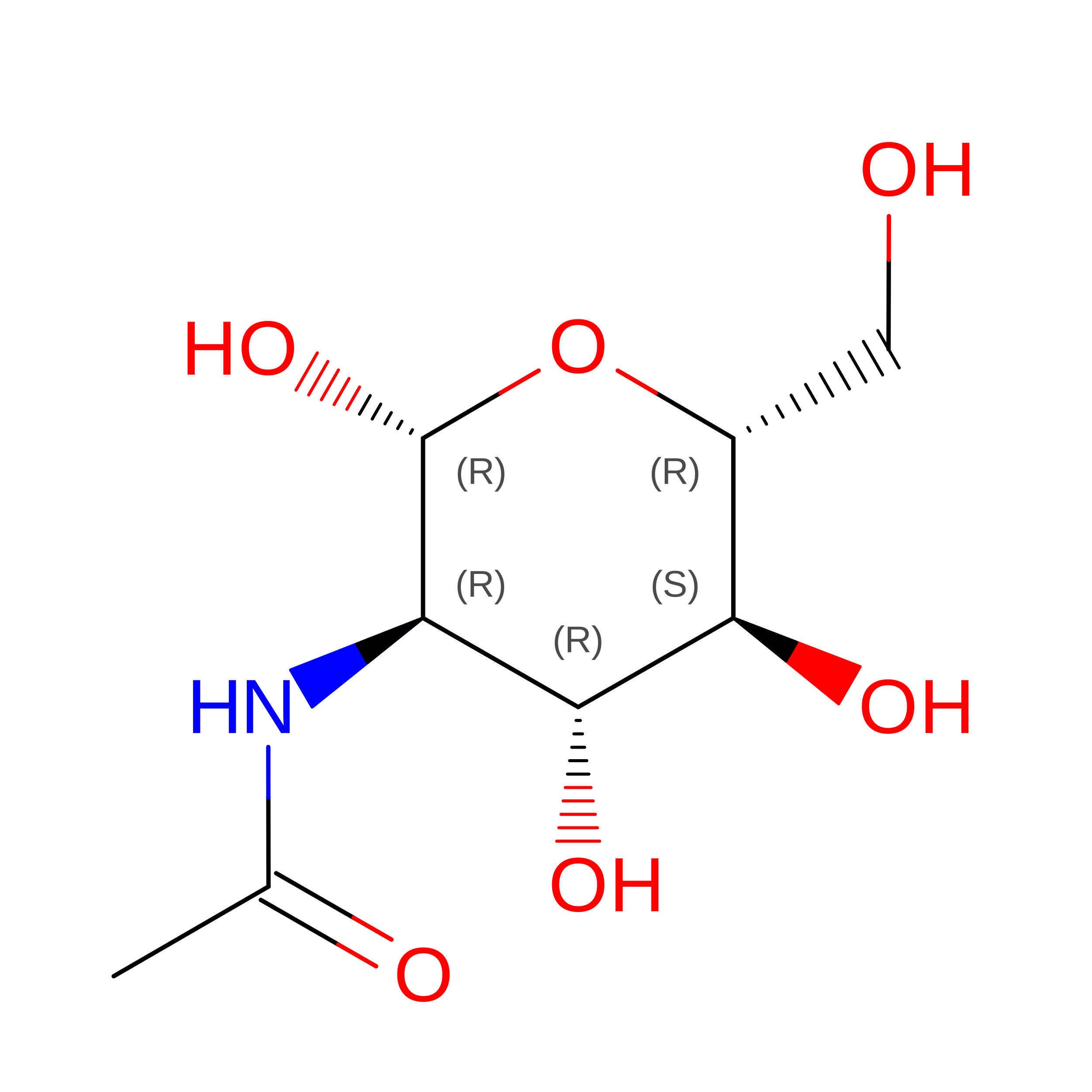
Chlorella virus Hyaluronan Synthase in the GlcNAc-primed channel-closed state


Experimental Data Snapshot

  • Method: ELECTRON MICROSCOPY
  • Resolution: 2.90 Å
  • Aggregation State: PARTICLE 
  • Reconstruction Method: SINGLE PARTICLE 

wwPDB Validation 3D Report Full Report

Validation slider image for 7SP9

This is version 1.3 of the entry. See complete history

Literature

Structure, substrate recognition and initiation of hyaluronan synthase.

Maloney, F.P.Kuklewicz, J.Corey, R.A.Bi, Y.Ho, R.Mateusiak, L.Pardon, E.Steyaert, J.Stansfeld, P.J.Zimmer, J.

(2022) Nature 604: 195-201

  • DOI: https://doi.org/10.1038/s41586-022-04534-2
  • Primary Citation Related Structures: 
    7SP6, 7SP7, 7SP8, 7SP9, 7SPA

  • PubMed Abstract: 

    Hyaluronan is an acidic heteropolysaccharide comprising alternating N-acetylglucosamine and glucuronic acid sugars that is ubiquitously expressed in the vertebrate extracellular matrix 1 . The high-molecular-mass polymer modulates essential physiological processes in health and disease, including cell differentiation, tissue homeostasis and angiogenesis 2 . Hyaluronan is synthesized by a membrane-embedded processive glycosyltransferase, hyaluronan synthase (HAS), which catalyses the synthesis and membrane translocation of hyaluronan from uridine diphosphate-activated precursors 3,4 . Here we describe five cryo-electron microscopy structures of a viral HAS homologue at different states during substrate binding and initiation of polymer synthesis. Combined with biochemical analyses and molecular dynamics simulations, our data reveal how HAS selects its substrates, hydrolyses the first substrate to prime the synthesis reaction, opens a hyaluronan-conducting transmembrane channel, ensures alternating substrate polymerization and coordinates hyaluronan inside its transmembrane pore. Our research suggests a detailed model for the formation of an acidic extracellular heteropolysaccharide and provides insights into the biosynthesis of one of the most abundant and essential glycosaminoglycans in the human body.


  • Organizational Affiliation
    • Department of Molecular Physiology and Biological Physics, University of Virginia School of Medicine, Charlottesville, VA, USA.

Macromolecule Content 

  • Total Structure Weight: 96.09 kDa 
  • Atom Count: 5,966 
  • Modeled Residue Count: 737 
  • Deposited Residue Count: 841 
  • Unique protein chains: 3

Macromolecules

Find similar proteins by:|  3D Structure
Entity ID: 1
MoleculeChains  Sequence LengthOrganismDetailsImage
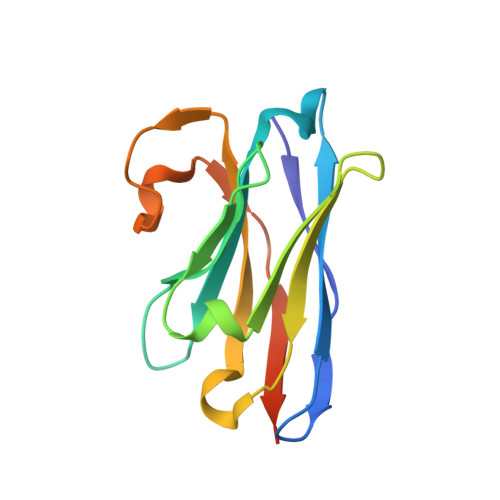
Nanobody 872A [auth B]134Lama glamaMutation(s): 0 
Find similar proteins by:|  3D Structure
Entity ID: 2
MoleculeChains  Sequence LengthOrganismDetailsImage
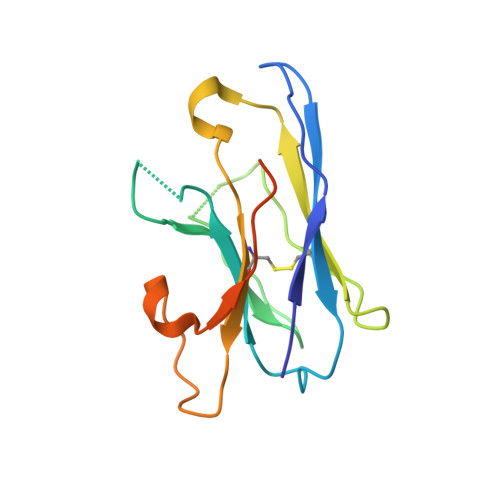
Nanobody 881B [auth C]137Lama glamaMutation(s): 0 
Find similar proteins by:|  3D Structure
Entity ID: 3
MoleculeChains  Sequence LengthOrganismDetailsImage
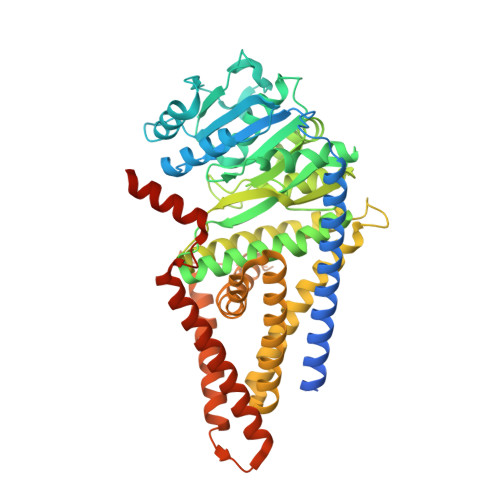
Hyaluronan synthaseC [auth A]570Paramecium bursaria Chlorella virus CZ-2Mutation(s): 1 
Gene Names: CZ-2_118RPBCVCZ2_118R
UniProt
Find proteins for A0ACD6B8N5 (Paramecium bursaria Chlorella virus CZ-2)
Explore A0ACD6B8N5 
Go to UniProtKB:  A0ACD6B8N5
Entity Groups
Sequence Clusters30% Identity50% Identity70% Identity90% Identity95% Identity100% Identity
UniProt GroupA0ACD6B8N5
Sequence Annotations
Expand
Reference Sequence

Small Molecules

Experimental Data & Validation

Experimental Data

  • Method: ELECTRON MICROSCOPY
  • Resolution: 2.90 Å
  • Aggregation State: PARTICLE 
  • Reconstruction Method: SINGLE PARTICLE 
EM Software:
TaskSoftware PackageVersion
RECONSTRUCTIONcryoSPARC3.1

Structure Validation

View Full Validation Report


Entry History 

& Funding Information

Deposition Data


Funding OrganizationLocationGrant Number
National Institutes of Health/National Institute Of Allergy and Infectious Diseases (NIH/NIAID)United StatesR21AI148853

Revision History  (Full details and data files)

  • Version 1.0: 2022-04-06
    Type: Initial release
  • Version 1.1: 2022-04-13
    Changes: Database references
  • Version 1.2: 2022-04-20
    Changes: Database references
  • Version 1.3: 2024-11-20
    Changes: Data collection, Structure summary