7SK7 | pdb_00007sk7

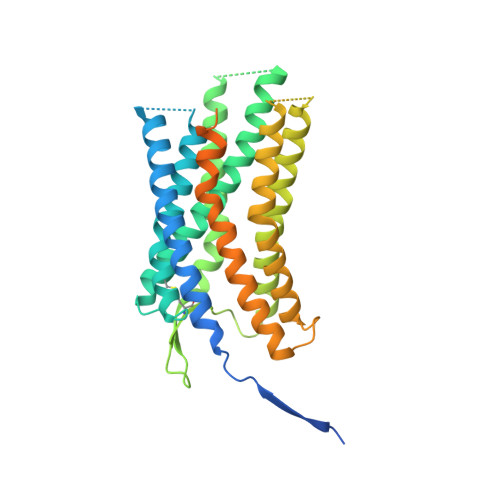
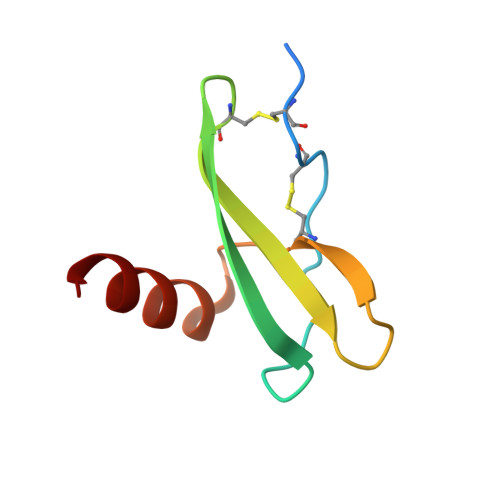
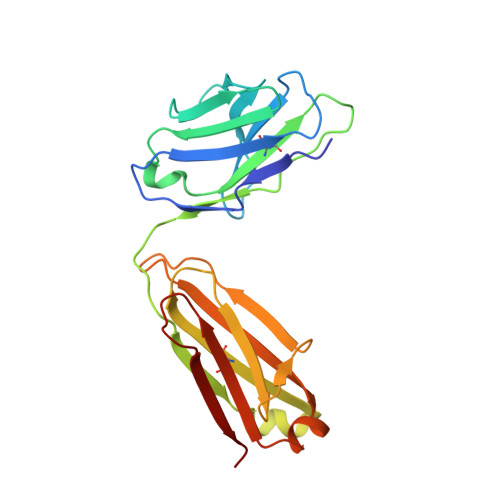
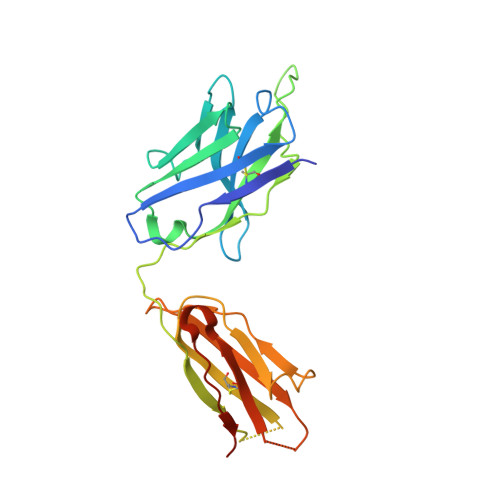
Cryo-EM structure of human ACKR3 in complex with CXCL12, a small molecule partial agonist CCX662, and an extracellular Fab


Experimental Data Snapshot

  • Method: ELECTRON MICROSCOPY
  • Resolution: 3.30 Å
  • Aggregation State: PARTICLE 
  • Reconstruction Method: SINGLE PARTICLE 

wwPDB Validation 3D Report Full Report

Validation slider image for 7SK7

This is version 1.1 of the entry. See complete history. 

Literature

Structures of atypical chemokine receptor 3 reveal the basis for its promiscuity and signaling bias.

Yen, Y.C., Schafer, C.T., Gustavsson, M., Eberle, S.A., Dominik, P.K., Deneka, D., Zhang, P., Schall, T.J., Kossiakoff, A.A., Tesmer, J.J.G., Handel, T.M.

(2022) Sci Adv 8: eabn8063-eabn8063

  • DOI: https://doi.org/10.1126/sciadv.abn8063
  • Primary Citation Related Structures: 
    7SK3, 7SK4, 7SK5, 7SK6, 7SK7, 7SK8, 7SK9

  • PubMed Abstract: 

    Both CXC chemokine receptor 4 (CXCR4) and atypical chemokine receptor 3 (ACKR3) are activated by the chemokine CXCL12 yet evoke distinct cellular responses. CXCR4 is a canonical G protein-coupled receptor (GPCR), whereas ACKR3 is intrinsically biased for arrestin. The molecular basis for this difference is not understood. Here, we describe cryo-EM structures of ACKR3 in complex with CXCL12, a more potent CXCL12 variant, and a small-molecule agonist. The bound chemokines adopt an unexpected pose relative to those established for CXCR4 and observed in other receptor-chemokine complexes. Along with functional studies, these structures provide insight into the ligand-binding promiscuity of ACKR3, why it fails to couple to G proteins, and its bias toward β-arrestin. The results lay the groundwork for understanding the physiological interplay of ACKR3 with other GPCRs.


  • Organizational Affiliation: 
    • Department of Biological Sciences, Purdue University, West Lafayette, IN, USA.

Macromolecule Content 

  • Total Structure Weight: 116.49 kDa 
  • Atom Count: 6,805 
  • Modeled Residue Count: 854 
  • Deposited Residue Count: 1,035 
  • Unique protein chains: 5

Macromolecules

Find similar proteins by:|  3D Structure
Entity ID: 1
MoleculeChains  Sequence LengthOrganismDetailsImage
Atypical chemokine receptor 3393Homo sapiensMutation(s): 0 
Gene Names: ACKR3, CMKOR1, CXCR7, GPR159, RDC1
Membrane Entity: Yes 
UniProt & NIH Common Fund Data Resources
Find proteins for P25106 (Homo sapiens)
Explore P25106 
Go to UniProtKB:  P25106
PHAROS:  P25106
GTEx:  ENSG00000144476 
Entity Groups
Sequence Clusters30% Identity50% Identity70% Identity90% Identity95% Identity100% Identity
UniProt GroupP25106
Sequence Annotations
Expand
Reference Sequence
Find similar proteins by:|  3D Structure
Entity ID: 2
MoleculeChains  Sequence LengthOrganismDetailsImage
Stromal cell-derived factor 168Homo sapiensMutation(s): 0 
Gene Names: CXCL12, SDF1, SDF1A, SDF1B
Membrane Entity: Yes 
UniProt & NIH Common Fund Data Resources
Find proteins for P48061 (Homo sapiens)
Explore P48061 
Go to UniProtKB:  P48061
PHAROS:  P48061
GTEx:  ENSG00000107562 
Entity Groups
Sequence Clusters30% Identity50% Identity70% Identity90% Identity95% Identity100% Identity
UniProt GroupP48061
Sequence Annotations
Expand
Reference Sequence
Find similar proteins by:|  3D Structure
Entity ID: 3
MoleculeChains  Sequence LengthOrganismDetailsImage
CID25 Fab light chain215Homo sapiensMutation(s): 0 
Entity Groups
Sequence Clusters30% Identity50% Identity70% Identity90% Identity95% Identity100% Identity
Sequence Annotations
Expand
Reference Sequence
Find similar proteins by:|  3D Structure
Entity ID: 4
MoleculeChains  Sequence LengthOrganismDetailsImage
CID25 Fab heavy chain236Homo sapiensMutation(s): 0 
Entity Groups
Sequence Clusters30% Identity50% Identity70% Identity90% Identity95% Identity100% Identity
Sequence Annotations
Expand
Reference Sequence
Find similar proteins by:|  3D Structure
Entity ID: 5
MoleculeChains  Sequence LengthOrganismDetailsImage
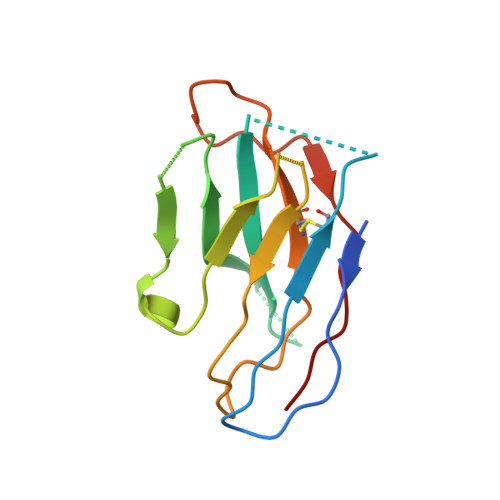
Anti-Fab nanobodyE [auth K]123Lama glamaMutation(s): 0 
Entity Groups
Sequence Clusters30% Identity50% Identity70% Identity90% Identity95% Identity100% Identity
Sequence Annotations
Expand
Reference Sequence

Small Molecules

Ligands 2 Unique
IDChains Name / Formula / InChI Key2D Diagram3D Interactions
GJ9
(Subject of Investigation/LOI)

Query on GJ9


Download:Ideal Coordinates CCD File
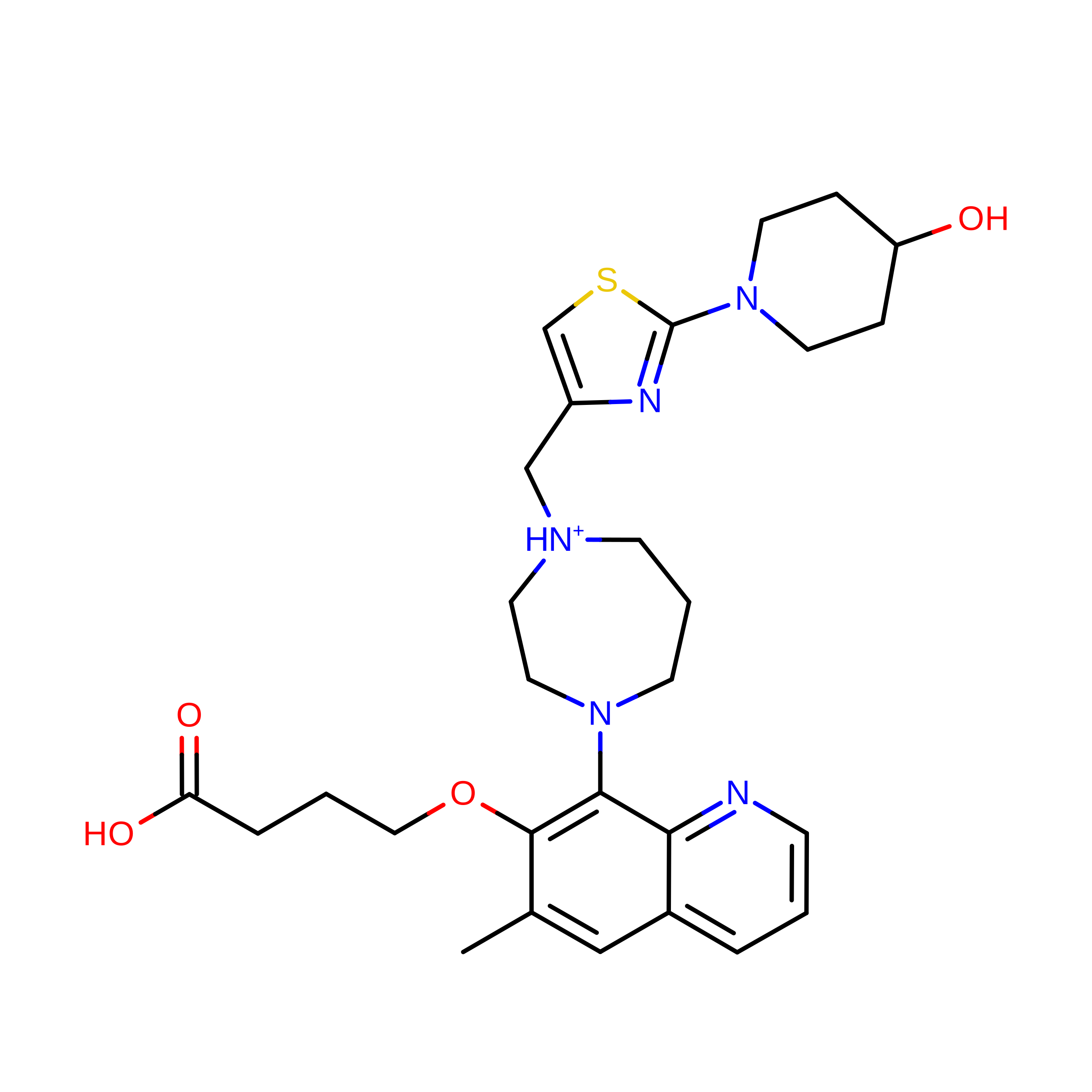
F [auth A](1R)-4-[7-(3-carboxypropoxy)-6-methylquinolin-8-yl]-1-{[2-(4-hydroxypiperidin-1-yl)-1,3-thiazol-4-yl]methyl}-1,4-diazepan-1-ium
C28 H38 N5 O4 S
OROWGUJESLHVQL-UHFFFAOYSA-O
CLR
(Subject of Investigation/LOI)

Query on CLR


Download:Ideal Coordinates CCD File
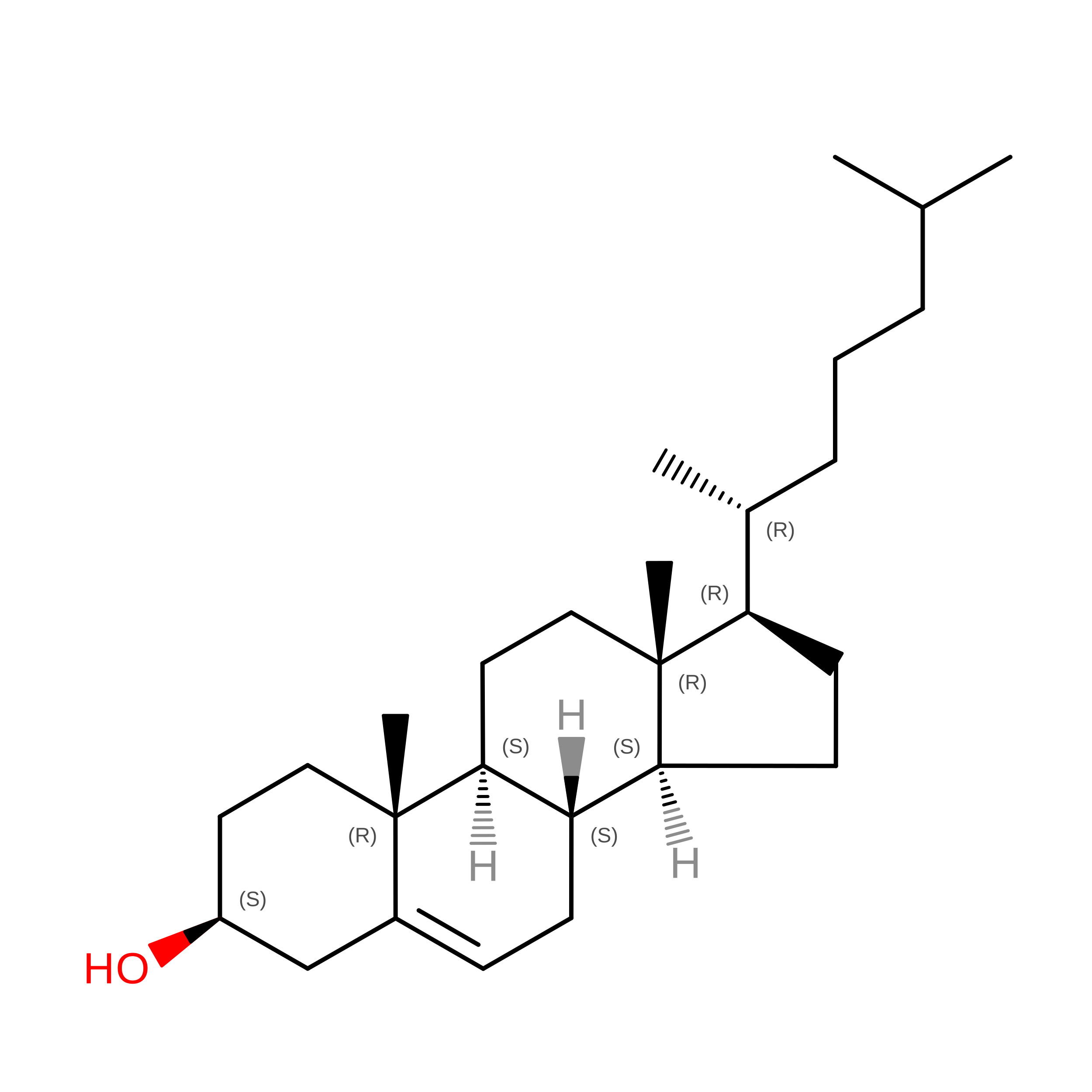
G [auth A]CHOLESTEROL
C27 H46 O
HVYWMOMLDIMFJA-DPAQBDIFSA-N

Experimental Data & Validation

Experimental Data

  • Method: ELECTRON MICROSCOPY
  • Resolution: 3.30 Å
  • Aggregation State: PARTICLE 
  • Reconstruction Method: SINGLE PARTICLE 
EM Software:
TaskSoftware PackageVersion
RECONSTRUCTIONcryoSPARC

Structure Validation

View Full Validation Report


Entry History 

& Funding Information

Deposition Data


Funding OrganizationLocationGrant Number
National Institutes of Health/National Cancer Institute (NIH/NCI)United StatesCA254402
National Institutes of Health/National Institute Of Allergy and Infectious Diseases (NIH/NIAID)United StatesAI161880
National Institutes of Health/National Cancer Institute (NIH/NCI)United StatesCA221289
National Institutes of Health/National Heart, Lung, and Blood Institute (NIH/NHLBI)United StatesHL071818
National Institutes of Health/National Cancer Institute (NIH/NCI)United StatesCA023168
National Institutes of Health/National Institute of General Medical Sciences (NIH/NIGMS)United StatesGM137505
National Institutes of Health/National Institute of General Medical Sciences (NIH/NIGMS)United StatesGM117372

Revision History  (Full details and data files)

  • Version 1.0: 2022-07-27
    Type: Initial release
  • Version 1.1: 2024-11-20
    Changes: Data collection, Structure summary