Download Mendeley
Structures of the Type IX Secretion/Gliding Motility Motor from across the Phylum Bacteroidetes.
Hennell James, R., Deme, J.C., Hunter, A., Berks, B.C., Lea, S.M.(2022) mBio 13: e0026722-e0026722
- PubMed: 35446127 Search on PubMedSearch on PubMed Central
- DOI: https://doi.org/10.1128/mbio.00267-22
- Primary Citation Related Structures:
7SAT, 7SAU, 7SAX, 7SAZ, 7SB2 - PubMed Abstract:
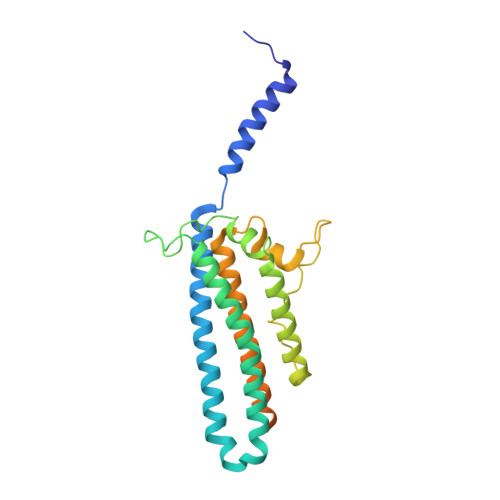
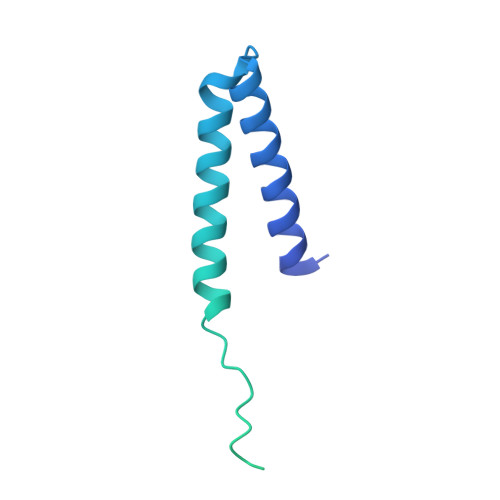
Gliding motility using cell surface adhesins, and export of proteins by the type IX secretion system (T9SS) are two phylum-specific features of the Bacteroidetes. Both of these processes are energized by the GldLM motor complex, which transduces the proton motive force at the inner membrane into mechanical work at the outer membrane. We previously used cryo-electron microscopy to solve the structure of the GldLM motor core from Flavobacterium johnsoniae at 3.9-Å resolution (R. Hennell James, J. C. Deme, A. Kjaer, F. Alcock, et al., Nat Microbiol 6:221-233, 2021, https://dx.doi.org/10.1038/s41564-020-00823-6). Here, we present structures of homologous complexes from a range of pathogenic and environmental Bacteroidetes species at up to 3.0-Å resolution. These structures show that the architecture of the GldLM motor core is conserved across the Bacteroidetes phylum, although there are species-specific differences at the N terminus of GldL. The resolution improvements reveal a cage-like structure that ties together the membrane-proximal cytoplasmic region of GldL and influences gliding function. These findings add detail to our structural understanding of bacterial ion-driven motors that drive the T9SS and gliding motility. IMPORTANCE Many bacteria in the Bacteroidetes phylum use the type IX secretion system to secrete proteins across their outer membrane. Most of these bacteria can also glide across surfaces using adhesin proteins that are propelled across the cell surface. Both secretion and gliding motility are driven by the GldLM protein complex, which forms a nanoscale electrochemical motor. We used cryo-electron microscopy to study the structure of the GldLM protein complex from different species, including the human pathogens Porphyromonas gingivalis and Capnocytophaga canimorsus. The organization of the motor is conserved across species, but we find species-specific structural differences and resolve motor features at higher resolution. This work improves our understanding of the type IX secretion system, which is a virulence determinant in human and animal diseases.
- Sir William Dunn School of Pathology, University of Oxfordgrid.4991.5, Oxford, United Kingdom.
Organizational Affiliation: