7OOL | pdb_00007ool

Crystal structure of a Candidatus photodesmus katoptron thioredoxin chimera containing an ancestral loop


Experimental Data Snapshot

  • Method: X-RAY DIFFRACTION
  • Resolution: 2.85 Å
  • R-Value Free: 
    0.287 (Depositor), 0.289 (DCC) 
  • R-Value Work: 
    0.261 (Depositor), 0.264 (DCC) 
  • R-Value Observed: 
    0.263 (Depositor) 

Starting Model: experimental
View more details

wwPDB Validation 3D Report Full Report

Validation slider image for 7OOL

This is version 1.3 of the entry. See complete history

Literature

Combining Ancestral Reconstruction with Folding-Landscape Simulations to Engineer Heterologous Protein Expression.

Gamiz-Arco, G.Risso, V.A.Gaucher, E.A.Gavira, J.A.Naganathan, A.N.Ibarra-Molero, B.Sanchez-Ruiz, J.M.

(2021) J Mol Biology 433: 167321-167321

  • DOI: https://doi.org/10.1016/j.jmb.2021.167321
  • Primary Citation Related Structures: 
    7OOL

  • PubMed Abstract: 

    Obligate symbionts typically exhibit high evolutionary rates. Consequently, their proteins may differ considerably from their modern and ancestral homologs in terms of both sequence and properties, thus providing excellent models to study protein evolution. Also, obligate symbionts are challenging to culture in the lab and proteins from uncultured organisms must be produced in heterologous hosts using recombinant DNA technology. Obligate symbionts thus replicate a fundamental scenario of metagenomics studies aimed at the functional characterization and biotechnological exploitation of proteins from the bacteria in soil. Here, we use the thioredoxin from Candidatus Photodesmus katoptron, an uncultured symbiont of flashlight fish, to explore evolutionary and engineering aspects of protein folding in heterologous hosts. The symbiont protein is a standard thioredoxin in terms of 3D-structure, stability and redox activity. However, its folding outside the original host is severely impaired, as shown by a very slow refolding in vitro and an inefficient expression in E. coli that leads mostly to insoluble protein. By contrast, resurrected Precambrian thioredoxins express efficiently in E. coli, plausibly reflecting an ancient adaptation to unassisted folding. We have used a statistical-mechanical model of the folding landscape to guide back-to-ancestor engineering of the symbiont protein. Remarkably, we find that the efficiency of heterologous expression correlates with the in vitro (i.e., unassisted) folding rate and that the ancestral expression efficiency can be achieved with only 1-2 back-to-ancestor replacements. These results demonstrate a minimal-perturbation, sequence-engineering approach to rescue inefficient heterologous expression which may potentially be useful in metagenomics efforts targeting recent adaptations.


  • Organizational Affiliation
    • Departamento de Quimica Fisica, Facultad de Ciencias, Unidad de Excelencia de Quimica Aplicada a Biomedicina y Medioambiente (UEQ), Universidad de Granada, 18071 Granada, Spain.

Macromolecule Content 

  • Total Structure Weight: 25.09 kDa 
  • Atom Count: 1,749 
  • Modeled Residue Count: 212 
  • Deposited Residue Count: 218 
  • Unique protein chains: 1

Macromolecules

Find similar proteins by:|  3D Structure
Entity ID: 1
MoleculeChains  Sequence LengthOrganismDetailsImage
Thioredoxin
A, B
109Candidatus Photodesmus anomalopisMutation(s): 0 
Gene Names: trxO1U_0791
UniProt
Find proteins for S3DGC4 (Candidatus Photodesmus katoptron Akat1)
Explore S3DGC4 
Go to UniProtKB:  S3DGC4
Entity Groups
Sequence Clusters30% Identity50% Identity70% Identity90% Identity95% Identity100% Identity
UniProt GroupS3DGC4
Sequence Annotations
Expand
Reference Sequence

Small Molecules

Ligands 6 Unique
IDChains Name / Formula / InChI Key2D Diagram3D Interactions
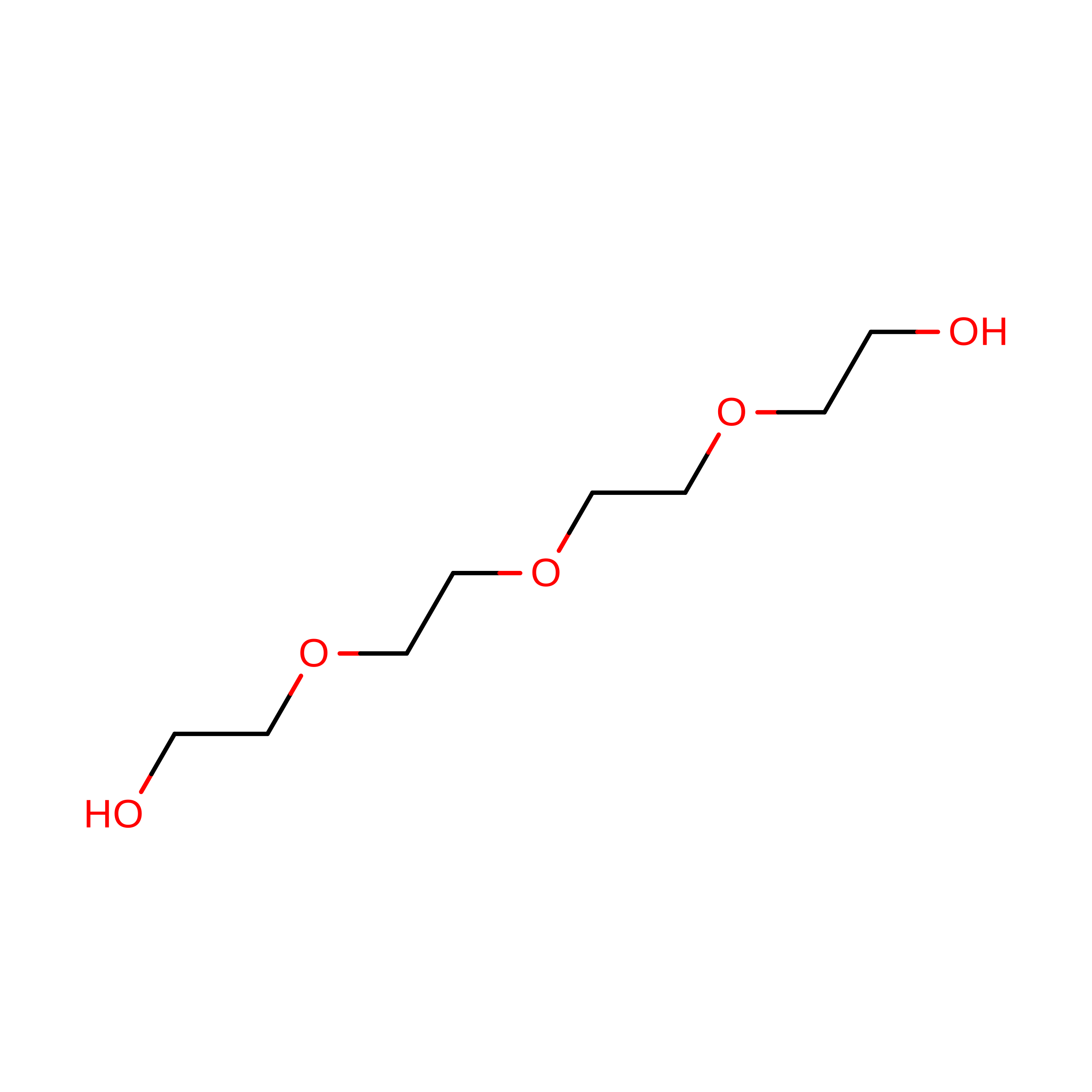
PG4

Query on PG4


Download:Ideal Coordinates CCD File
D [auth A]TETRAETHYLENE GLYCOL
C8 H18 O5
UWHCKJMYHZGTIT-UHFFFAOYSA-N
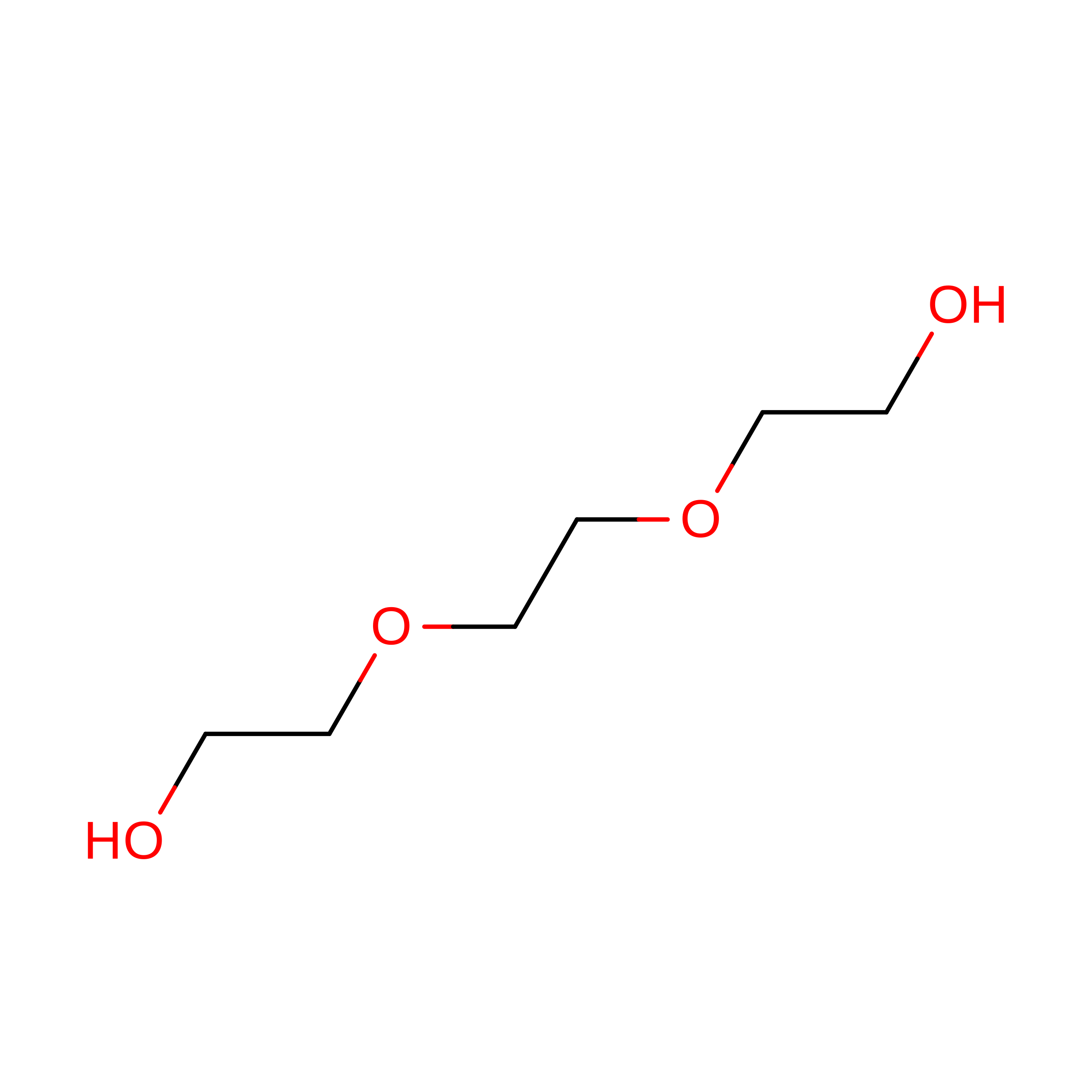
PGE

Query on PGE


Download:Ideal Coordinates CCD File
J [auth B]TRIETHYLENE GLYCOL
C6 H14 O4
ZIBGPFATKBEMQZ-UHFFFAOYSA-N
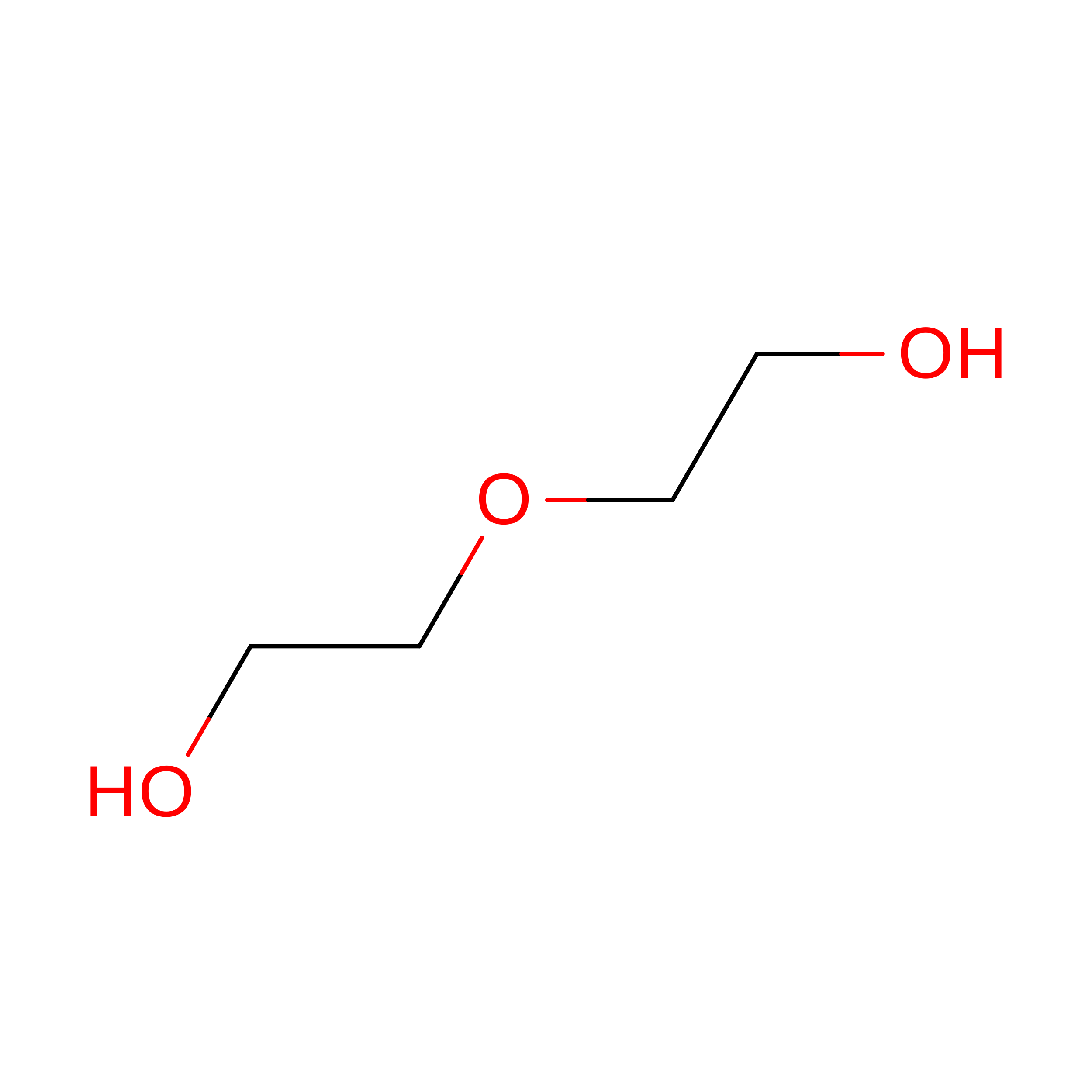
PEG

Query on PEG


Download:Ideal Coordinates CCD File
C [auth A],
E [auth A],
G [auth A]
DI(HYDROXYETHYL)ETHER
C4 H10 O3
MTHSVFCYNBDYFN-UHFFFAOYSA-N
SO4

Query on SO4


Download:Ideal Coordinates CCD File
H [auth A]SULFATE ION
O4 S
QAOWNCQODCNURD-UHFFFAOYSA-L
GOL

Query on GOL


Download:Ideal Coordinates CCD File
I [auth B]GLYCEROL
C3 H8 O3
PEDCQBHIVMGVHV-UHFFFAOYSA-N
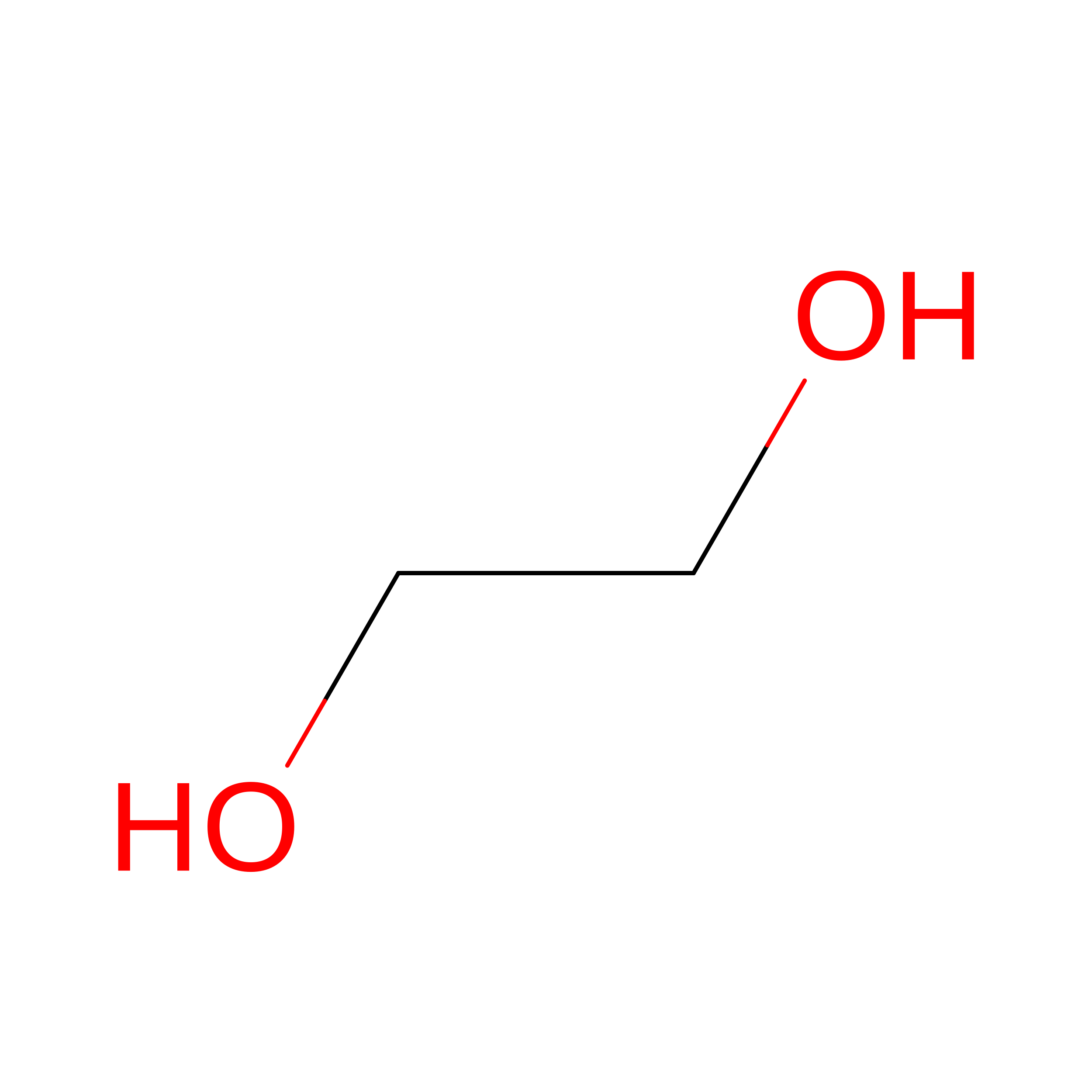
EDO

Query on EDO


Download:Ideal Coordinates CCD File
F [auth A],
K [auth B]
1,2-ETHANEDIOL
C2 H6 O2
LYCAIKOWRPUZTN-UHFFFAOYSA-N

Experimental Data & Validation

Experimental Data

  • Method: X-RAY DIFFRACTION
  • Resolution: 2.85 Å
  • R-Value Free:  0.287 (Depositor), 0.289 (DCC) 
  • R-Value Work:  0.261 (Depositor), 0.264 (DCC) 
  • R-Value Observed: 0.263 (Depositor) 
Space Group: I 21 3
Unit Cell:
Length ( Å )Angle ( ˚ )
a = 140.08α = 90
b = 140.08β = 90
c = 140.08γ = 90
Software Package:
Software NamePurpose
XDSdata reduction
MOLREPphasing
PHENIXrefinement
PDB_EXTRACTdata extraction
Aimlessdata scaling

Structure Validation

View Full Validation Report


Entry History 

& Funding Information

Deposition Data


Funding OrganizationLocationGrant Number
Spanish Ministry of Science, Innovation, and UniversitiesSpainRTI2018-097142-B-100
Spanish Ministry of Science, Innovation, and UniversitiesSpainBIO2016-74875-P

Revision History  (Full details and data files)

  • Version 1.0: 2021-11-10
    Type: Initial release
  • Version 1.1: 2021-11-24
    Changes: Data collection, Database references
  • Version 1.2: 2024-01-31
    Changes: Data collection, Refinement description
  • Version 1.3: 2024-10-23
    Changes: Structure summary