7JTA | pdb_00007jta

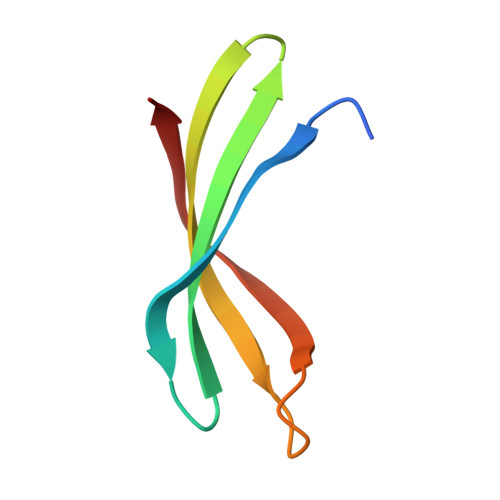
Crystal structure of a putative nuclease with anti-Cas9 activity from an uncultured Clostridia bacterium


Experimental Data Snapshot

  • Method: X-RAY DIFFRACTION
  • Resolution: 2.80 Å
  • R-Value Free: 
    0.246 (Depositor), 0.250 (DCC) 
  • R-Value Work: 
    0.222 (Depositor), 0.220 (DCC) 
  • R-Value Observed: 
    0.225 (Depositor) 

Starting Model: in silico
View more details

wwPDB Validation   3D Report Full Report


This is version 1.3 of the entry. See complete history


Literature

The novel anti-CRISPR AcrIIA22 relieves DNA torsion in target plasmids and impairs SpyCas9 activity.

Forsberg, K.J.Schmidtke, D.T.Werther, R.Uribe, R.V.Hausman, D.Sommer, M.O.A.Stoddard, B.L.Kaiser, B.K.Malik, H.S.

(2021) PLoS Biol 19: e3001428-e3001428

  • DOI: https://doi.org/10.1371/journal.pbio.3001428
  • Primary Citation of Related Structures:  
    7JTA

  • PubMed Abstract: 

    To overcome CRISPR-Cas defense systems, many phages and mobile genetic elements (MGEs) encode CRISPR-Cas inhibitors called anti-CRISPRs (Acrs). Nearly all characterized Acrs directly bind Cas proteins to inactivate CRISPR immunity. Here, using functional metagenomic selection, we describe AcrIIA22, an unconventional Acr found in hypervariable genomic regions of clostridial bacteria and their prophages from human gut microbiomes. AcrIIA22 does not bind strongly to SpyCas9 but nonetheless potently inhibits its activity against plasmids. To gain insight into its mechanism, we obtained an X-ray crystal structure of AcrIIA22, which revealed homology to PC4-like nucleic acid-binding proteins. Based on mutational analyses and functional assays, we deduced that acrIIA22 encodes a DNA nickase that relieves torsional stress in supercoiled plasmids. This may render them less susceptible to SpyCas9, which uses free energy from negative supercoils to form stable R-loops. Modifying DNA topology may provide an additional route to CRISPR-Cas resistance in phages and MGEs.


  • Organizational Affiliation
    • Division of Basic Sciences, Fred Hutchinson Cancer Research Center, Seattle, Washington, United States of America.

Macromolecules
Find similar proteins by:  (by identity cutoff)  |  3D Structure
Entity ID: 1
MoleculeChains Sequence LengthOrganismDetailsImage
NTF2-like nuclease/anti-CRISPR
A, B
59Clostridia bacteriumMutation(s): 0 
Entity Groups  
Sequence Clusters30% Identity50% Identity70% Identity90% Identity95% Identity100% Identity
Sequence Annotations
Expand
  • Reference Sequence
Small Molecules
Ligands 2 Unique
IDChains Name / Formula / InChI Key2D Diagram3D Interactions
MPD
Query on MPD

Download Ideal Coordinates CCD File 
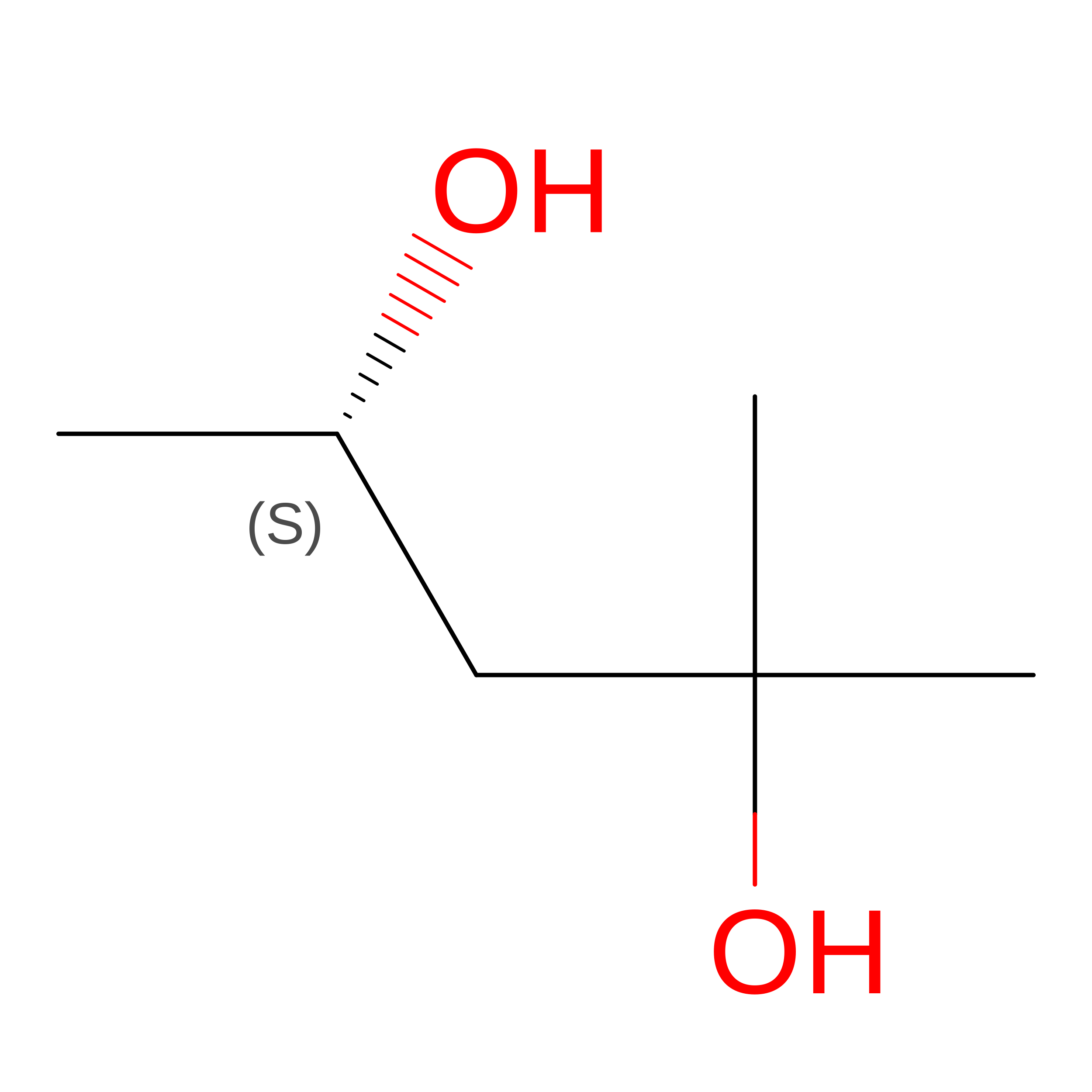
J [auth B](4S)-2-METHYL-2,4-PENTANEDIOL
C6 H14 O2
SVTBMSDMJJWYQN-YFKPBYRVSA-N
NO3
Query on NO3

Download Ideal Coordinates CCD File 
C [auth A]
D [auth A]
E [auth A]
F [auth A]
G [auth A]
C [auth A],
D [auth A],
E [auth A],
F [auth A],
G [auth A],
H [auth B],
I [auth B]
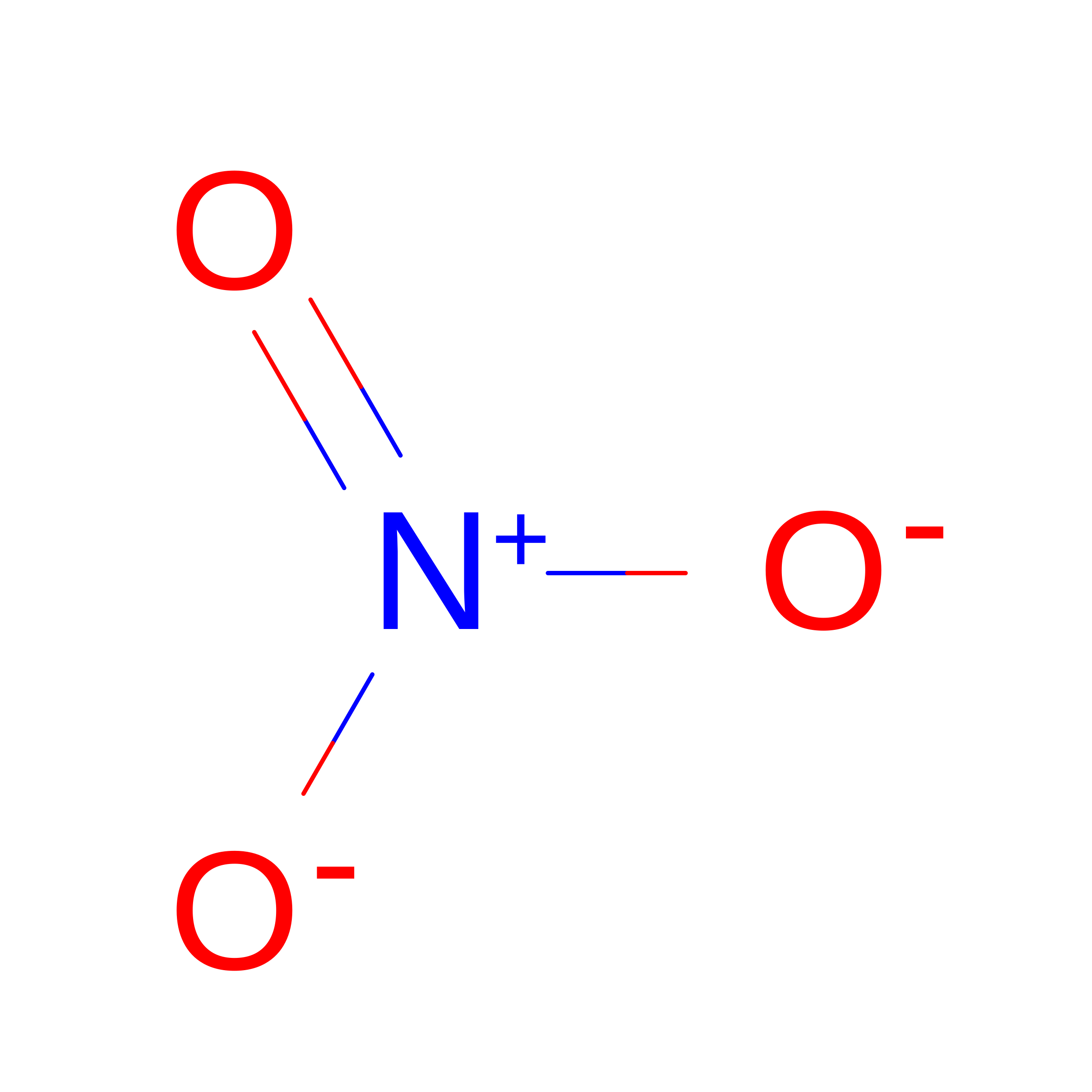
NITRATE ION
N O3
NHNBFGGVMKEFGY-UHFFFAOYSA-N
Experimental Data & Validation

Experimental Data

  • Method: X-RAY DIFFRACTION
  • Resolution: 2.80 Å
  • R-Value Free:  0.246 (Depositor), 0.250 (DCC) 
  • R-Value Work:  0.222 (Depositor), 0.220 (DCC) 
  • R-Value Observed: 0.225 (Depositor) 
Space Group: P 43 3 2
Unit Cell:
Length ( Å )Angle ( ˚ )
a = 128.561α = 90
b = 128.561β = 90
c = 128.561γ = 90
Software Package:
Software NamePurpose
HKL-2000data scaling
PHASERphasing
PHENIXrefinement
PDB_EXTRACTdata extraction
HKL-2000data reduction

Structure Validation

View Full Validation Report


Entry History & Funding Information

Deposition Data


Funding OrganizationLocationGrant Number
National Institutes of Health/National Institute of General Medical Sciences (NIH/NIGMS)United StatesR01GM105691

Revision History  (Full details and data files)

  • Version 1.0: 2021-09-22
    Type: Initial release
  • Version 1.1: 2022-04-06
    Changes: Database references
  • Version 1.2: 2024-04-03
    Changes: Data collection, Refinement description
  • Version 1.3: 2024-10-30
    Changes: Structure summary