Download Mendeley
Structural and Functional Characteristics of FMN-Dependent NADPH-Indigo Reductase Homolog from Bacillus cohnii.
Yoneda, K., Sakuraba, H., Hayashi, J., Naruse, Y., Araki, T., Ohshima, T.(2025) J Nutr Sci Vitaminol (Tokyo) 71: 180-183
- PubMed: 40301060 Search on PubMed
- DOI: https://doi.org/10.3177/jnsv.71.180
- Primary Citation Related Structures:
7F76 - PubMed Abstract:
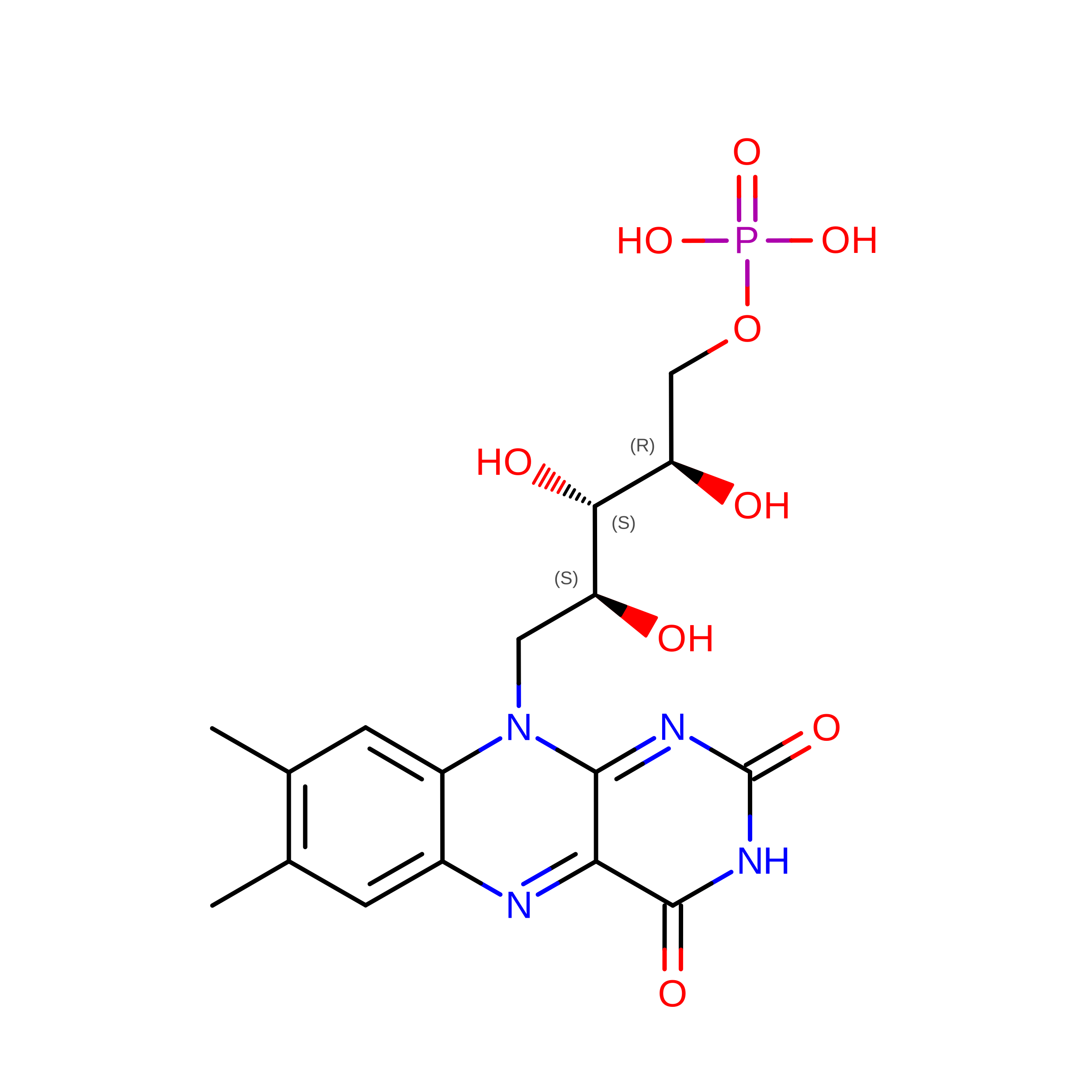
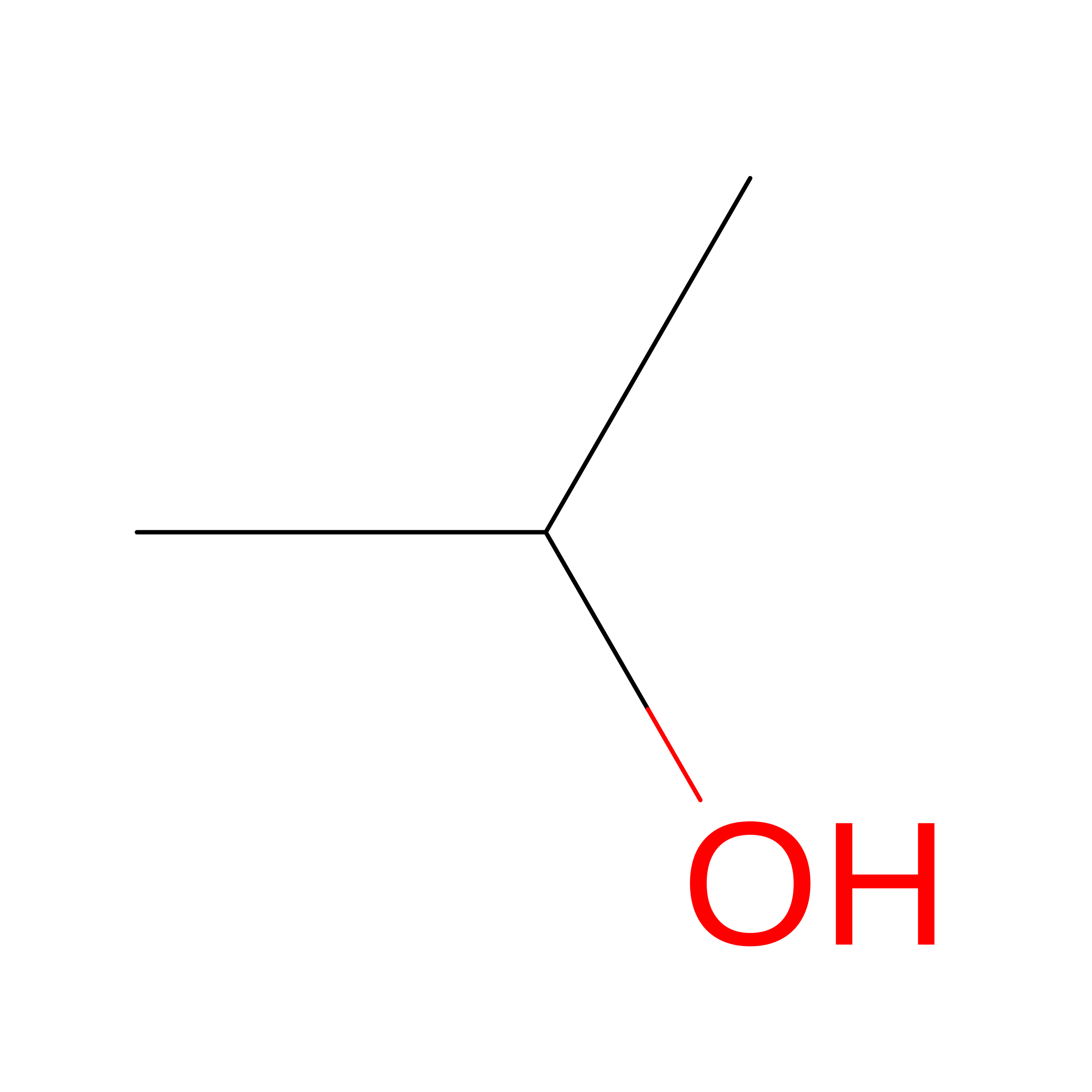
We found indigo reductase homolog in Bacillus cohnii gene and succeeded in production of a large amount of the recombinant homolog in Escherichia coli. The homolog exhibited FMN-dependent NADPH-quinone reductase activity, but not indigo-reducing activity. Crystal structure analysis of the enzyme revealed the formation of a binary complex with FMN, 2-propanol, and glycerol, determined at a resolution of 1.57 Å. Notably, the structure of FMN was of particular interest, as the isoalloxazine ring of FMN exhibited a butterfly-like bent conformation, with an angular deviation of approximately 9.4º to 10.9º along the axis between N5 and N10. The reason for FMN adopting a butterfly-like structure was thought that the exposure of the enzyme crystal to X-ray radiation led to the one-electron reduction of FMN, forming the semiquinone radical FMNH • .
- Department of Food and Life Sciences, School of Agriculture, Tokai University.
Organizational Affiliation: