7CUW | pdb_00007cuw

Ubiquinol Binding Site of Cytochrome bo3 from Escherichia coli


Experimental Data Snapshot

  • Method: ELECTRON MICROSCOPY
  • Resolution: 2.63 Å
  • Aggregation State: PARTICLE 
  • Reconstruction Method: SINGLE PARTICLE 

wwPDB Validation 3D Report Full Report

Validation slider image for 7CUW

This is version 2.0 of the entry. See complete history. 

Literature

Cryo-EM structures of Escherichia coli cytochrome bo3 reveal bound phospholipids and ubiquinone-8 in a dynamic substrate binding site.

Li, J., Han, L., Vallese, F., Ding, Z., Choi, S.K., Hong, S., Luo, Y., Liu, B., Chan, C.K., Tajkhorshid, E., Zhu, J., Clarke, O., Zhang, K., Gennis, R.

(2021) Proc Natl Acad Sci U S A 118

  • DOI: https://doi.org/10.1073/pnas.2106750118
  • Primary Citation Related Structures: 
    7CUB, 7CUQ, 7CUW, 7N9Z

  • PubMed Abstract: 

    Two independent structures of the proton-pumping, respiratory cytochrome bo 3 ubiquinol oxidase (cyt bo 3 ) have been determined by cryogenic electron microscopy (cryo-EM) in styrene-maleic acid (SMA) copolymer nanodiscs and in membrane scaffold protein (MSP) nanodiscs to 2.55- and 2.19-Å resolution, respectively. The structures include the metal redox centers (heme b , heme o 3 , and Cu B ), the redox-active cross-linked histidine-tyrosine cofactor, and the internal water molecules in the proton-conducting D channel. Each structure also contains one equivalent of ubiquinone-8 (UQ8) in the substrate binding site as well as several phospholipid molecules. The isoprene side chain of UQ8 is clamped within a hydrophobic groove in subunit I by transmembrane helix TM0, which is only present in quinol oxidases and not in the closely related cytochrome c oxidases. Both structures show carbonyl O1 of the UQ8 headgroup hydrogen bonded to D75 I and R71 I In both structures, residue H98 I occupies two conformations. In conformation 1, H98 I forms a hydrogen bond with carbonyl O4 of the UQ8 headgroup, but in conformation 2, the imidazole side chain of H98 I has flipped to form a hydrogen bond with E14 I at the N-terminal end of TM0. We propose that H98 I dynamics facilitate proton transfer from ubiquinol to the periplasmic aqueous phase during oxidation of the substrate. Computational studies show that TM0 creates a channel, allowing access of water to the ubiquinol headgroup and to H98 I .


  • Organizational Affiliation: 
    • School of Medicine and Holistic Integrative Medicine, Nanjing University of Chinese Medicine, Nanjing 210023, China.

Macromolecule Content 

  • Total Structure Weight: 147.34 kDa 
  • Atom Count: 9,839 
  • Modeled Residue Count: 1,199 
  • Deposited Residue Count: 1,267 
  • Unique protein chains: 4

Macromolecules

Find similar proteins by:|  3D Structure
Entity ID: 1
MoleculeChains  Sequence LengthOrganismDetailsImage
Cytochrome bo(3) ubiquinol oxidase subunit 1663Escherichia coliMutation(s): 0 
EC: 7.1.1.3
Membrane Entity: Yes 
UniProt
Find proteins for P0ABI8 (Escherichia coli (strain K12))
Explore P0ABI8 
Go to UniProtKB:  P0ABI8
Entity Groups
Sequence Clusters30% Identity50% Identity70% Identity90% Identity95% Identity100% Identity
UniProt GroupP0ABI8
Sequence Annotations
Expand
Reference Sequence
Find similar proteins by:|  3D Structure
Entity ID: 2
MoleculeChains  Sequence LengthOrganismDetailsImage
Cytochrome bo(3) ubiquinol oxidase subunit 2291Escherichia coliMutation(s): 0 
Membrane Entity: Yes 
UniProt
Find proteins for P0ABJ1 (Escherichia coli (strain K12))
Explore P0ABJ1 
Go to UniProtKB:  P0ABJ1
Entity Groups
Sequence Clusters30% Identity50% Identity70% Identity90% Identity95% Identity100% Identity
UniProt GroupP0ABJ1
Sequence Annotations
Expand
Reference Sequence
Find similar proteins by:|  3D Structure
Entity ID: 3
MoleculeChains  Sequence LengthOrganismDetailsImage
Cytochrome bo(3) ubiquinol oxidase subunit 3204Escherichia coliMutation(s): 0 
Membrane Entity: Yes 
UniProt
Find proteins for P0ABJ3 (Escherichia coli (strain K12))
Explore P0ABJ3 
Go to UniProtKB:  P0ABJ3
Entity Groups
Sequence Clusters30% Identity50% Identity70% Identity90% Identity95% Identity100% Identity
UniProt GroupP0ABJ3
Sequence Annotations
Expand
Reference Sequence
Find similar proteins by:|  3D Structure
Entity ID: 4
MoleculeChains  Sequence LengthOrganismDetailsImage
Cytochrome bo(3) ubiquinol oxidase subunit 4109Escherichia coliMutation(s): 0 
Membrane Entity: Yes 
UniProt
Find proteins for P0ABJ6 (Escherichia coli (strain K12))
Explore P0ABJ6 
Go to UniProtKB:  P0ABJ6
Entity Groups
Sequence Clusters30% Identity50% Identity70% Identity90% Identity95% Identity100% Identity
UniProt GroupP0ABJ6
Sequence Annotations
Expand
Reference Sequence

Small Molecules

Ligands 5 Unique
IDChains Name / Formula / InChI Key2D Diagram3D Interactions
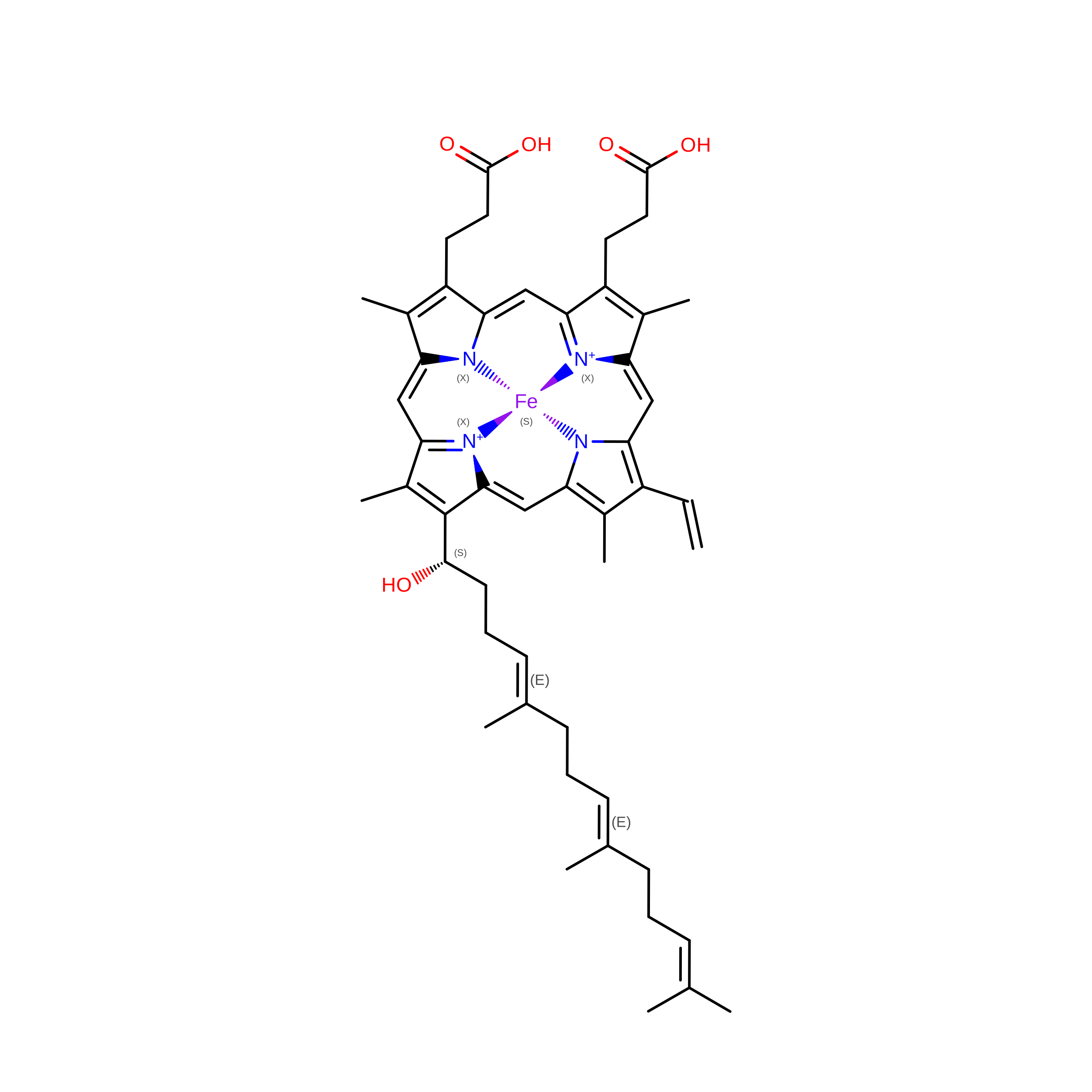
HEO

Query on HEO


Download:Ideal Coordinates CCD File
F [auth A]HEME O
C49 H58 Fe N4 O5
FRKORVCRVCLRBA-BZKSIRDQSA-L
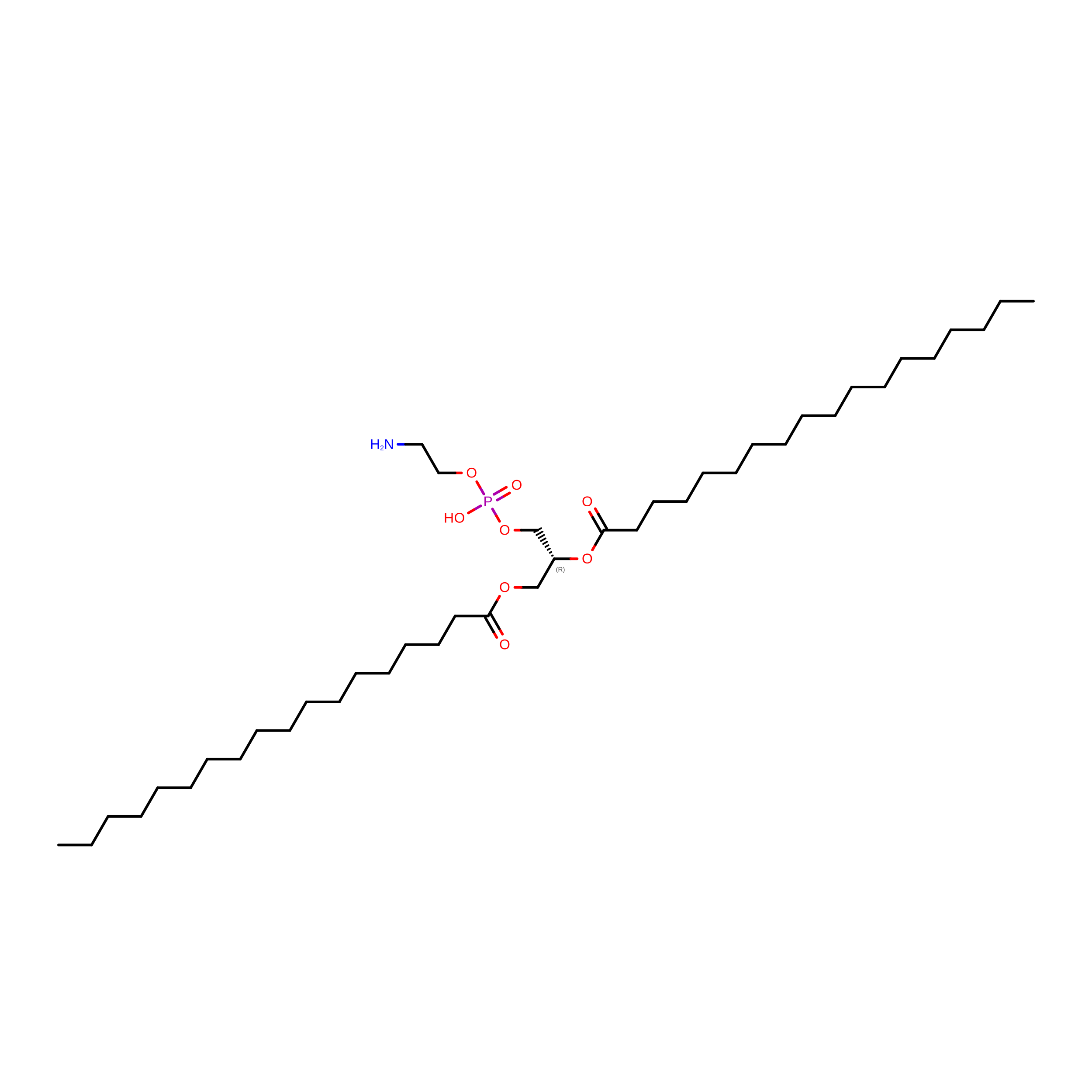
3PE

Query on 3PE


Download:Ideal Coordinates CCD File
H [auth A],
I [auth A],
J [auth A],
L [auth A],
M [auth C]
1,2-Distearoyl-sn-glycerophosphoethanolamine
C41 H82 N O8 P
LVNGJLRDBYCPGB-LDLOPFEMSA-N
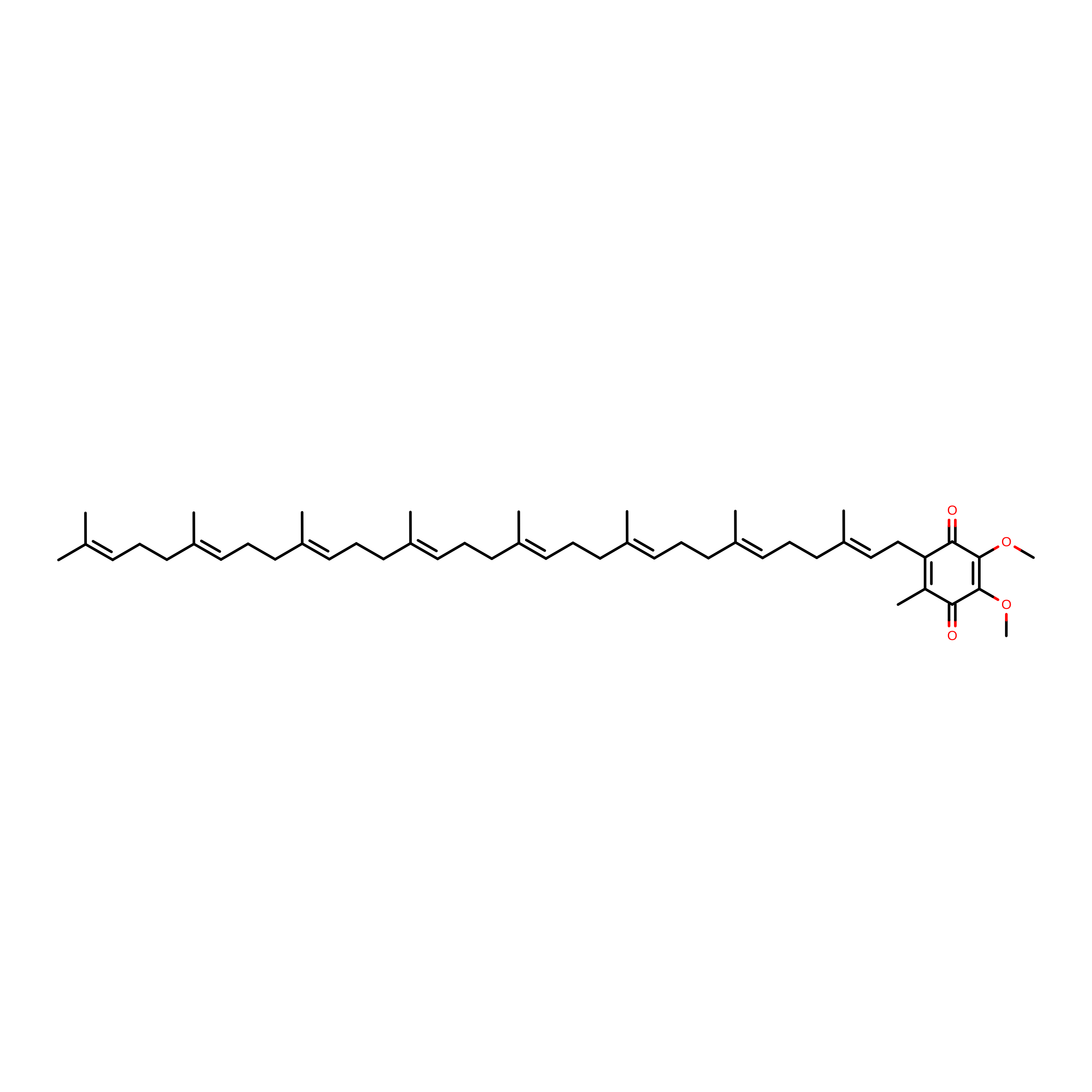
UQ8
(Subject of Investigation/LOI)

Query on UQ8


Download:Ideal Coordinates CCD File
K [auth A]Ubiquinone-8
C49 H74 O4
ICFIZJQGJAJRSU-SGHXUWJISA-N
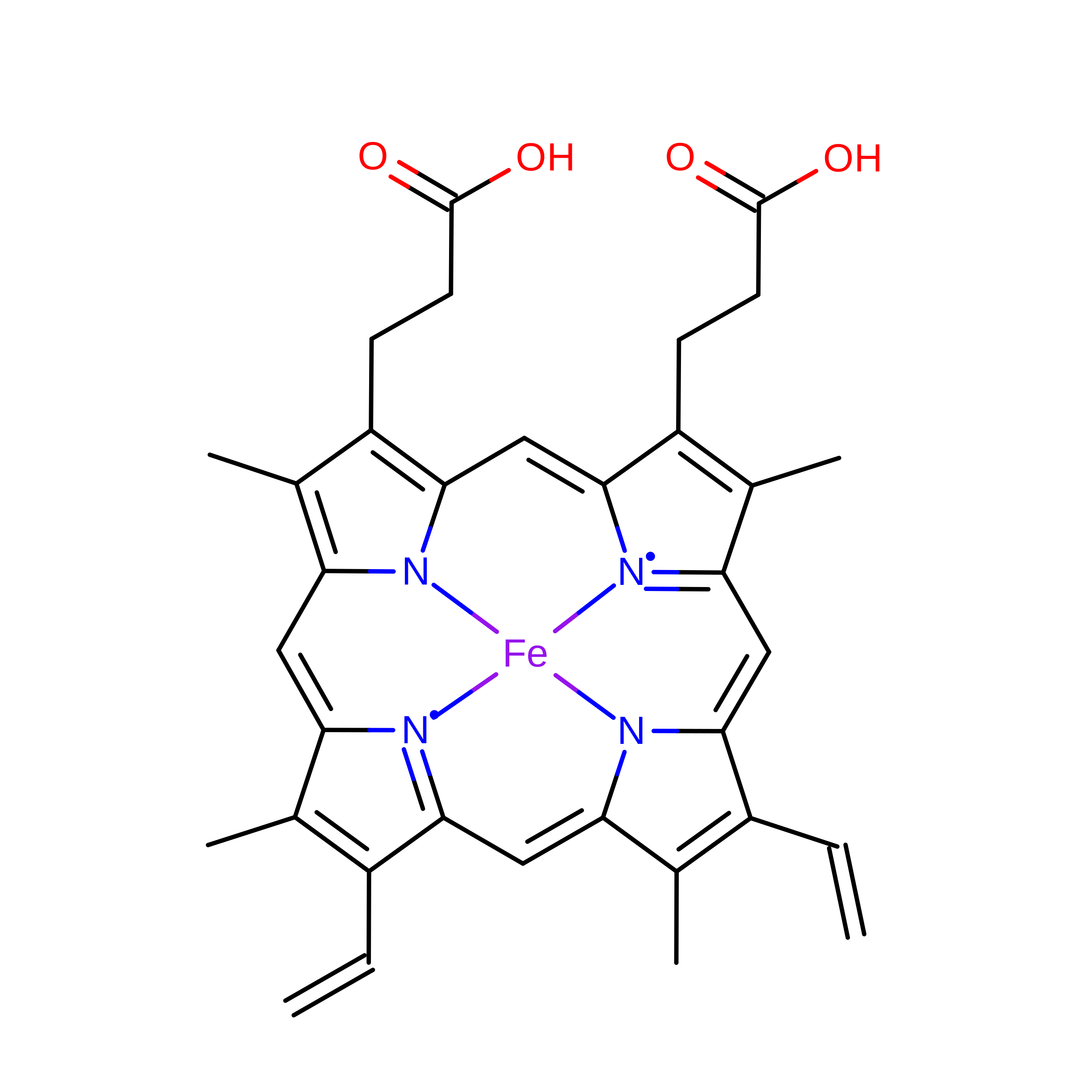
HEM

Query on HEM


Download:Ideal Coordinates CCD File
E [auth A]PROTOPORPHYRIN IX CONTAINING FE
C34 H32 Fe N4 O4
KABFMIBPWCXCRK-RGGAHWMASA-L
CU

Query on CU


Download:Ideal Coordinates CCD File
G [auth A]COPPER (II) ION
Cu
JPVYNHNXODAKFH-UHFFFAOYSA-N

Experimental Data & Validation

Experimental Data

  • Method: ELECTRON MICROSCOPY
  • Resolution: 2.63 Å
  • Aggregation State: PARTICLE 
  • Reconstruction Method: SINGLE PARTICLE 

Structure Validation

View Full Validation Report


Entry History 

Deposition Data

Revision History  (Full details and data files)

  • Version 1.0: 2021-08-25
    Type: Initial release
  • Version 1.1: 2022-03-09
    Changes: Database references
  • Version 1.2: 2024-05-29
    Changes: Data collection
  • Version 2.0: 2026-08-12
    Type: Remediation
    Reason: Metalloprotein remediation
    Changes: Data collection, Derived calculations, Non-polymer description, Structure summary