6R0T | pdb_00006r0t

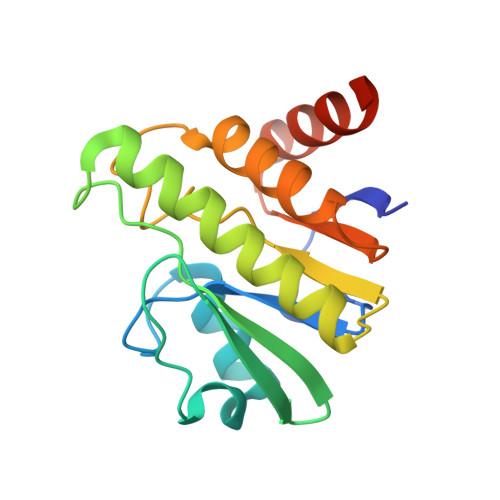
Getah virus macro domain in complex with ADPr in open conformation


Experimental Data Snapshot

  • Method: X-RAY DIFFRACTION
  • Resolution: 1.85 Å
  • R-Value Free: 
    0.199 (Depositor), 0.215 (DCC) 
  • R-Value Work: 
    0.168 (Depositor), 0.183 (DCC) 
  • R-Value Observed: 
    0.170 (Depositor) 

Starting Model: experimental
View more details

wwPDB Validation 3D Report Full Report

Validation slider image for 6R0T

Ligand Structure Quality Assessment 


This is version 1.3 of the entry. See complete history

Literature

Snapshots of ADP-ribose bound to Getah virus macro domain reveal an intriguing choreography.

Ferreira-Ramos, A.S.Sulzenbacher, G.Canard, B.Coutard, B.

(2020) Sci Rep 10: 14422-14422

  • DOI: https://doi.org/10.1038/s41598-020-70870-w
  • Primary Citation Related Structures: 
    6QZU, 6R0F, 6R0G, 6R0P, 6R0R, 6R0T

  • PubMed Abstract: 

    Alphaviruses are (re-)emerging arboviruses of public health concern. The nsP3 gene product is one of the key players during viral replication. NsP3 comprises three domains: a macro domain, a zinc-binding domain and a hypervariable region. The macro domain is essential at both early and late stages of the replication cycle through ADP-ribose (ADPr) binding and de-ADP-ribosylation of host proteins. However, both its specific role and the precise molecular mechanism of de-ADP-ribosylation across specific viral families remains to be elucidated. Here we investigate by X-ray crystallography the mechanism of ADPr reactivity in the active site of Getah virus macro domain, which displays a peculiar substitution of one of the conserved residues in the catalytic loop. ADPr adopts distinct poses including a covalent bond between the C''1 of the ADPr and a conserved Togaviridae-specific cysteine. These different poses observed for ADPr may represent snapshots of the de-ADP-ribosylation mechanism, highlighting residues to be further characterised.


  • Organizational Affiliation
    • Architecture et Fonction des Macromolécules Biologiques, CNRS, Aix-Marseille Université, 13288, Marseille, France.

Macromolecule Content 

  • Total Structure Weight: 37.73 kDa 
  • Atom Count: 2,691 
  • Modeled Residue Count: 320 
  • Deposited Residue Count: 336 
  • Unique protein chains: 1

Macromolecules

Find similar proteins by:|  3D Structure
Entity ID: 1
MoleculeChains  Sequence LengthOrganismDetailsImage
Non-structural polyprotein
A, B
168Getah virusMutation(s): 0 
Gene Names: nsP1234
UniProt
Find proteins for Q5Y389 (Getah virus)
Explore Q5Y389 
Go to UniProtKB:  Q5Y389
Entity Groups
Sequence Clusters30% Identity50% Identity70% Identity90% Identity95% Identity100% Identity
UniProt GroupQ5Y389
Sequence Annotations
Expand
Reference Sequence

Small Molecules

Ligands 3 Unique
IDChains Name / Formula / InChI Key2D Diagram3D Interactions
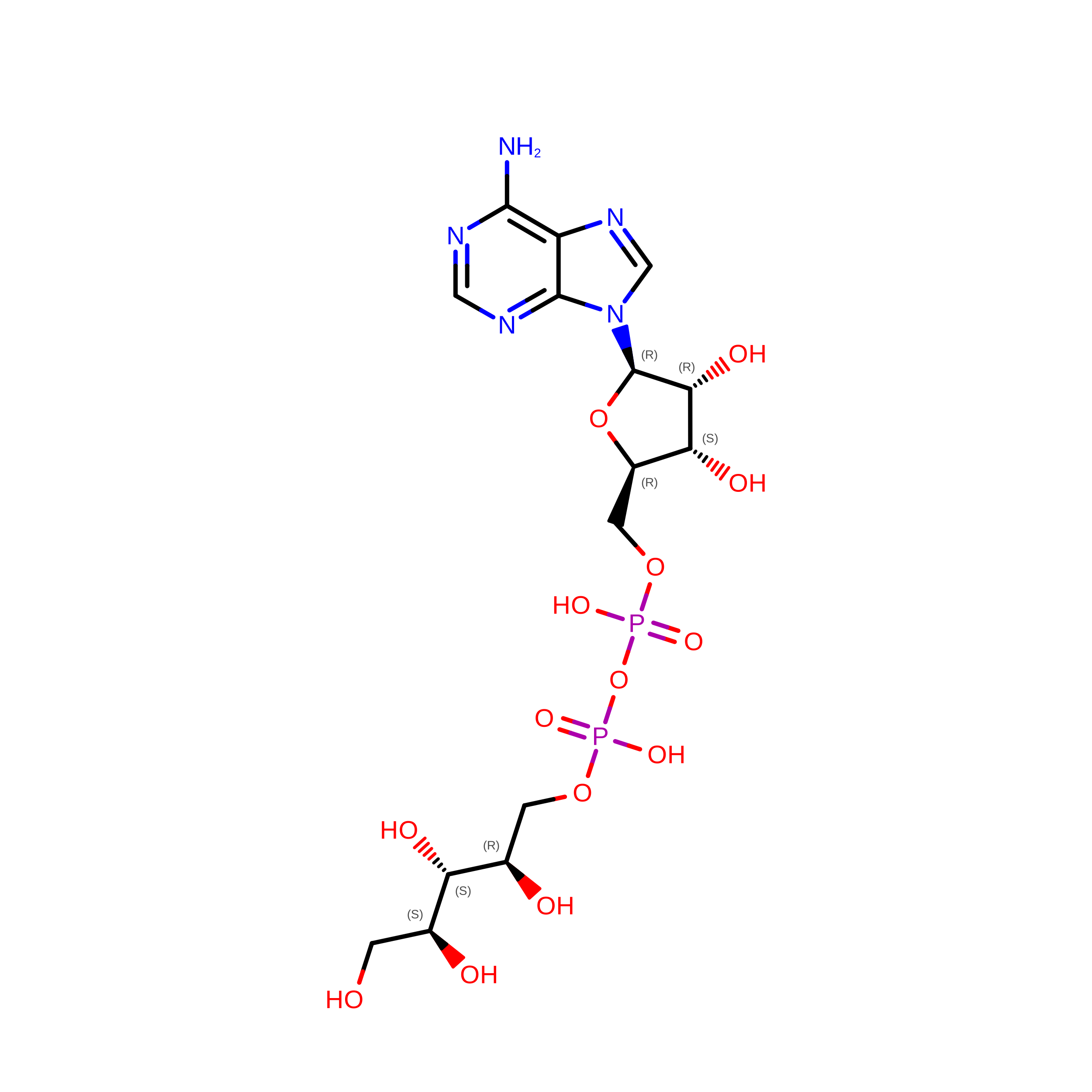
JNT

Query on JNT


Download:Ideal Coordinates CCD File
C [auth A],
I [auth B]
[[(2~{R},3~{S},4~{R},5~{R})-5-(6-aminopurin-9-yl)-3,4-bis(oxidanyl)oxolan-2-yl]methoxy-oxidanyl-phosphoryl] [(2~{R},3~{S},4~{S})-2,3,4,5-tetrakis(oxidanyl)pentyl] hydrogen phosphate
C15 H25 N5 O14 P2
QKJRZYRQRSLXSV-AOOZFPJJSA-N
EDO

Query on EDO


Download:Ideal Coordinates CCD File
D [auth A],
E [auth A],
F [auth A],
J [auth B]
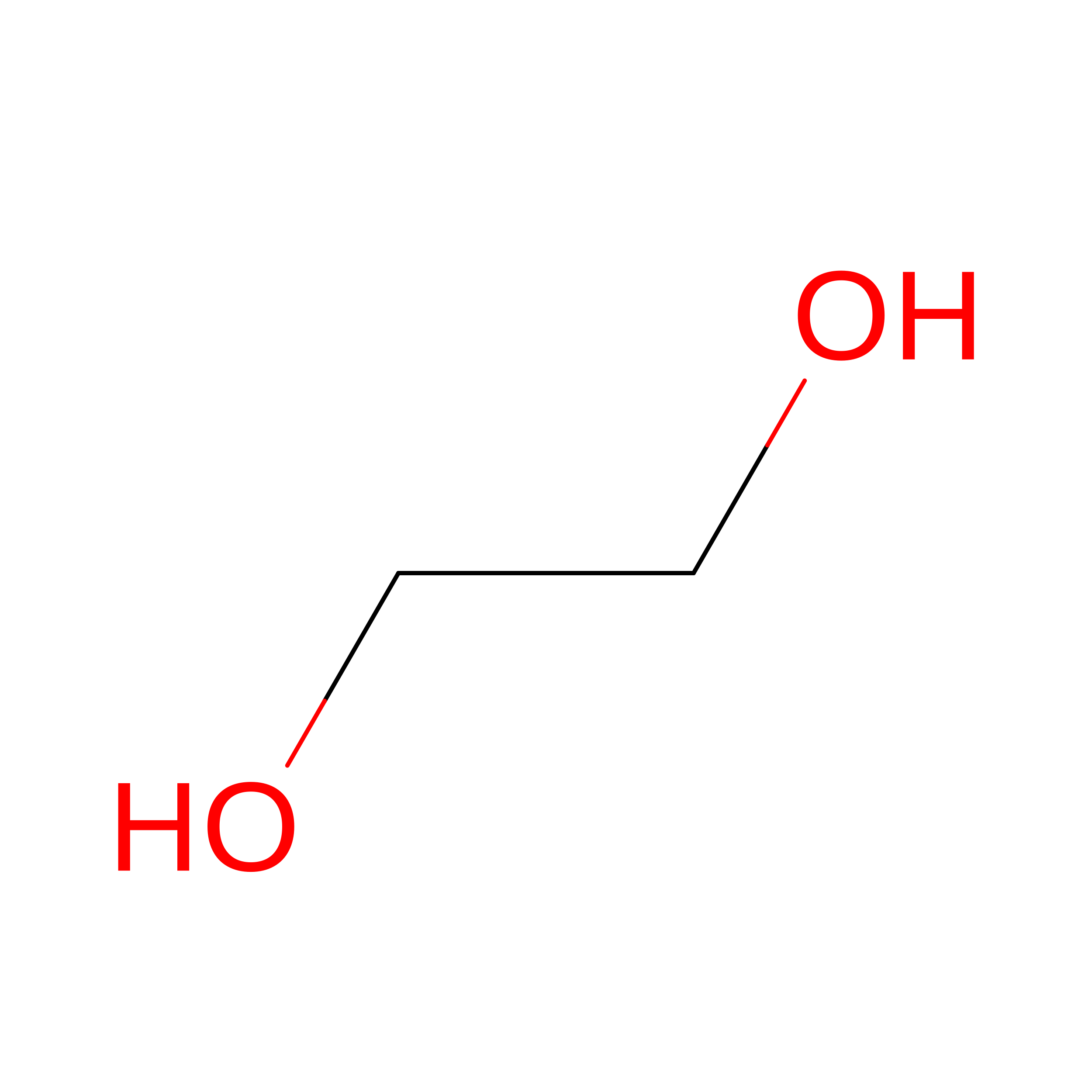
1,2-ETHANEDIOL
C2 H6 O2
LYCAIKOWRPUZTN-UHFFFAOYSA-N
ACT

Query on ACT


Download:Ideal Coordinates CCD File
G [auth A],
H [auth A]
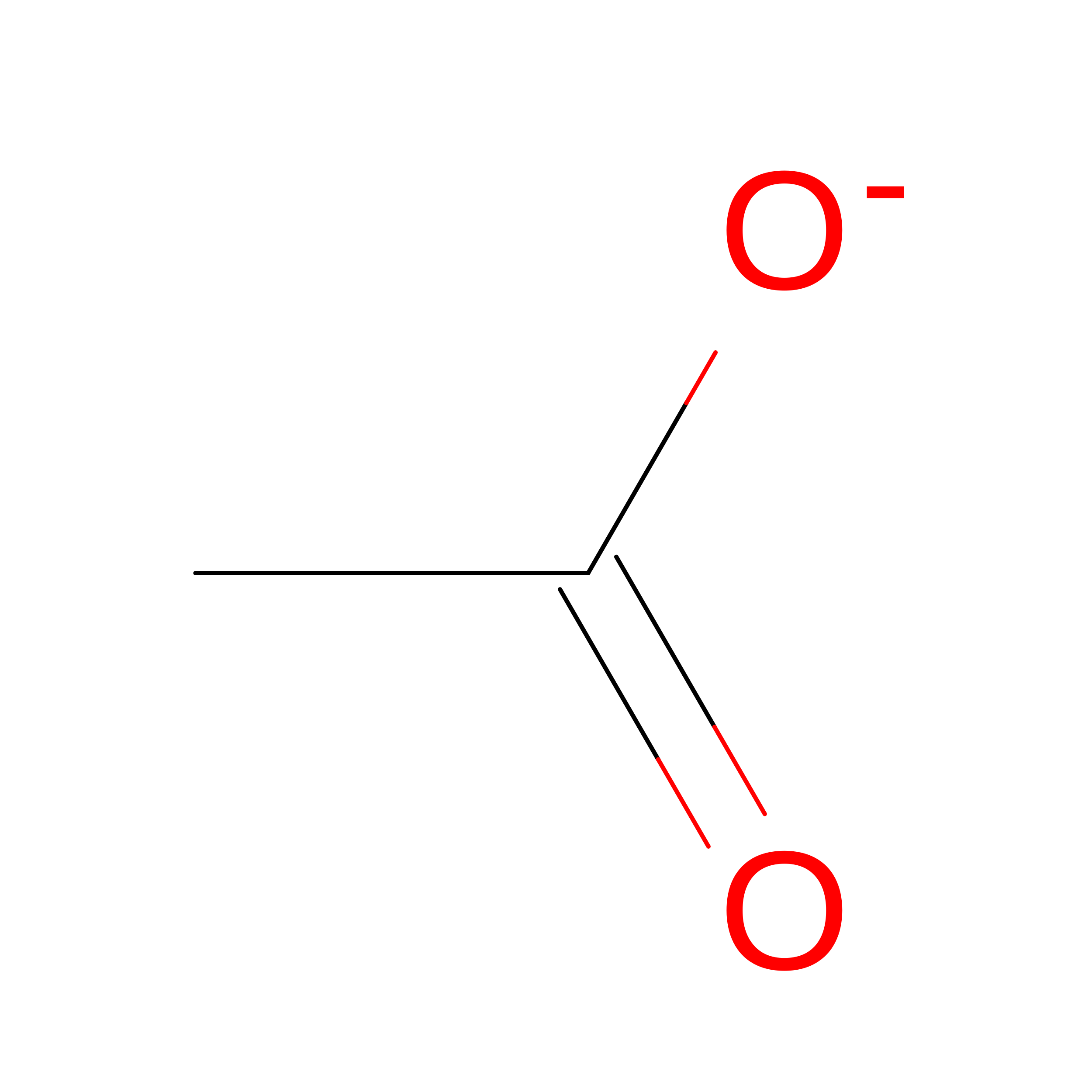
ACETATE ION
C2 H3 O2
QTBSBXVTEAMEQO-UHFFFAOYSA-M

Experimental Data & Validation

Experimental Data

  • Method: X-RAY DIFFRACTION
  • Resolution: 1.85 Å
  • R-Value Free:  0.199 (Depositor), 0.215 (DCC) 
  • R-Value Work:  0.168 (Depositor), 0.183 (DCC) 
  • R-Value Observed: 0.170 (Depositor) 
Space Group: P 21 21 21
Unit Cell:
Length ( Å )Angle ( ˚ )
a = 46.673α = 90
b = 71.441β = 90
c = 98.97γ = 90
Software Package:
Software NamePurpose
REFMACrefinement
XDSdata reduction
Aimlessdata scaling
REFMACphasing

Structure Validation

View Full Validation Report


Ligand Structure Quality Assessment 


Entry History 

Deposition Data

Revision History  (Full details and data files)

  • Version 1.0: 2020-04-01
    Type: Initial release
  • Version 1.1: 2020-10-14
    Changes: Database references
  • Version 1.2: 2022-12-21
    Changes: Data collection, Database references
  • Version 1.3: 2024-01-31
    Changes: Data collection, Refinement description