Download Mendeley
Light chain modulates heavy chain conformation to change protection profile of monoclonal antibodies against influenza A viruses.
Xiao, H., Guo, T., Yang, M., Qi, J., Huang, C., Hong, Y., Gu, J., Pang, X., Liu, W.J., Peng, R., McCauley, J., Bi, Y., Li, S., Feng, J., Zhang, H., Zhang, X., Lu, X., Yan, J., Chen, L., Shi, Y., Chen, W., Gao, G.F.(2019) Cell Discov 5: 21-21
- PubMed: 30993000 Search on PubMedSearch on PubMed Central
- DOI: https://doi.org/10.1038/s41421-019-0086-x
- Primary Citation Related Structures:
6J9O - PubMed Abstract:
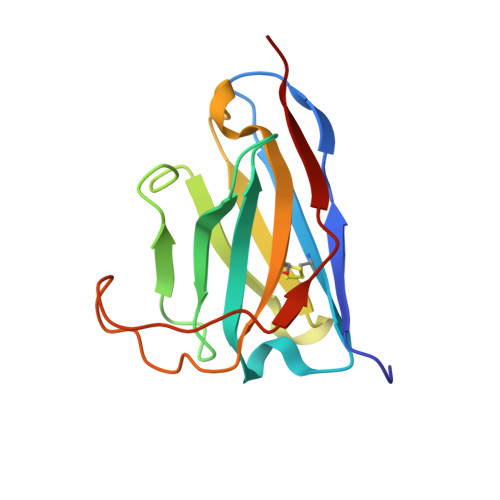
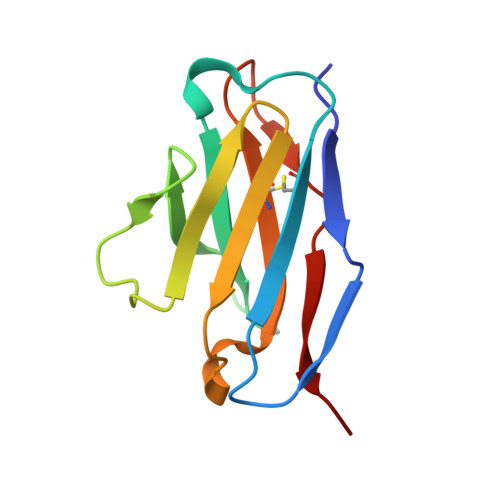
The isolation of human monoclonal antibodies with broadly neutralizing breadth can provide a promising countermeasure for influenza A viruses infection. Most broadly neutralizing antibodies against influenza A viruses bind to the conserved stem region or the receptor-binding cavity of hemagglutinin and the interaction is dominated by the heavy chain. The light chain, however, contributes few or no direct contacts to the antigen. Here we report an H3-clade neutralizing human monoclonal antibody, AF4H1K1, which recognizes the hemagglutinin glycoproteins of all group 2 influenza A viruses. This human monoclonal antibody has been obtained through the screening by pairing different heavy and light chains from an H7N9-infected patient based on the next-generation sequencing technology. Further structural studies revealed that light chains modulate the neutralizing spectrum by affecting the local conformation of heavy chains, instead of direct interaction with the antigen. These findings provide important clues to understand the molecular basis of light chains in antigen recognition and to explore the strategies in particular of the use of light chain modification to develop broadly protective monoclonal antibodies against influenza A viruses and other emerging viruses.
- 1Laboraroty of Protein Engineering and Vaccines, Tianjin Institute of Industrial Biotechnology, Chinese Academy of Sciences (CAS), Tianjin, 300308 China.
Organizational Affiliation: