6J0H | pdb_00006j0h

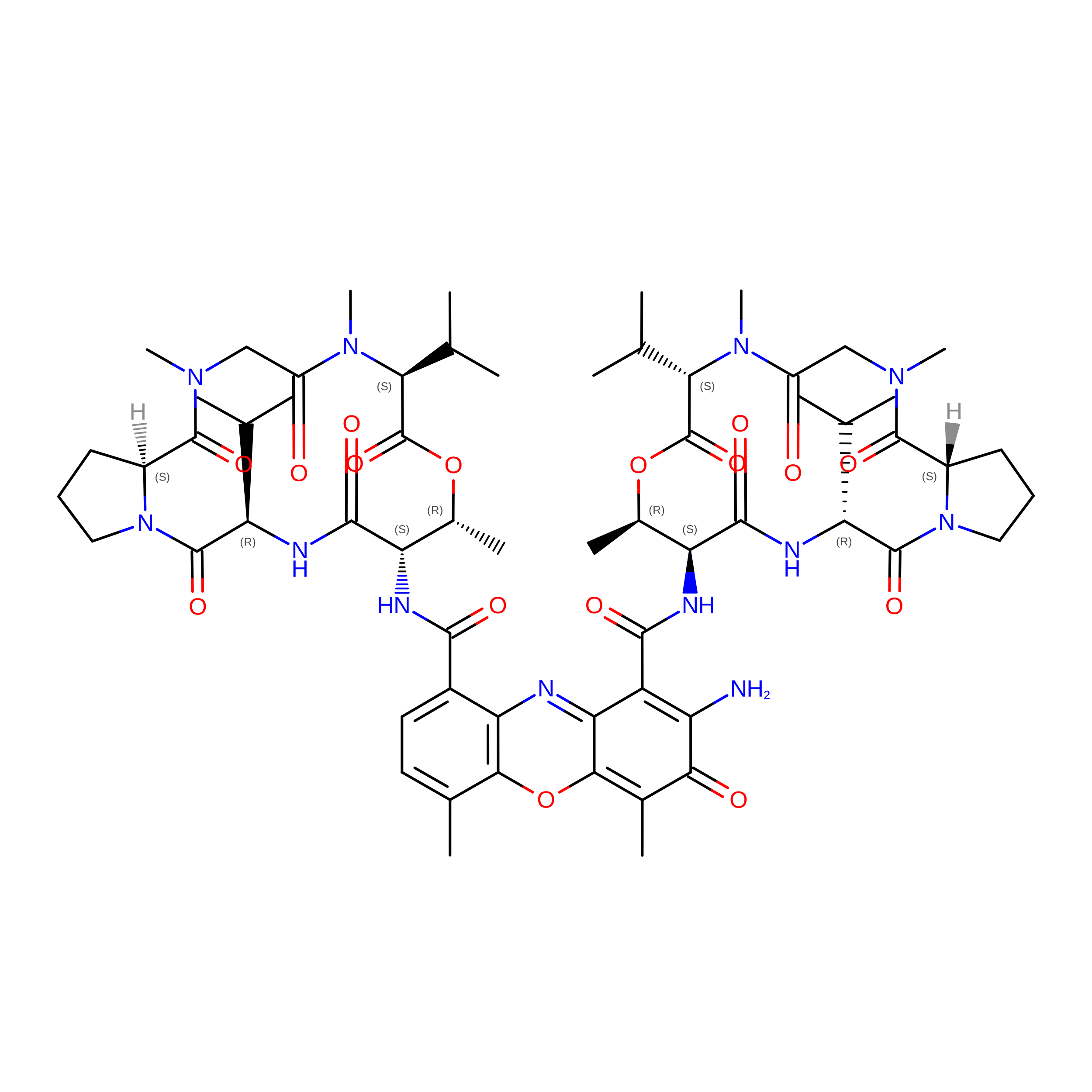
Crystal structure of Actinomycin D- d(TTGGCGAA) complex


Experimental Data Snapshot

  • Method: X-RAY DIFFRACTION
  • Resolution: 1.52 Å
  • R-Value Free: 
    0.216 (Depositor), 0.216 (DCC) 
  • R-Value Work: 
    0.209 (Depositor), 0.209 (DCC) 
  • R-Value Observed: 
    0.210 (Depositor) 

wwPDB Validation 3D Report Full Report

Validation slider image for 6J0H

This is version 3.1 of the entry. See complete history

Literature

Polymorphic G:G mismatches act as hotspots for inducing right-handed Z DNA by DNA intercalation.

Satange, R.Chuang, C.Y.Neidle, S.Hou, M.H.

(2019) Nucleic Acids Res 47: 8899-8912

  • DOI: https://doi.org/10.1093/nar/gkz653
  • Primary Citation Related Structures: 
    6J0H, 6J0I

  • PubMed Abstract: 

    DNA mismatches are highly polymorphic and dynamic in nature, albeit poorly characterized structurally. We utilized the antitumour antibiotic CoII(Chro)2 (Chro = chromomycin A3) to stabilize the palindromic duplex d(TTGGCGAA) DNA with two G:G mismatches, allowing X-ray crystallography-based monitoring of mismatch polymorphism. For the first time, the unusual geometry of several G:G mismatches including syn-syn, water mediated anti-syn and syn-syn-like conformations can be simultaneously observed in the crystal structure. The G:G mismatch sites of the d(TTGGCGAA) duplex can also act as a hotspot for the formation of alternative DNA structures with a GC/GA-5' intercalation site for binding by the GC-selective intercalator actinomycin D (ActiD). Direct intercalation of two ActiD molecules to G:G mismatch sites causes DNA rearrangements, resulting in backbone distortion to form right-handed Z-DNA structures with a single-step sharp kink. Our study provides insights on intercalators-mismatch DNA interactions and a rationale for mismatch interrogation and detection via DNA intercalation.


  • Organizational Affiliation
    • Institute of Genomics and Bioinformatics, National Chung Hsing University, Taichung, 402, Taiwan.

Macromolecule Content 

  • Total Structure Weight: 3.78 kDa 
  • Atom Count: 315 
  • Modeled Residue Count: 19 
  • Deposited Residue Count: 19 
  • Unique protein chains: 1
  • Unique nucleic acid chains: 1

Macromolecules


Find similar proteins by:  Sequence   |   3D Structure  
Entity ID: 2
MoleculeChains  Sequence LengthOrganismDetailsImage
Actinomycin D11Streptomyces sp.Mutation(s): 0 
Find similar nucleic acids by:  Sequence
Entity ID: 1
MoleculeChains LengthOrganismImage
DNA (5'-D(P*TP*TP*GP*GP*CP*GP*AP*A)-3')8synthetic construct
Sequence Annotations
Expand
Reference Sequence

Small Molecules

Ligands 1 Unique
IDChains Name / Formula / InChI Key2D Diagram3D Interactions
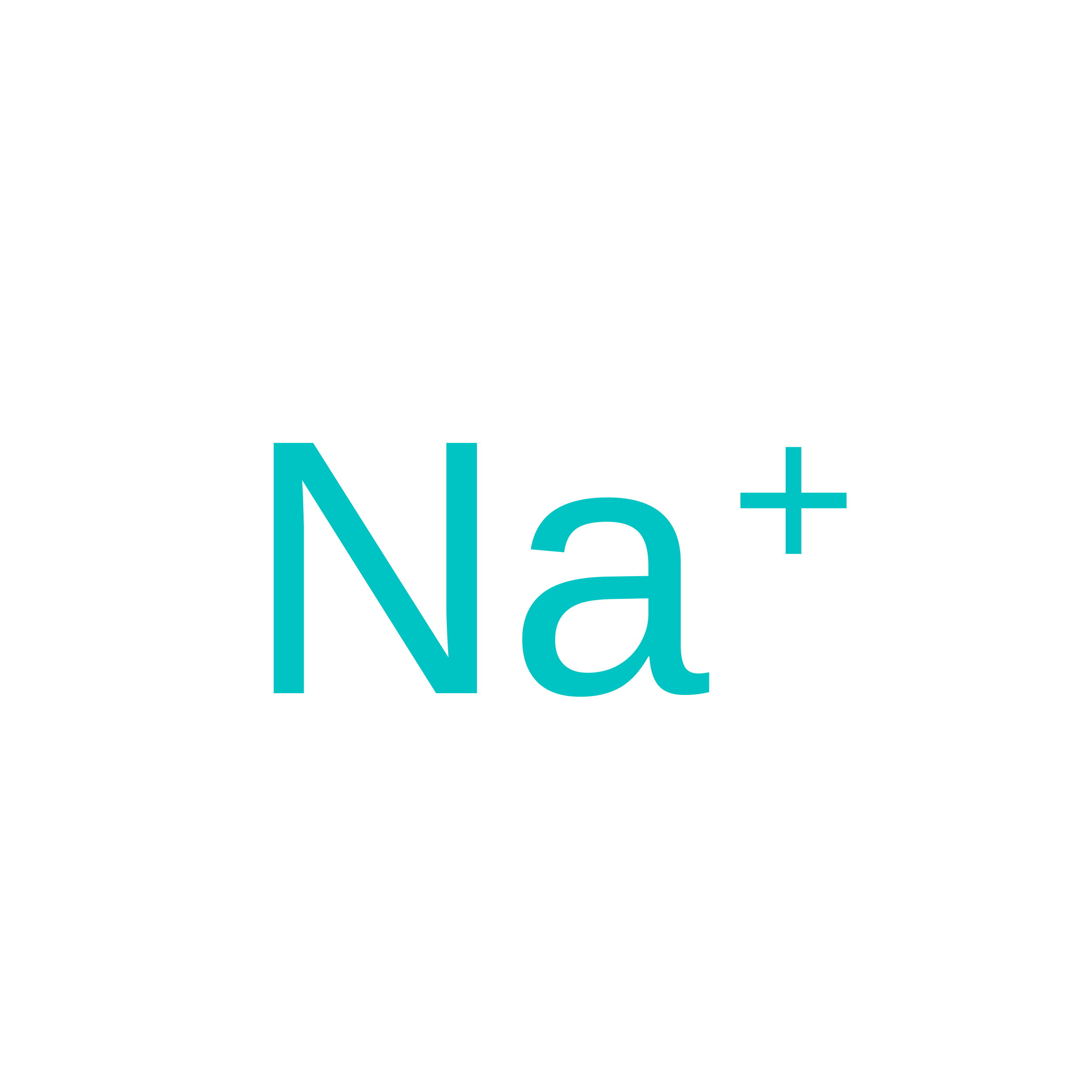
NA

Query on NA


Download:Ideal Coordinates CCD File
C [auth A]SODIUM ION
Na
FKNQFGJONOIPTF-UHFFFAOYSA-N
Modified Residues  2 Unique
IDChains TypeFormula2D DiagramParent
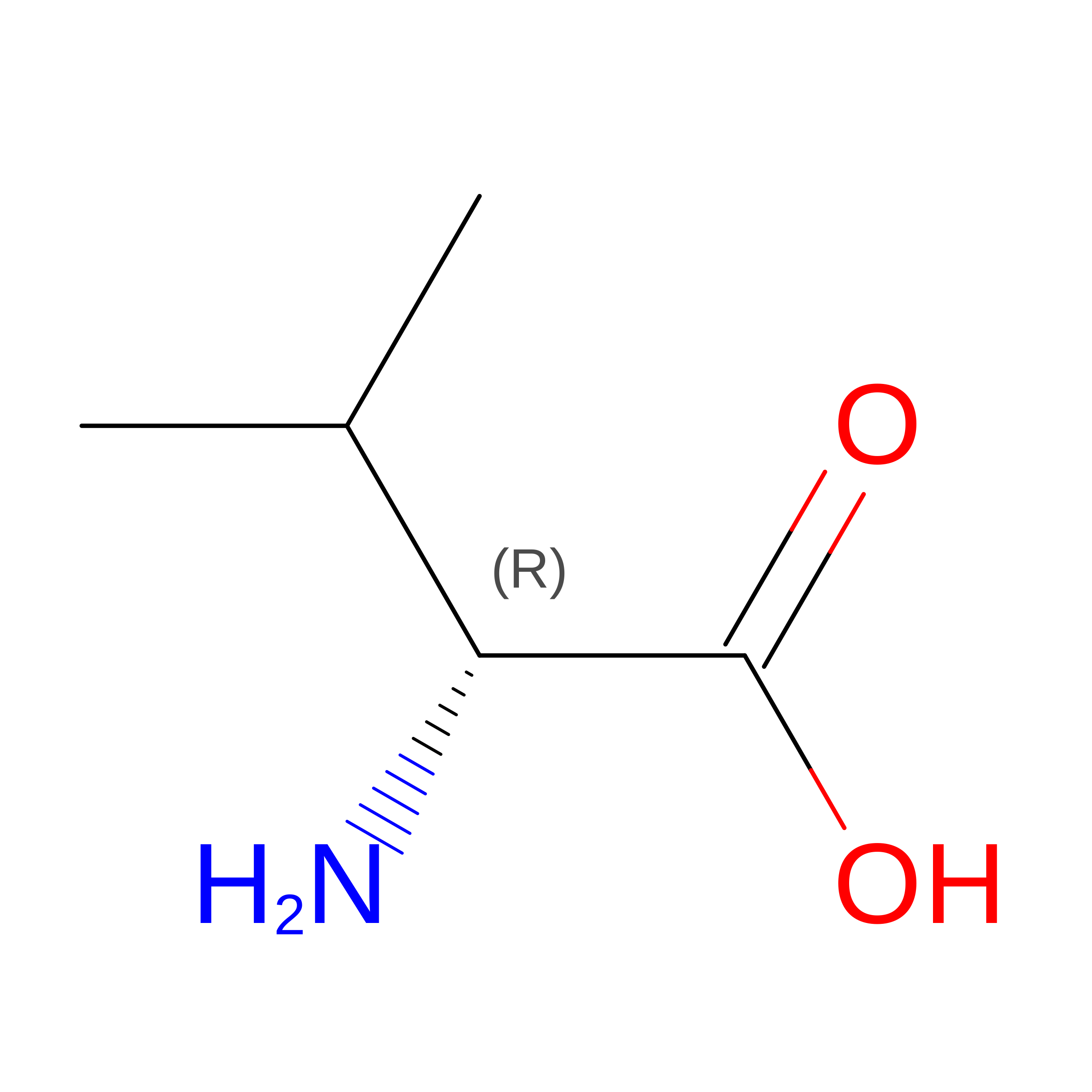
DVA
Query on DVA
B
D-PEPTIDE LINKINGC5 H11 N O2

--

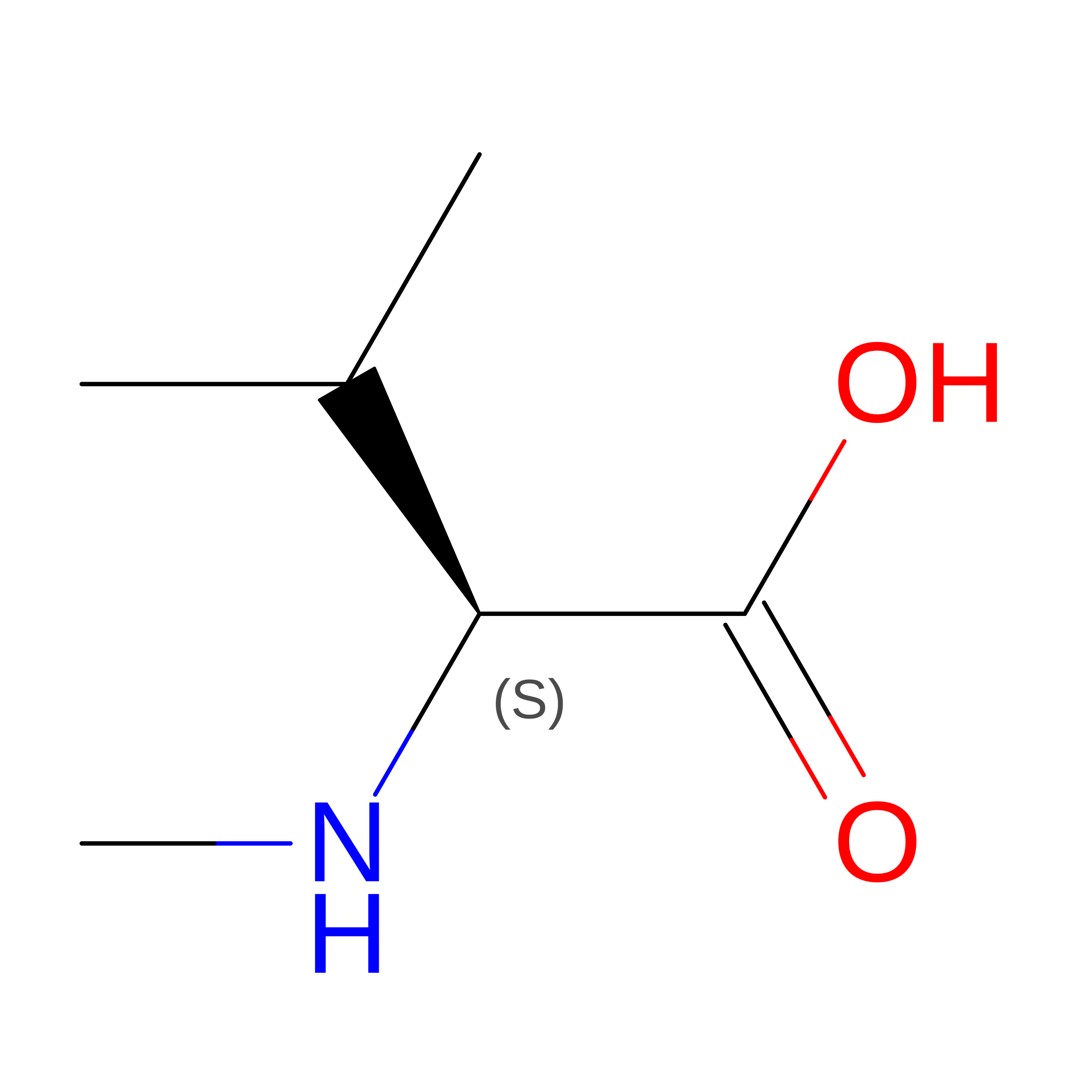
MVA
Query on MVA
B
L-PEPTIDE LINKINGC6 H13 N O2VAL
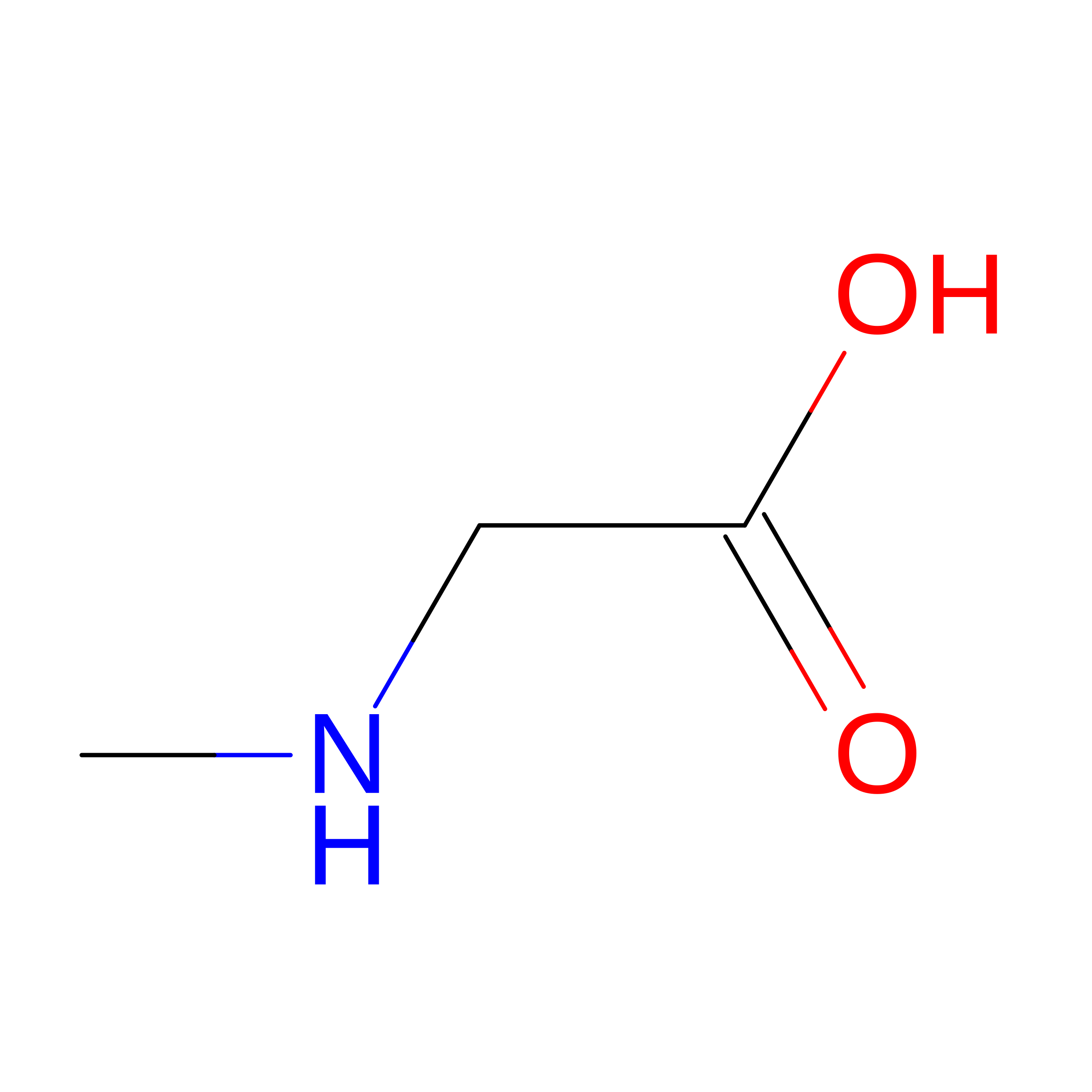
SAR
Query on SAR
B
PEPTIDE LINKINGC3 H7 N O2GLY

Biologically Interesting Molecules (External Reference) 

1 Unique

Experimental Data & Validation

Experimental Data

  • Method: X-RAY DIFFRACTION
  • Resolution: 1.52 Å
  • R-Value Free:  0.216 (Depositor), 0.216 (DCC) 
  • R-Value Work:  0.209 (Depositor), 0.209 (DCC) 
  • R-Value Observed: 0.210 (Depositor) 
Space Group: I 41 2 2
Unit Cell:
Length ( Å )Angle ( ˚ )
a = 59.5α = 90
b = 59.5β = 90
c = 93.489γ = 90
Software Package:
Software NamePurpose
PHENIXrefinement
HKL-2000data scaling
PDB_EXTRACTdata extraction
HKL-2000data reduction
PHENIXphasing

Structure Validation

View Full Validation Report


Entry History 

Deposition Data

Revision History  (Full details and data files)

  • Version 1.0: 2019-07-24
    Type: Initial release
  • Version 1.1: 2019-08-21
    Changes: Data collection, Database references
  • Version 1.2: 2019-10-30
    Changes: Data collection, Database references
  • Version 1.3: 2022-03-09
    Changes: Database references, Derived calculations
  • Version 2.0: 2023-11-15
    Changes: Advisory, Atomic model, Data collection, Derived calculations
  • Version 3.0: 2024-07-10
    Changes: Data collection, Derived calculations, Non-polymer description, Structure summary
  • Version 3.1: 2024-11-13
    Changes: Structure summary