6HIQ | pdb_00006hiq

Mouse serotonin 5-HT3 receptor, serotonin-bound, I2 conformation


Experimental Data Snapshot

  • Method: ELECTRON MICROSCOPY
  • Resolution: 3.20 Å
  • Aggregation State: PARTICLE 
  • Reconstruction Method: SINGLE PARTICLE 

wwPDB Validation 3D Report Full Report

Validation slider image for 6HIQ

This is version 3.1 of the entry. See complete history

Literature

Conformational transitions of the serotonin 5-HT3receptor.

Polovinkin, L.Hassaine, G.Perot, J.Neumann, E.Jensen, A.A.Lefebvre, S.N.Corringer, P.J.Neyton, J.Chipot, C.Dehez, F.Schoehn, G.Nury, H.

(2018) Nature 563: 275-279

  • DOI: https://doi.org/10.1038/s41586-018-0672-3
  • Primary Citation Related Structures: 
    6HIN, 6HIO, 6HIQ, 6HIS

  • PubMed Abstract: 

    The serotonin 5-HT 3 receptor is a pentameric ligand-gated ion channel (pLGIC). It belongs to a large family of receptors that function as allosteric signal transducers across the plasma membrane 1,2 ; upon binding of neurotransmitter molecules to extracellular sites, the receptors undergo complex conformational transitions that result in transient opening of a pore permeable to ions. 5-HT 3 receptors are therapeutic targets for emesis and nausea, irritable bowel syndrome and depression 3 . In spite of several reported pLGIC structures 4-8 , no clear unifying view has emerged on the conformational transitions involved in channel gating. Here we report four cryo-electron microscopy structures of the full-length mouse 5-HT 3 receptor in complex with the anti-emetic drug tropisetron, with serotonin, and with serotonin and a positive allosteric modulator, at resolutions ranging from 3.2 Å to 4.5 Å. The tropisetron-bound structure resembles those obtained with an inhibitory nanobody 5 or without ligand 9 . The other structures include an 'open' state and two ligand-bound states. We present computational insights into the dynamics of the structures, their pore hydration and free-energy profiles, and characterize movements at the gate level and cation accessibility in the pore. Together, these data deepen our understanding of the gating mechanism of pLGICs and capture ligand binding in unprecedented detail.


  • Organizational Affiliation
    • CNRS, Université Grenoble Alpes, CEA, IBS, Grenoble, France.

Macromolecule Content 

  • Total Structure Weight: 267.09 kDa 
  • Atom Count: 16,110 
  • Modeled Residue Count: 1,925 
  • Deposited Residue Count: 2,260 
  • Unique protein chains: 1

Macromolecules

Find similar proteins by:|  3D Structure
Entity ID: 1
MoleculeChains  Sequence LengthOrganismDetailsImage
5-hydroxytryptamine receptor 3AA,
B [auth E],
C [auth B],
D [auth C],
E [auth D]
452Mus musculusMutation(s): 0 
Gene Names: Htr3a5ht3Htr3
Membrane Entity: Yes 
UniProt & NIH Common Fund Data Resources
Find proteins for P23979 (Mus musculus)
Explore P23979 
Go to UniProtKB:  P23979
IMPC:  MGI:96282
Entity Groups
Sequence Clusters30% Identity50% Identity70% Identity90% Identity95% Identity100% Identity
UniProt GroupP23979
Glycosylation
Glycosylation Sites: 3Go to GlyGen: P23979-1
Sequence Annotations
Expand
Reference Sequence

Oligosaccharides

Help  
Entity ID: 2
MoleculeChains Length2D Diagram GlycosylationD Interactions
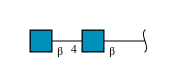
2-acetamido-2-deoxy-beta-D-glucopyranose-(1-4)-2-acetamido-2-deoxy-beta-D-glucopyranose
F, G, H, I, J
F, G, H, I, J, K, L, M, N, O
2N-Glycosylation
Glycosylation Resources
GlyTouCan: G42666HT
GlyCosmos: G42666HT
GlyGen: G42666HT

Small Molecules

Ligands 2 Unique
IDChains Name / Formula / InChI Key2D Diagram3D Interactions
NAG

Query on NAG


Download:Ideal Coordinates CCD File
P [auth A],
R [auth E],
T [auth B],
V [auth C],
X [auth D]
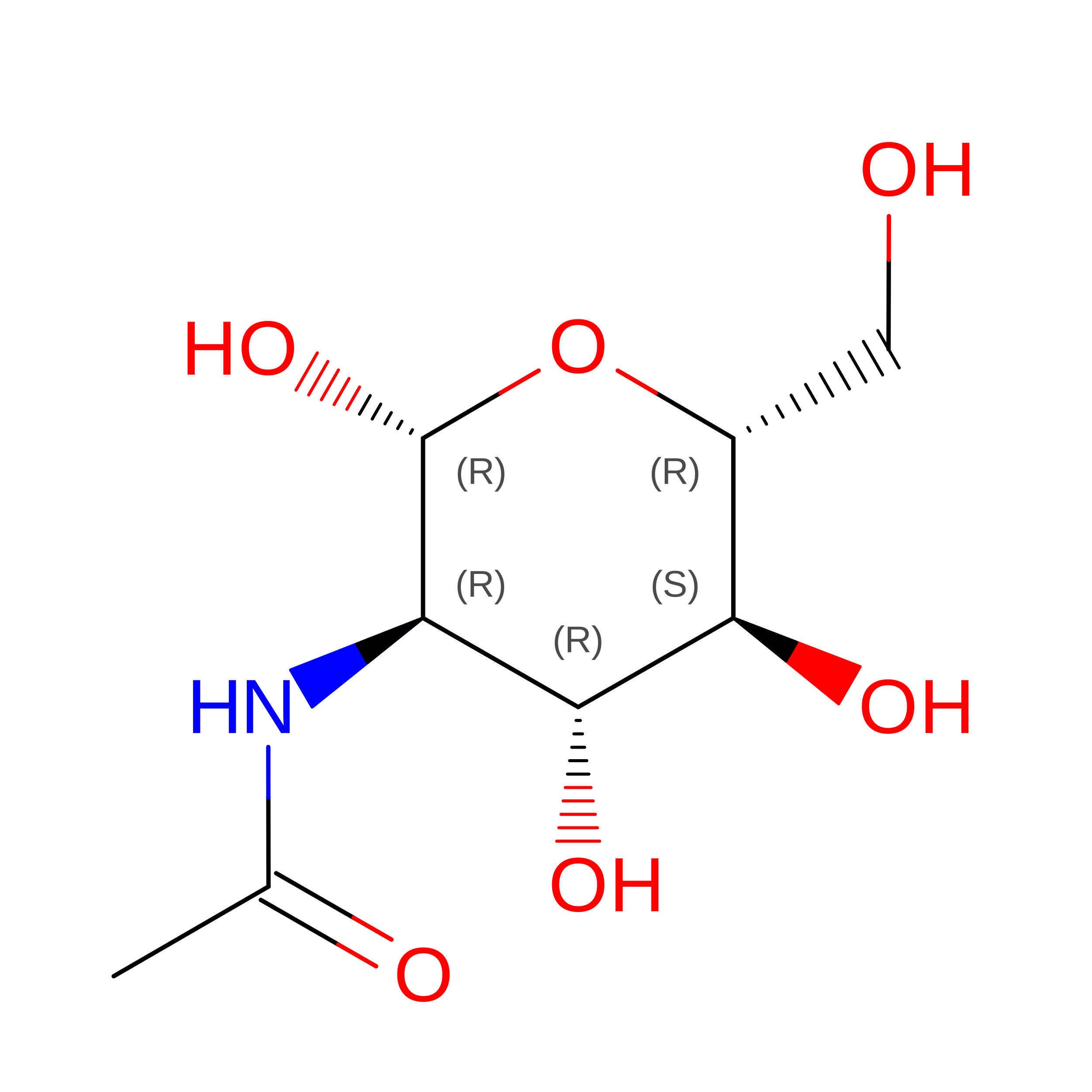
2-acetamido-2-deoxy-beta-D-glucopyranose
C8 H15 N O6
OVRNDRQMDRJTHS-FMDGEEDCSA-N
SRO

Query on SRO


Download:Ideal Coordinates CCD File
Q [auth A],
S [auth E],
U [auth B],
W [auth C],
Y [auth D]
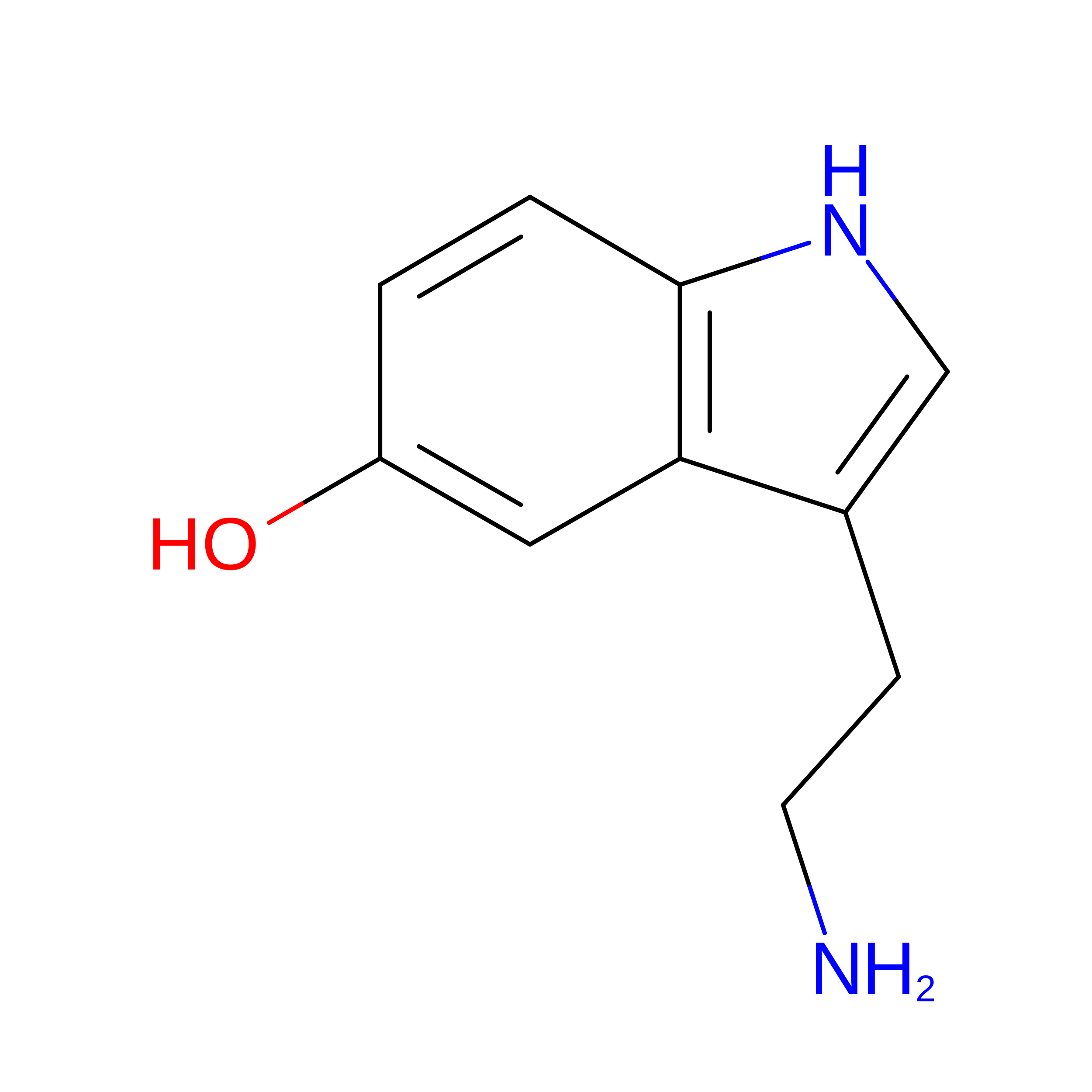
SEROTONIN
C10 H12 N2 O
QZAYGJVTTNCVMB-UHFFFAOYSA-N

Experimental Data & Validation

Experimental Data

  • Method: ELECTRON MICROSCOPY
  • Resolution: 3.20 Å
  • Aggregation State: PARTICLE 
  • Reconstruction Method: SINGLE PARTICLE 

Structure Validation

View Full Validation Report


Entry History 

Deposition Data

Revision History  (Full details and data files)

  • Version 1.0: 2018-11-07
    Type: Initial release
  • Version 1.1: 2018-11-21
    Changes: Data collection, Database references
  • Version 1.2: 2018-11-28
    Changes: Data collection, Database references
  • Version 2.0: 2020-07-29
    Type: Remediation
    Reason: Carbohydrate remediation
    Changes: Atomic model, Data collection, Derived calculations, Structure summary
  • Version 3.0: 2022-09-14
    Changes: Atomic model, Data collection, Database references, Source and taxonomy, Structure summary
  • Version 3.1: 2024-11-20
    Changes: Data collection, Structure summary