5KOK | pdb_00005kok

Pavine N-methyltransferase in complex with Tetrahydropapaverine and S-adenosylhomocysteine pH 7.25


Experimental Data Snapshot

  • Method: X-RAY DIFFRACTION
  • Resolution: 1.79 Å
  • R-Value Free: 
    0.199 (Depositor), 0.201 (DCC) 
  • R-Value Work: 
    0.163 (Depositor), 0.166 (DCC) 
  • R-Value Observed: 
    0.165 (Depositor) 

Starting Model: experimental
View more details

wwPDB Validation 3D Report Full Report

Validation slider image for 5KOK

Ligand Structure Quality Assessment 


This is version 1.5 of the entry. See complete history

Literature

Structural and Functional Studies of Pavine N-Methyltransferase from Thalictrum flavum Reveal Novel Insights into Substrate Recognition and Catalytic Mechanism.

Torres, M.A.Hoffarth, E.Eugenio, L.Savtchouk, J.Chen, X.Morris, J.S.Facchini, P.J.Ng, K.K.

(2016) J Biological Chem 291: 23403-23415

  • DOI: https://doi.org/10.1074/jbc.M116.747261
  • Primary Citation Related Structures: 
    5KN4, 5KOC, 5KOK, 5KPC, 5KPG

  • PubMed Abstract: 

    Benzylisoquinoline alkaloids (BIAs) are produced in a wide variety of plants and include many common analgesic, antitussive, and anticancer compounds. Several members of a distinct family of S-adenosylmethionine (SAM)-dependent N-methyltransferases (NMTs) play critical roles in BIA biosynthesis, but the molecular basis of substrate recognition and catalysis is not known for NMTs involved in BIA metabolism. To address this issue, the crystal structure of pavine NMT from Thalictrum flavum was solved using selenomethionine-substituted protein (d min = 2.8 Å). Additional structures were determined for the native protein (d min = 2.0 Å) as well as binary complexes with SAM (d min = 2.3 Å) or the reaction product S-adenosylhomocysteine (d min = 1.6 Å). The structure of a complex with S-adenosylhomocysteine and two molecules of tetrahydropapaverine (THP; one as the S conformer and a second in the R configuration) (d min = 1.8 Å) revealed key features of substrate recognition. Pavine NMT converted racemic THP to laudanosine, but the enzyme showed a preference for (±)-pavine and (S)-reticuline as substrates. These structures suggest the involvement of highly conserved residues at the active site. Mutagenesis of three residues near the methyl group of SAM and the nitrogen atom of the alkaloid acceptor decreased enzyme activity without disrupting the structure of the protein. The binding site for THP provides a framework for understanding substrate specificity among numerous NMTs involved in the biosynthesis of BIAs and other specialized metabolites. This information will facilitate metabolic engineering efforts aimed at producing medicinally important compounds in heterologous systems, such as yeast.


  • Organizational Affiliation
    • From the Department of Biological Sciences and.

Macromolecule Content 

  • Total Structure Weight: 95.02 kDa 
  • Atom Count: 6,376 
  • Modeled Residue Count: 695 
  • Deposited Residue Count: 794 
  • Unique protein chains: 1

Macromolecules

Find similar proteins by:|  3D Structure
Entity ID: 1
MoleculeChains  Sequence LengthOrganismDetailsImage
Pavine N-methyltransferase
A, B
397Thalictrum flavum subsp. glaucumMutation(s): 0 
EC: 2.1.1.300
UniProt
Find proteins for C3SBW0 (Thalictrum flavum subsp. glaucum)
Explore C3SBW0 
Go to UniProtKB:  C3SBW0
Entity Groups
Sequence Clusters30% Identity50% Identity70% Identity90% Identity95% Identity100% Identity
UniProt GroupC3SBW0
Sequence Annotations
Expand
Reference Sequence

Small Molecules

Ligands 3 Unique
IDChains Name / Formula / InChI Key2D Diagram3D Interactions
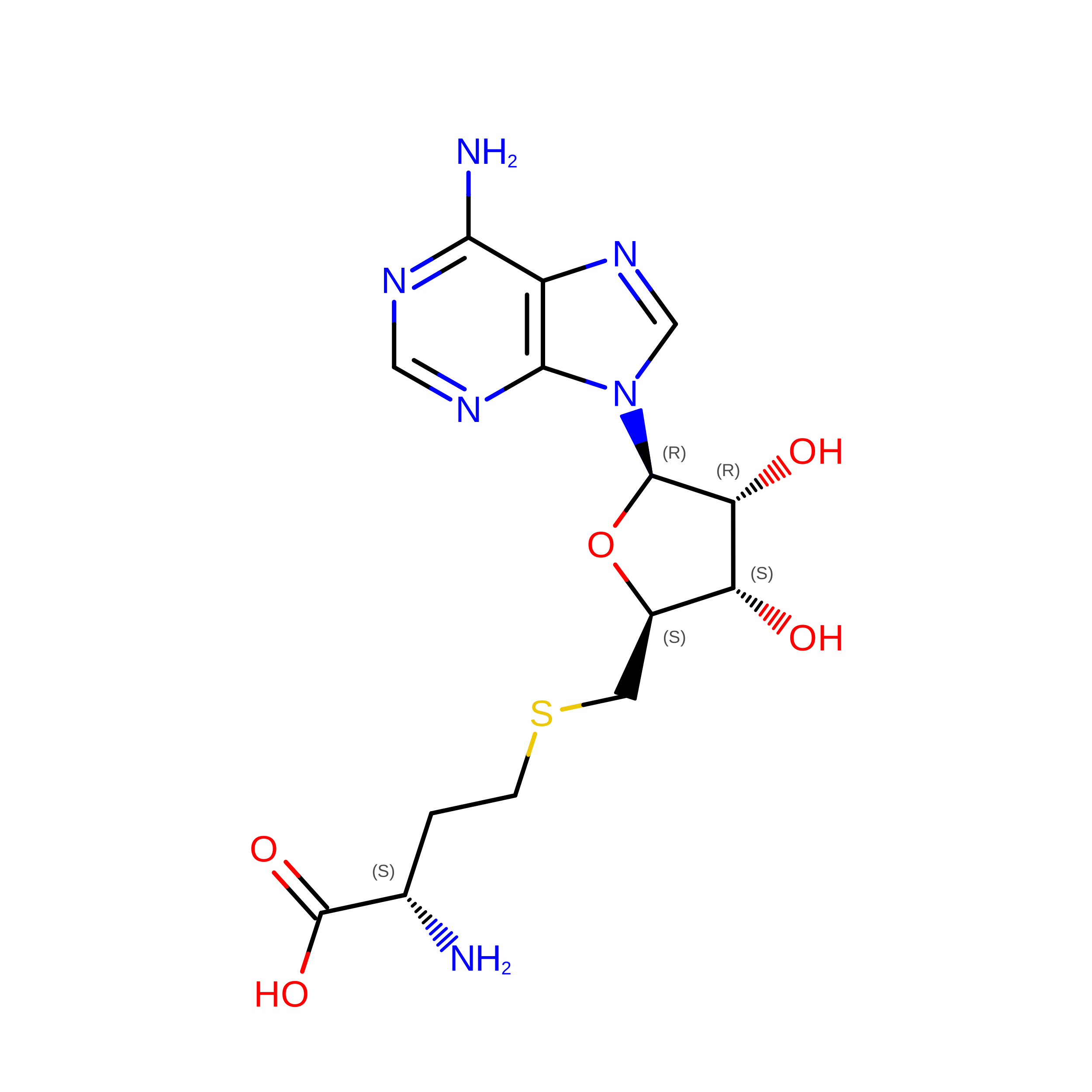
SAH

Query on SAH


Download:Ideal Coordinates CCD File
C [auth A],
F [auth B]
S-ADENOSYL-L-HOMOCYSTEINE
C14 H20 N6 O5 S
ZJUKTBDSGOFHSH-WFMPWKQPSA-N
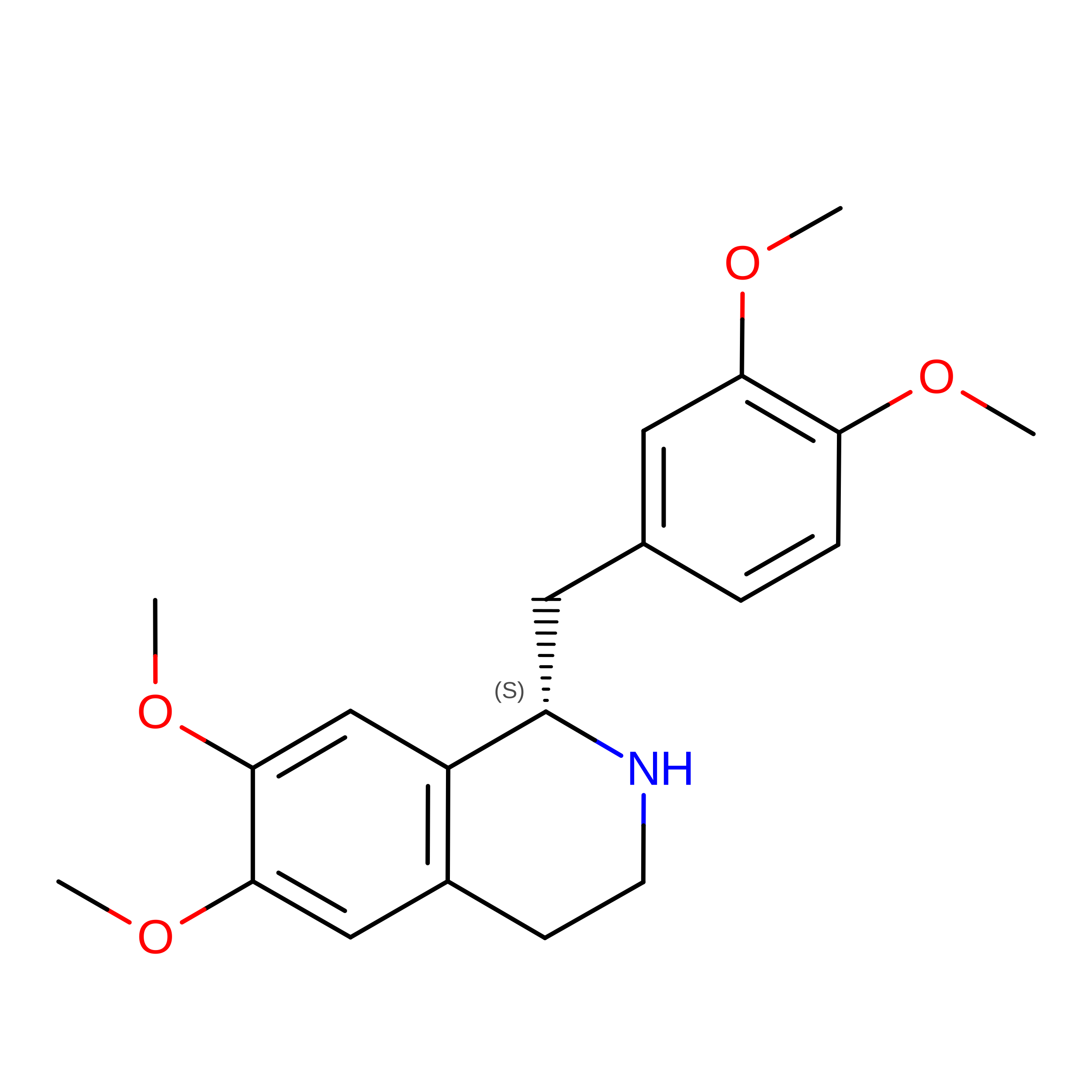
S9T

Query on S9T


Download:Ideal Coordinates CCD File
D [auth A],
G [auth B]
(1~{S})-1-[(3,4-dimethoxyphenyl)methyl]-6,7-dimethoxy-1,2,3,4-tetrahydroisoquinoline
C20 H25 N O4
YXWQTVWJNHKSCC-INIZCTEOSA-N
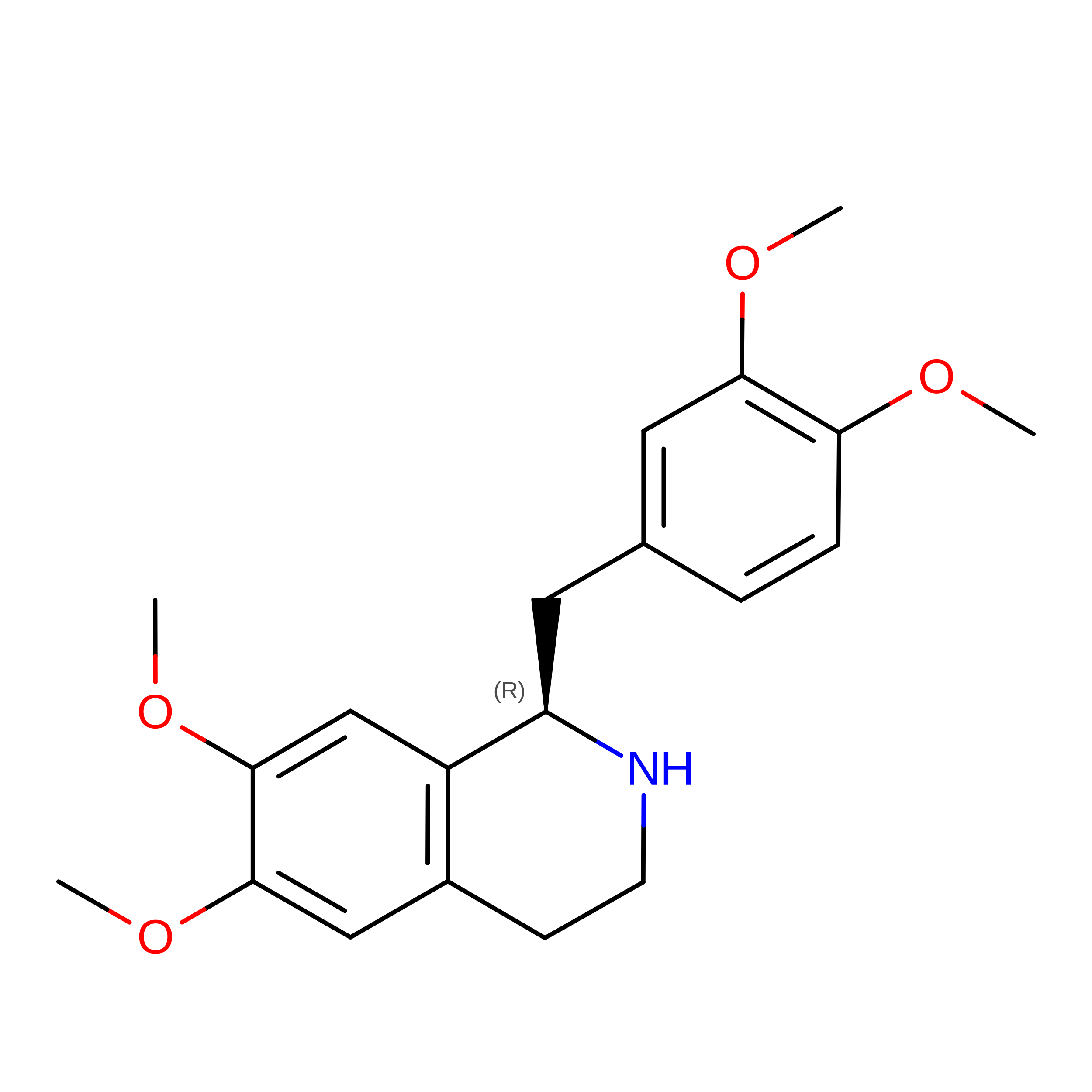
R9T

Query on R9T


Download:Ideal Coordinates CCD File
E [auth A],
H [auth B]
(1~{R})-1-[(3,4-dimethoxyphenyl)methyl]-6,7-dimethoxy-1,2,3,4-tetrahydroisoquinoline
C20 H25 N O4
YXWQTVWJNHKSCC-MRXNPFEDSA-N

Experimental Data & Validation

Experimental Data

  • Method: X-RAY DIFFRACTION
  • Resolution: 1.79 Å
  • R-Value Free:  0.199 (Depositor), 0.201 (DCC) 
  • R-Value Work:  0.163 (Depositor), 0.166 (DCC) 
  • R-Value Observed: 0.165 (Depositor) 
Space Group: P 1 21 1
Unit Cell:
Length ( Å )Angle ( ˚ )
a = 53.776α = 90
b = 71.637β = 99.21
c = 95.226γ = 90
Software Package:
Software NamePurpose
PHENIXrefinement
XDSdata reduction
XSCALEdata scaling
PHENIXphasing

Structure Validation

View Full Validation Report


Ligand Structure Quality Assessment 


Entry History 

& Funding Information

Deposition Data


Funding OrganizationLocationGrant Number
Natural Sciences and Engineering Research Council (NSERC, Canada)Canada262089

Revision History  (Full details and data files)

  • Version 1.0: 2016-09-07
    Type: Initial release
  • Version 1.1: 2016-09-14
    Changes: Database references
  • Version 1.2: 2016-11-16
    Changes: Database references
  • Version 1.3: 2017-09-27
    Changes: Author supporting evidence, Database references, Derived calculations
  • Version 1.4: 2020-01-08
    Changes: Author supporting evidence
  • Version 1.5: 2023-10-04
    Changes: Data collection, Database references, Refinement description