5EDL | pdb_00005edl

Crystal structure of an S-component of ECF transporter


Experimental Data Snapshot

  • Method: X-RAY DIFFRACTION
  • Resolution: 1.95 Å
  • R-Value Free: 
    0.217 (Depositor), 0.220 (DCC) 
  • R-Value Work: 
    0.195 (Depositor), 0.199 (DCC) 
  • R-Value Observed: 
    0.197 (Depositor) 

wwPDB Validation 3D Report Full Report

Validation slider image for 5EDL

Ligand Structure Quality Assessment 


This is version 2.0 of the entry. See complete history

Literature

Crystal Structure of a Group I Energy Coupling Factor Vitamin Transporter S Component in Complex with Its Cognate Substrate.

Josts, I.Almeida Hernandez, Y.Andreeva, A.Tidow, H.

(2016) Cell Chem Biol 23: 827-836

  • DOI: https://doi.org/10.1016/j.chembiol.2016.06.008
  • Primary Citation Related Structures: 
    5EDL

  • PubMed Abstract: 

    Energy coupling factor (ECF) transporters are responsible for the uptake of essential scarce nutrients in prokaryotes. This ATP-binding cassette transporter family comprises two subgroups that share a common architecture forming a tripartite membrane protein complex consisting of a translocation component and ATP hydrolyzing module and a substrate-capture (S) component. Here, we present the crystal structure of YkoE from Bacillus subtilis, the S component of the previously uncharacterized group I ECF transporter YkoEDC. Structural and biochemical analyses revealed the constituent residues of the thiamine-binding pocket as well as an unexpected mode of vitamin recognition. In addition, our experimental and bioinformatics data demonstrate major differences between YkoE and group II ECF transporters and indicate how group I vitamin transporter S components have diverged from other group I and group II ECF transporters.


  • Organizational Affiliation
    • The Hamburg Centre for Ultrafast Imaging (CUI), Institute for Biochemistry and Molecular Biology, University of Hamburg, Martin-Luther-King-Platz 6, 20146 Hamburg, Germany; Department of Chemistry, Institute for Biochemistry and Molecular Biology, University of Hamburg, Martin-Luther-King-Platz 6, 20146 Hamburg, Germany.

Macromolecule Content 

  • Total Structure Weight: 21.96 kDa 
  • Atom Count: 1,607 
  • Modeled Residue Count: 197 
  • Deposited Residue Count: 197 
  • Unique protein chains: 1

Macromolecules

Find similar proteins by:|  3D Structure
Entity ID: 1
MoleculeChains  Sequence LengthOrganismDetailsImage
Putative HMP/thiamine permease protein YkoE197Bacillus subtilisMutation(s): 0 
Gene Names: ykoEBSU13230
Membrane Entity: Yes 
UniProt
Find proteins for O34738 (Bacillus subtilis (strain 168))
Explore O34738 
Go to UniProtKB:  O34738
Entity Groups
Sequence Clusters30% Identity50% Identity70% Identity90% Identity95% Identity100% Identity
UniProt GroupO34738
Sequence Annotations
Expand
Reference Sequence

Small Molecules

Ligands 2 Unique
IDChains Name / Formula / InChI Key2D Diagram3D Interactions
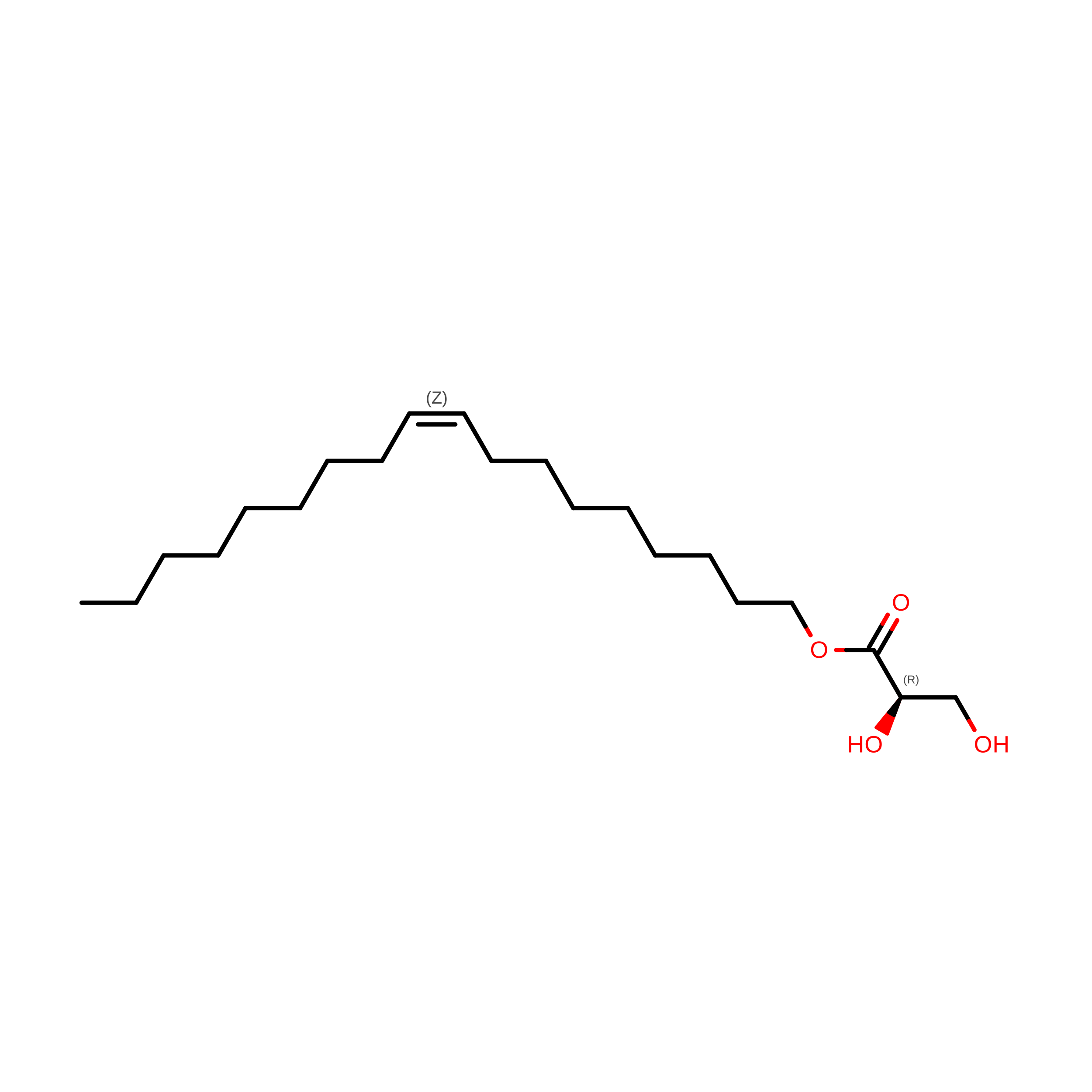
MPG

Query on MPG


Download:Ideal Coordinates CCD File
C [auth A],
D [auth A]
[(Z)-octadec-9-enyl] (2R)-2,3-bis(oxidanyl)propanoate
C21 H40 O4
JPJYKWFFJCWMPK-GDCKJWNLSA-N
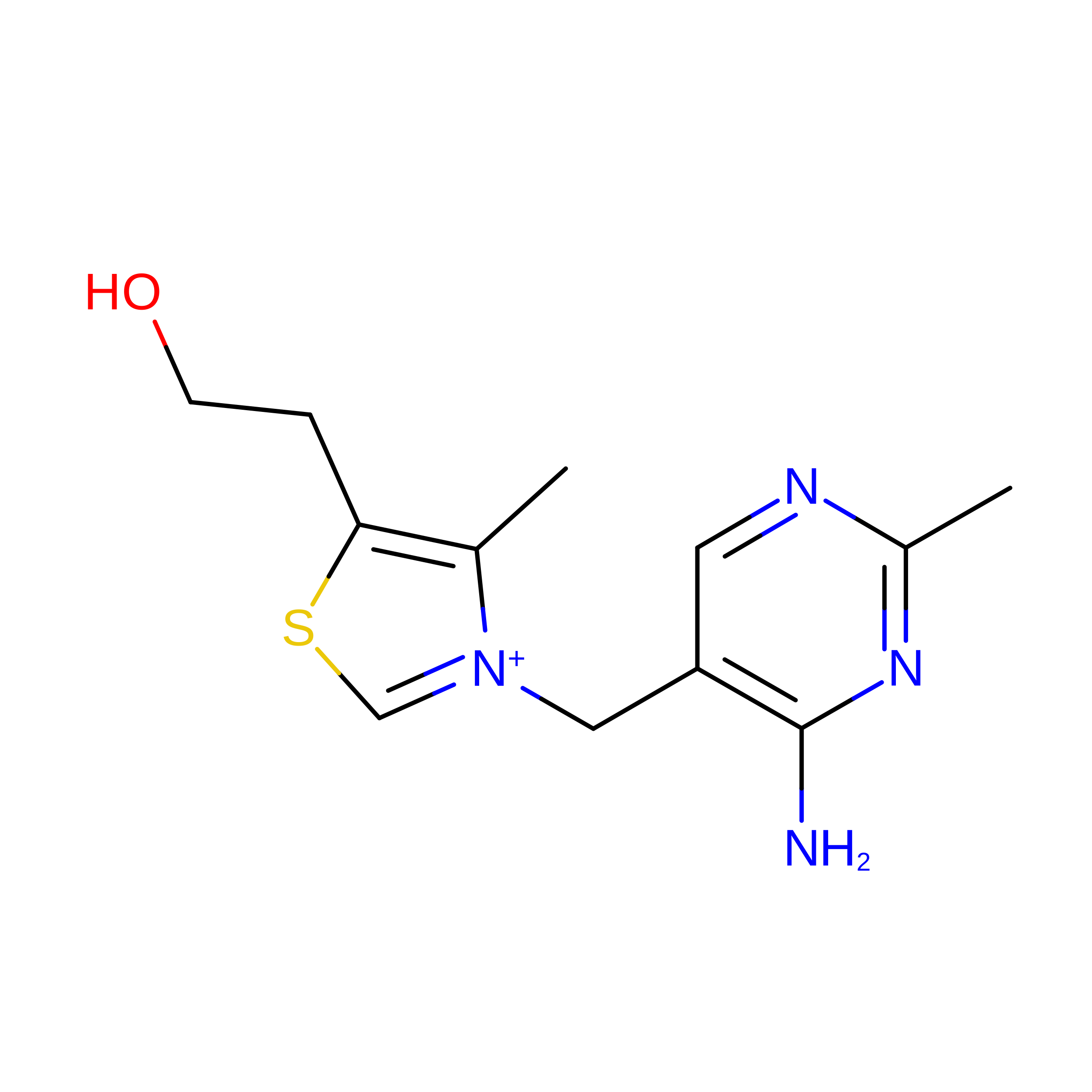
VIB

Query on VIB


Download:Ideal Coordinates CCD File
B [auth A]3-(4-AMINO-2-METHYL-PYRIMIDIN-5-YLMETHYL)-5-(2-HYDROXY-ETHYL)-4-METHYL-THIAZOL-3-IUM
C12 H17 N4 O S
JZRWCGZRTZMZEH-UHFFFAOYSA-N

Experimental Data & Validation

Experimental Data

  • Method: X-RAY DIFFRACTION
  • Resolution: 1.95 Å
  • R-Value Free:  0.217 (Depositor), 0.220 (DCC) 
  • R-Value Work:  0.195 (Depositor), 0.199 (DCC) 
  • R-Value Observed: 0.197 (Depositor) 
Space Group: I 4 2 2
Unit Cell:
Length ( Å )Angle ( ˚ )
a = 70.713α = 90
b = 70.713β = 90
c = 196.839γ = 90
Software Package:
Software NamePurpose
PHENIXrefinement
PDB_EXTRACTdata extraction
XDSdata reduction
Aimlessdata scaling
SHELXDEphasing

Structure Validation

View Full Validation Report


Ligand Structure Quality Assessment 


Entry History 

Deposition Data

Revision History  (Full details and data files)

  • Version 1.0: 2016-08-17
    Type: Initial release
  • Version 2.0: 2024-05-08
    Changes: Atomic model, Data collection, Database references, Structure summary