5A3C | pdb_00005a3c

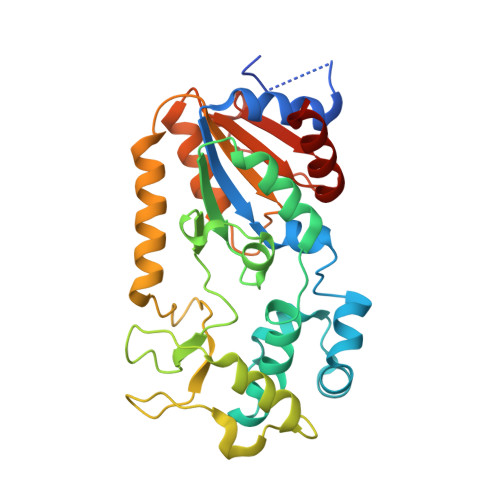
Crystal structure of the ADP-ribosylating sirtuin (SirTM) from Streptococcus pyogenes in complex with NAD


Experimental Data Snapshot

  • Method: X-RAY DIFFRACTION
  • Resolution: 2.03 Å
  • R-Value Free: 
    0.233 (Depositor), 0.250 (DCC) 
  • R-Value Work: 
    0.176 (Depositor) 
  • R-Value Observed: 
    0.178 (Depositor) 

wwPDB Validation 3D Report Full Report

Validation slider image for 5A3C

Ligand Structure Quality Assessment 


This is version 1.2 of the entry. See complete history. 

Literature

Identification of a Class of Protein Adp-Ribosylating Sirtuins in Microbial Pathogens.

Rack, J.G., Morra, R., Barkauskaite, E., Kraehenbuehl, R., Ariza, A., Qu, Y., Ortmayer, M., Leidecker, O., Cameron, D.R., Matic, I., Peleg, A.Y., Leys, D., Traven, A., Ahel, I.

(2015) Mol Cell 59: 309

  • DOI: https://doi.org/10.1016/j.molcel.2015.06.013
  • Primary Citation Related Structures: 
    5A35, 5A3A, 5A3B, 5A3C

  • PubMed Abstract: 

    Sirtuins are an ancient family of NAD(+)-dependent deacylases connected with the regulation of fundamental cellular processes including metabolic homeostasis and genome integrity. We show the existence of a hitherto unrecognized class of sirtuins, found predominantly in microbial pathogens. In contrast to earlier described classes, these sirtuins exhibit robust protein ADP-ribosylation activity. In our model organisms, Staphylococcus aureus and Streptococcus pyogenes, the activity is dependent on prior lipoylation of the target protein and can be reversed by a sirtuin-associated macrodomain protein. Together, our data describe a sirtuin-dependent reversible protein ADP-ribosylation system and establish a crosstalk between lipoylation and mono-ADP-ribosylation. We propose that these posttranslational modifications modulate microbial virulence by regulating the response to host-derived reactive oxygen species.


  • Organizational Affiliation: 
    • Sir William Dunn School of Pathology, University of Oxford, South Parks Road, Oxford OX1 3RE, UK.

Macromolecule Content 

  • Total Structure Weight: 36.23 kDa 
  • Atom Count: 2,617 
  • Modeled Residue Count: 286 
  • Deposited Residue Count: 303 
  • Unique protein chains: 1

Macromolecules

Find similar proteins by:|  3D Structure
Entity ID: 1
MoleculeChains  Sequence LengthOrganismDetailsImage
SIR2 FAMILY PROTEIN303Streptococcus pyogenes str. ManfredoMutation(s): 0 
EC: 2.4.2.30 (PDB Primary Data), 2.4.2 (UniProt)
UniProt
Find proteins for P0DN71 (Streptococcus pyogenes serotype M5 (strain Manfredo))
Explore P0DN71 
Go to UniProtKB:  P0DN71
Entity Groups
Sequence Clusters30% Identity50% Identity70% Identity90% Identity95% Identity100% Identity
UniProt GroupP0DN71
Sequence Annotations
Expand
Reference Sequence

Small Molecules

Ligands 4 Unique
IDChains Name / Formula / InChI Key2D Diagram3D Interactions
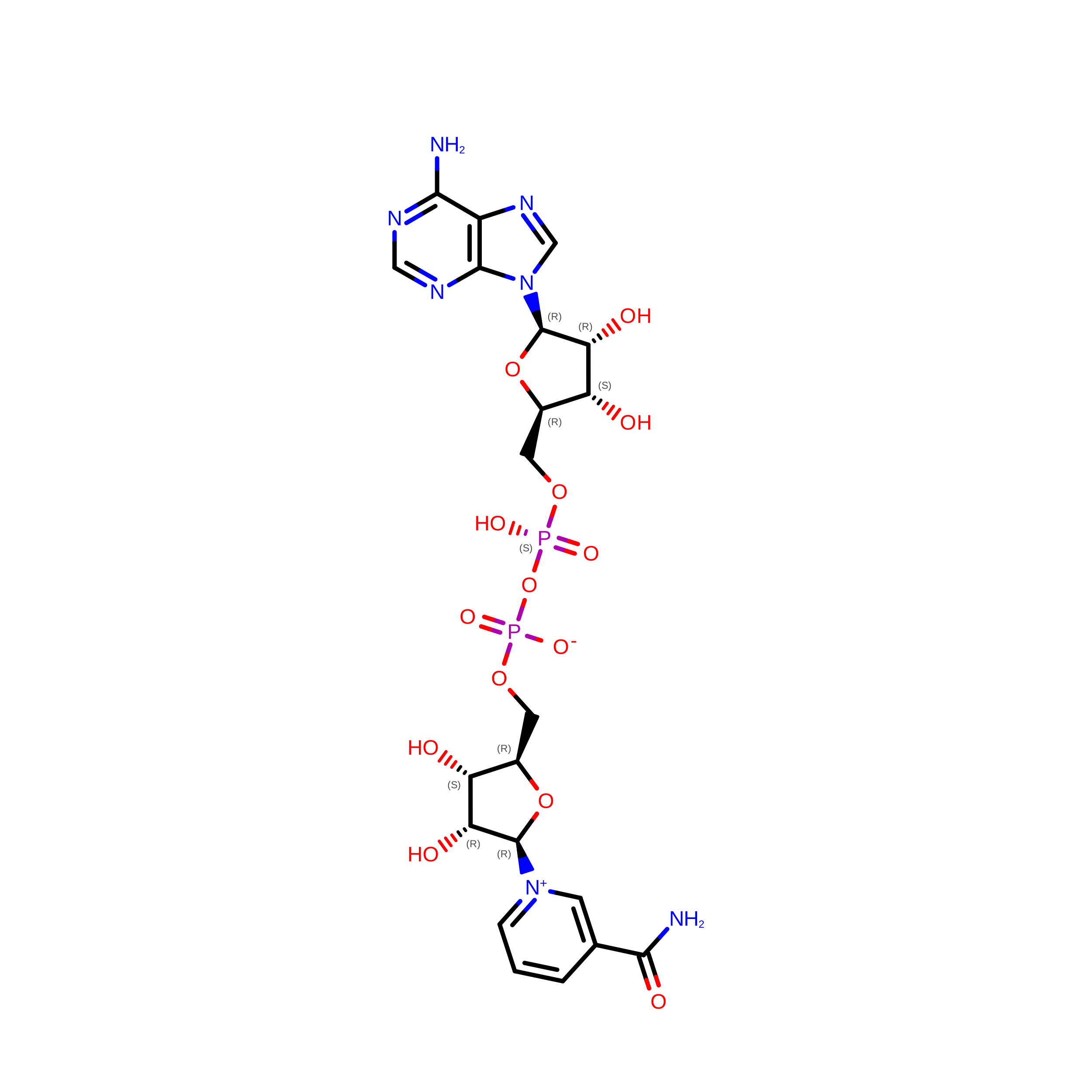
NAD

Query on NAD


Download:Ideal Coordinates CCD File
F [auth A]NICOTINAMIDE-ADENINE-DINUCLEOTIDE
C21 H27 N7 O14 P2
BAWFJGJZGIEFAR-NNYOXOHSSA-N
GLY

Query on GLY


Download:Ideal Coordinates CCD File
B [auth A],
C [auth A],
D [auth A]
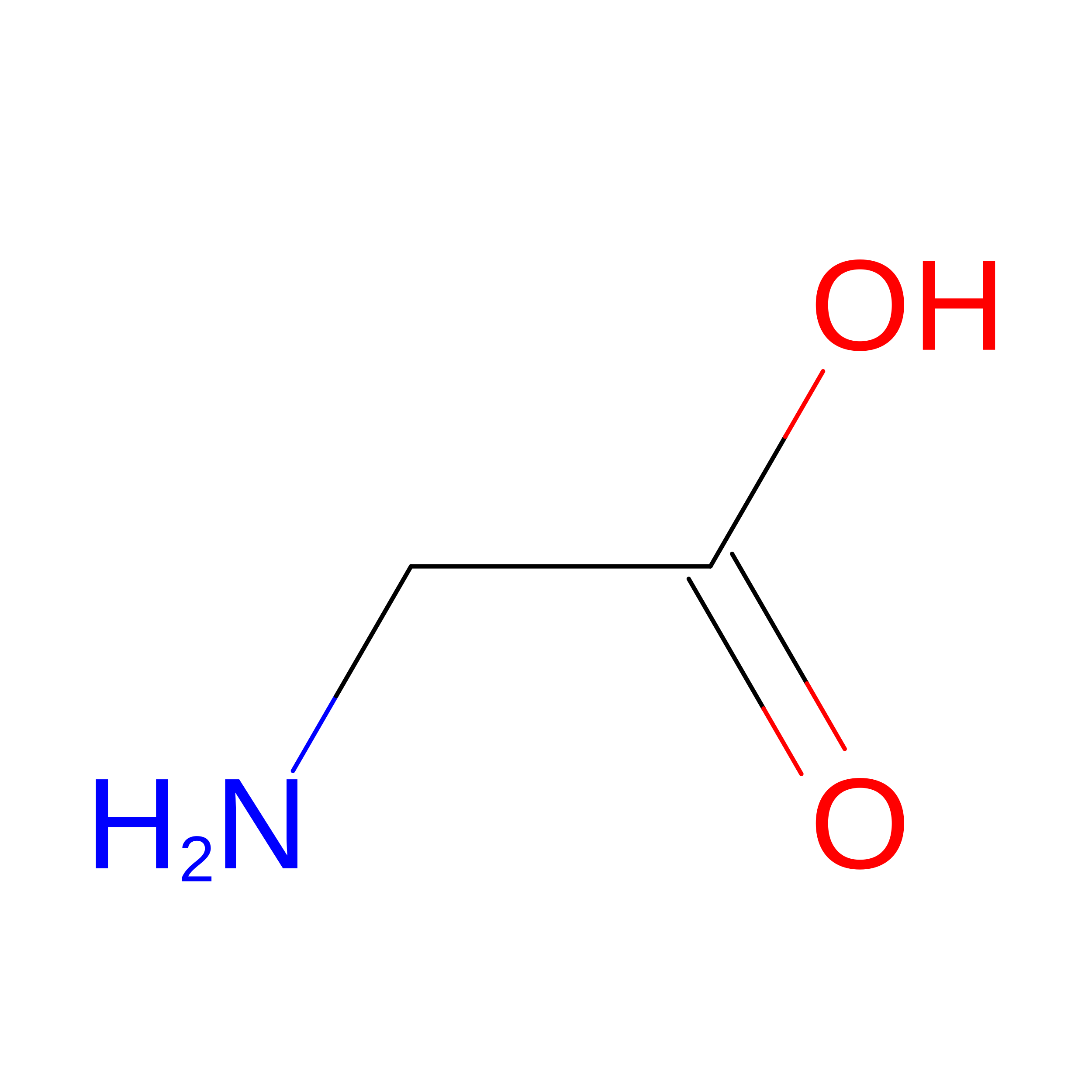
GLYCINE
C2 H5 N O2
DHMQDGOQFOQNFH-UHFFFAOYSA-N
ZN

Query on ZN


Download:Ideal Coordinates CCD File
E [auth A]ZINC ION
Zn
PTFCDOFLOPIGGS-UHFFFAOYSA-N
EDO

Query on EDO


Download:Ideal Coordinates CCD File
G [auth A],
H [auth A]
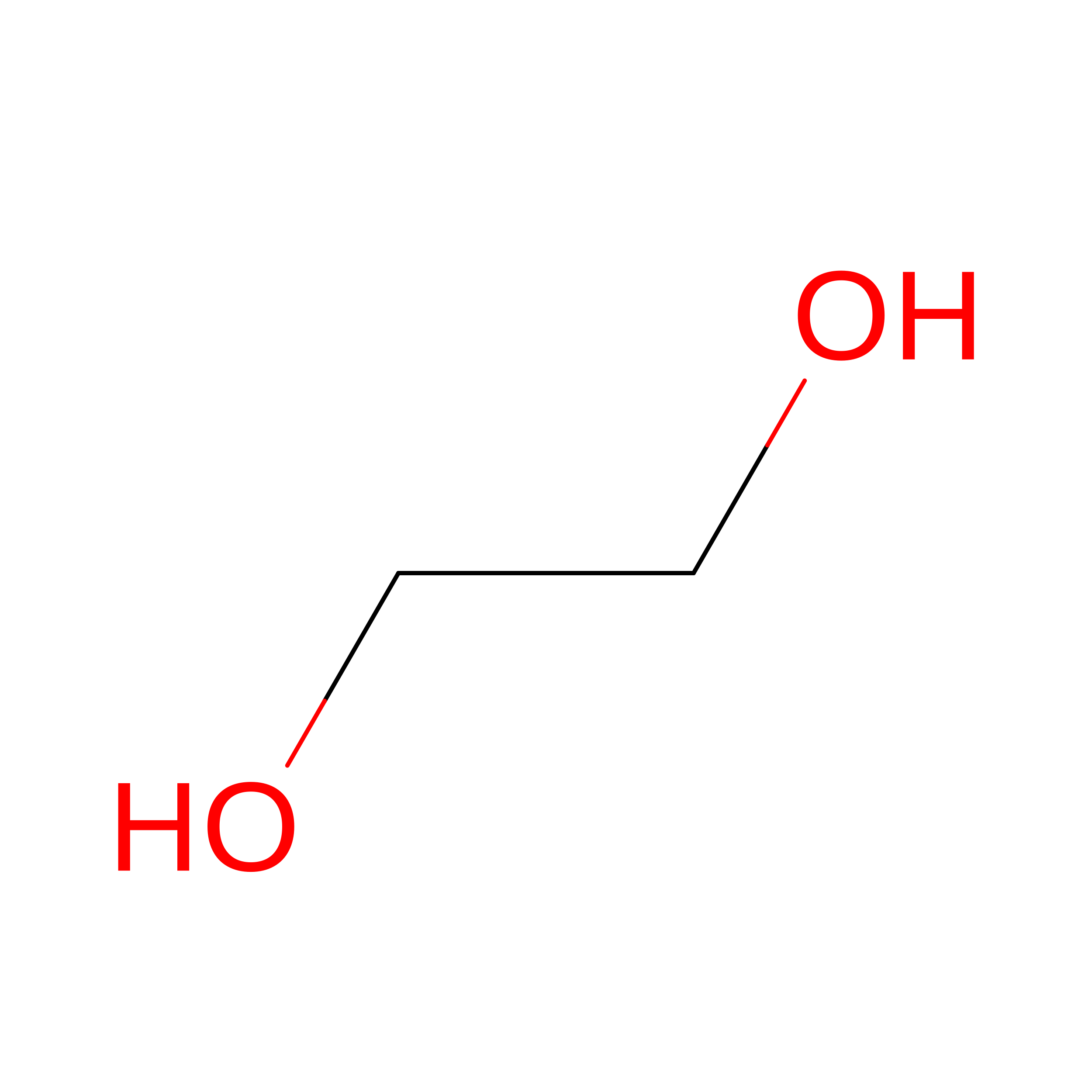
1,2-ETHANEDIOL
C2 H6 O2
LYCAIKOWRPUZTN-UHFFFAOYSA-N

Experimental Data & Validation

Experimental Data

  • Method: X-RAY DIFFRACTION
  • Resolution: 2.03 Å
  • R-Value Free:  0.233 (Depositor), 0.250 (DCC) 
  • R-Value Work:  0.176 (Depositor) 
  • R-Value Observed: 0.178 (Depositor) 
Space Group: P 1
Unit Cell:
Length ( Å )Angle ( ˚ )
a = 33.88α = 99.55
b = 41.48β = 93.61
c = 51.26γ = 92.98
Software Package:
Software NamePurpose
REFMACrefinement
XDSdata reduction
Aimlessdata scaling
autoSHARPphasing

Structure Validation

View Full Validation Report


Ligand Structure Quality Assessment 


Entry History 

Revision History  (Full details and data files)

  • Version 1.0: 2015-07-29
    Type: Initial release
  • Version 1.1: 2015-10-07
    Changes: Atomic model, Derived calculations
  • Version 1.2: 2024-05-08
    Changes: Data collection, Database references, Derived calculations, Other