4OOW | pdb_00004oow

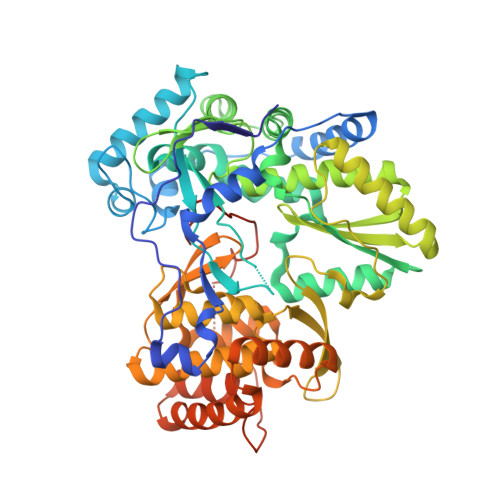
HCV NS5B polymerase with a fragment of quercetagetin


Experimental Data Snapshot

  • Method: X-RAY DIFFRACTION
  • Resolution: 2.57 Å
  • R-Value Free: 
    0.277 (Depositor), 0.275 (DCC) 
  • R-Value Work: 
    0.216 (Depositor), 0.215 (DCC) 
  • R-Value Observed: 
    0.221 (Depositor) 

Starting Model: experimental
View more details

wwPDB Validation 3D Report Full Report

Validation slider image for 4OOW

This is version 1.1 of the entry. See complete history

Literature

Inhibition of RNA binding to hepatitis C virus RNA-dependent RNA polymerase: a new mechanism for antiviral intervention.

Ahmed-Belkacem, A.Guichou, J.F.Brillet, R.Ahnou, N.Hernandez, E.Pallier, C.Pawlotsky, J.M.

(2014) Nucleic Acids Res 42: 9399-9409

  • DOI: https://doi.org/10.1093/nar/gku632
  • Primary Citation Related Structures: 
    4OOW

  • PubMed Abstract: 

    The hepatitis C virus (HCV) RNA-dependent RNA polymerase (RdRp) is a key target for antiviral intervention. The goal of this study was to identify the binding site and unravel the molecular mechanism by which natural flavonoids efficiently inhibit HCV RdRp. Screening identified the flavonol quercetagetin as the most potent inhibitor of HCV RdRp activity. Quercetagetin was found to inhibit RdRp through inhibition of RNA binding to the viral polymerase, a yet unknown antiviral mechanism. X-ray crystallographic structure analysis of the RdRp-quercetagetin complex identified quercetagetin's binding site at the entrance of the RNA template tunnel, confirming its original mode of action. This antiviral mechanism was associated with a high barrier to resistance in both site-directed mutagenesis and long-term selection experiments. In conclusion, we identified a new mechanism for non-nucleoside inhibition of HCV RdRp through inhibition of RNA binding to the enzyme, a mechanism associated with broad genotypic activity and a high barrier to resistance. Our results open the way to new antiviral approaches for HCV and other viruses that use an RdRp based on RNA binding inhibition, that could prove to be useful in human, animal or plant viral infections.


  • Organizational Affiliation
    • Inserm U955, Hôpital Henri Mondor, 51 avenue du Maréchal de Lattre de Tassigny, 94010 Créteil, France.

Macromolecule Content 

  • Total Structure Weight: 129.17 kDa 
  • Atom Count: 8,841 
  • Modeled Residue Count: 1,093 
  • Deposited Residue Count: 1,156 
  • Unique protein chains: 1

Macromolecules

Find similar proteins by:|  3D Structure
Entity ID: 1
MoleculeChains  Sequence LengthOrganismDetailsImage
RNA-directed RNA polymerase
A, B
578Hepatitis C virus isolate HC-J4Mutation(s): 0 
EC: 2.7.7.48
UniProt
Find proteins for O92972 (Hepatitis C virus genotype 1b (strain HC-J4))
Explore O92972 
Go to UniProtKB:  O92972
Entity Groups
Sequence Clusters30% Identity50% Identity70% Identity90% Identity95% Identity100% Identity
UniProt GroupO92972
Sequence Annotations
Expand
Reference Sequence

Small Molecules

Ligands 1 Unique
IDChains Name / Formula / InChI Key2D Diagram3D Interactions
CAQ

Query on CAQ


Download:Ideal Coordinates CCD File
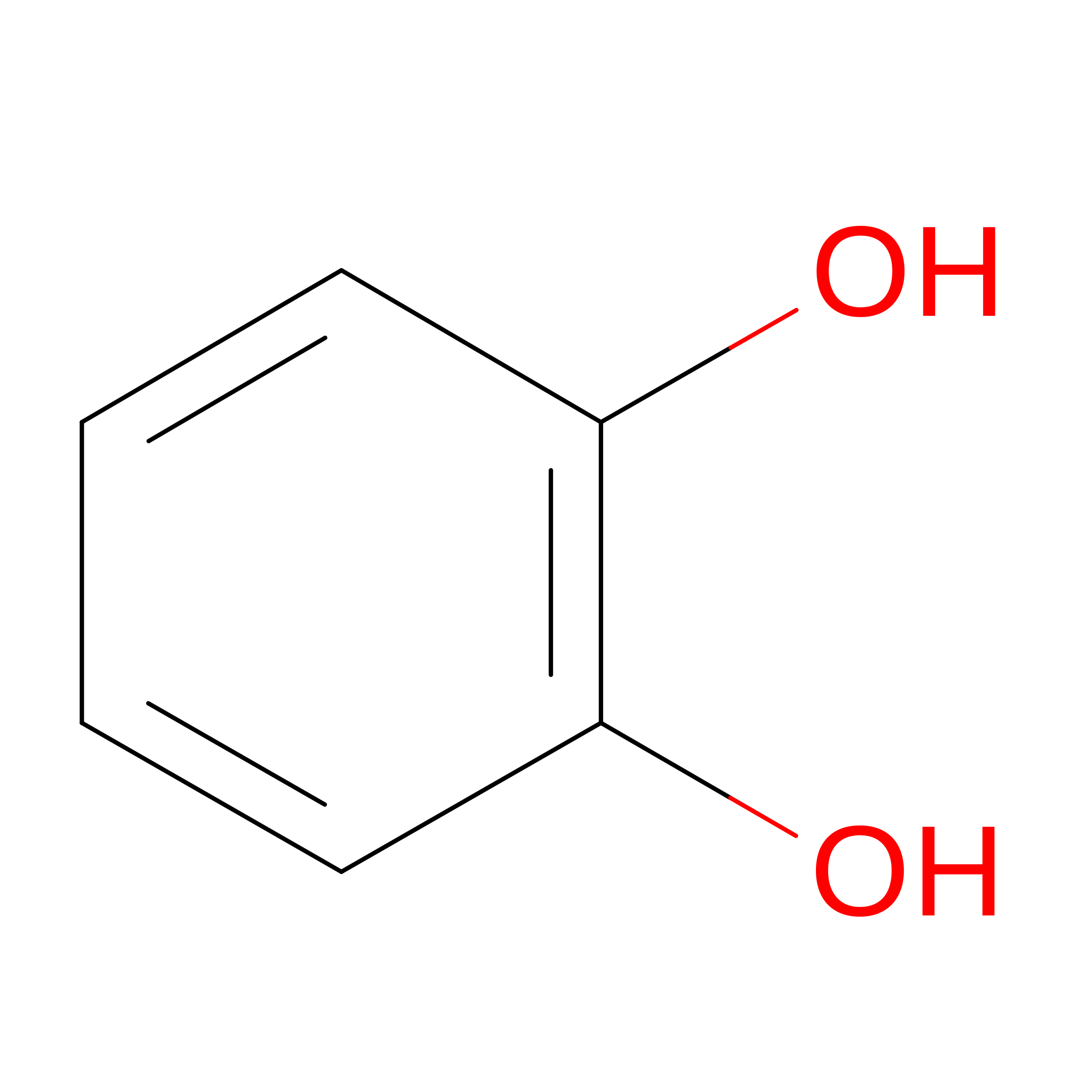
C [auth A]CATECHOL
C6 H6 O2
YCIMNLLNPGFGHC-UHFFFAOYSA-N

Experimental Data & Validation

Experimental Data

  • Method: X-RAY DIFFRACTION
  • Resolution: 2.57 Å
  • R-Value Free:  0.277 (Depositor), 0.275 (DCC) 
  • R-Value Work:  0.216 (Depositor), 0.215 (DCC) 
  • R-Value Observed: 0.221 (Depositor) 
Space Group: P 21 21 21
Unit Cell:
Length ( Å )Angle ( ˚ )
a = 106.6α = 90
b = 108.87β = 90
c = 134.97γ = 90
Software Package:
Software NamePurpose
DNAdata collection
MOLREPphasing
REFMACrefinement
MOSFLMdata reduction
SCALAdata scaling

Structure Validation

View Full Validation Report


Entry History 

Deposition Data

Revision History  (Full details and data files)

  • Version 1.0: 2014-12-17
    Type: Initial release
  • Version 1.1: 2023-09-20
    Changes: Data collection, Database references, Derived calculations, Refinement description