4KEQ | pdb_00004keq

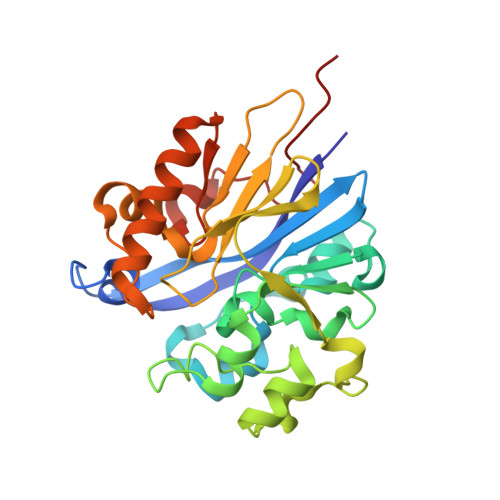
Crystal structure of 4-pyridoxolactonase, 5-pyridoxolactone bound


Experimental Data Snapshot

  • Method: X-RAY DIFFRACTION
  • Resolution: 2.28 Å
  • R-Value Free: 
    0.246 (Depositor), 0.242 (DCC) 
  • R-Value Work: 
    0.188 (Depositor) 
  • R-Value Observed: 
    0.191 (Depositor) 

Starting Model: experimental
View more details

wwPDB Validation 3D Report Full Report

Validation slider image for 4KEQ

Ligand Structure Quality Assessment 


This is version 1.2 of the entry. See complete history

Literature

Structure of 4-pyridoxolactonase from Mesorhizobium loti.

Kobayashi, J.Yoshikane, Y.Yagi, T.Baba, S.Mizutani, K.Takahashi, N.Mikami, B.

(2014) Acta Crystallogr F Struct Biol Commun 70: 424-432

  • DOI: https://doi.org/10.1107/S2053230X14003926
  • Primary Citation Related Structures: 
    3AJ3, 4KEP, 4KEQ

  • PubMed Abstract: 

    4-Pyridoxolactonase from Mesorhizobium loti catalyzes the zinc-dependent lactone-ring hydrolysis of 4-pyridoxolactone (4PAL) to 4-pyridoxic acid (4PA) in vitamin B6 degradation pathway I. The crystal structures of 4-pyridoxolactonase and its complex with 5-pyridoxolactone (5PAL; the competitive inhibitor) were determined. The overall structure was an αβ/βα sandwich fold, and two zinc ions were coordinated. This strongly suggested that the enzyme belongs to subclass B3 of the class B β-lactamases. In the complex structure, the carbonyl group of 5PAL pointed away from the active site, revealing why it acts as a competitive inhibitor. Based on docking simulation with 4PAL, 4PA and a reaction intermediate, 4-pyridoxolactonase probably catalyzes the reaction through a subclass B2-like mechanism, not the subclass B3 mechanism.


  • Organizational Affiliation
    • Laboratory of Applied Structural Biology, Division of Applied Life Sciences, Graduate School of Agriculture, Kyoto University, Gokasyo, Uji, Kyoto 611-0011, Japan.

Macromolecule Content 

  • Total Structure Weight: 31.65 kDa 
  • Atom Count: 2,251 
  • Modeled Residue Count: 270 
  • Deposited Residue Count: 274 
  • Unique protein chains: 1

Macromolecules

Find similar proteins by:|  3D Structure
Entity ID: 1
MoleculeChains  Sequence LengthOrganismDetailsImage
4-pyridoxolactonase274Mesorhizobium japonicum MAFF 303099Mutation(s): 0 
Gene Names: mlr6805
EC: 3.1.1.27
UniProt
Find proteins for Q988B9 (Mesorhizobium japonicum (strain LMG 29417 / CECT 9101 / MAFF 303099))
Explore Q988B9 
Go to UniProtKB:  Q988B9
Entity Groups
Sequence Clusters30% Identity50% Identity70% Identity90% Identity95% Identity100% Identity
UniProt GroupQ988B9
Sequence Annotations
Expand
Reference Sequence

Small Molecules

Ligands 4 Unique
IDChains Name / Formula / InChI Key2D Diagram3D Interactions
5PN

Query on 5PN


Download:Ideal Coordinates CCD File
D [auth A],
E [auth A]
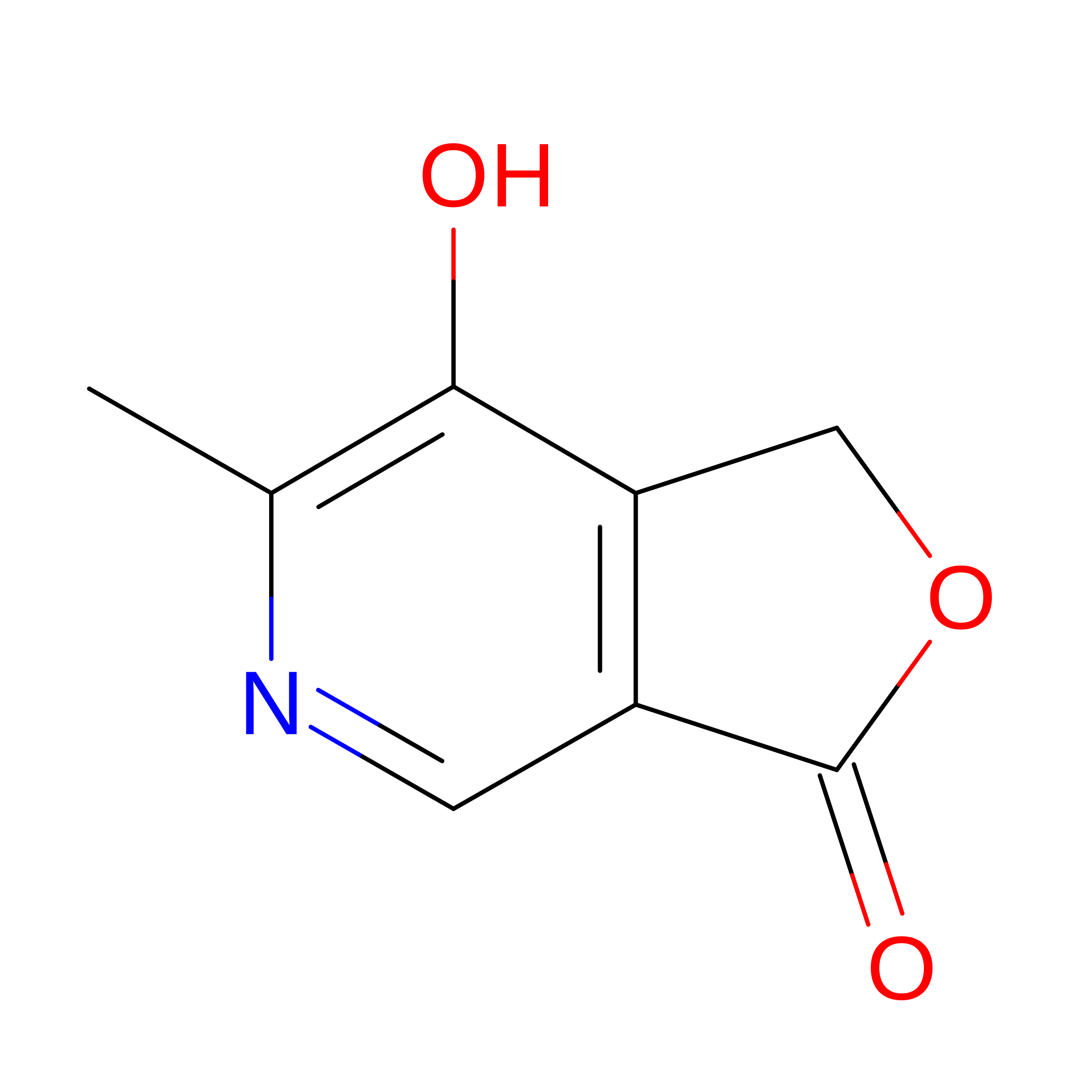
7-hydroxy-6-methylfuro[3,4-c]pyridin-3(1H)-one
C8 H7 N O3
PPAXBSPBIWBREI-UHFFFAOYSA-N
GOL

Query on GOL


Download:Ideal Coordinates CCD File
F [auth A],
G [auth A],
H [auth A]
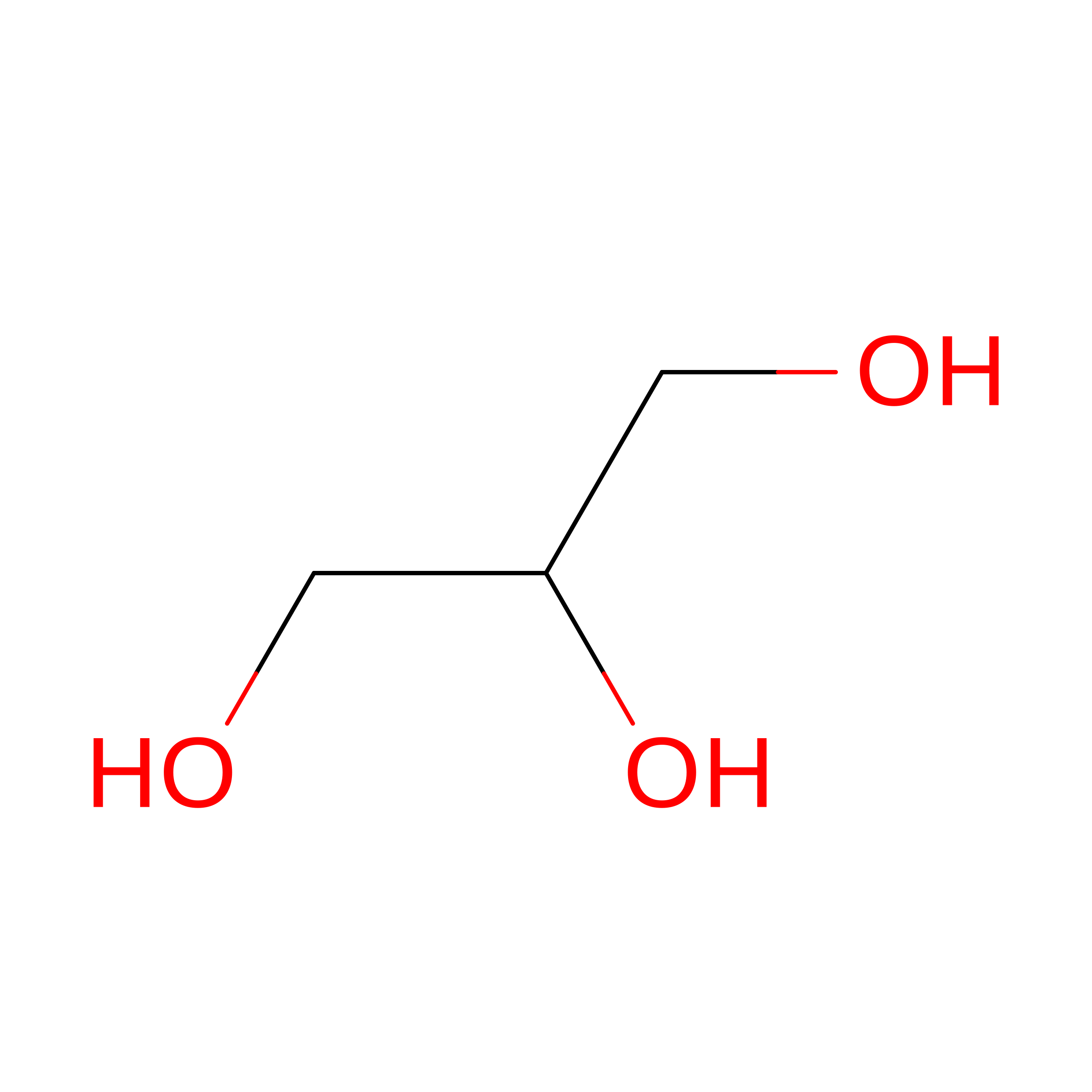
GLYCEROL
C3 H8 O3
PEDCQBHIVMGVHV-UHFFFAOYSA-N
ZN

Query on ZN


Download:Ideal Coordinates CCD File
B [auth A],
C [auth A]
ZINC ION
Zn
PTFCDOFLOPIGGS-UHFFFAOYSA-N
EDO

Query on EDO


Download:Ideal Coordinates CCD File
I [auth A],
J [auth A],
K [auth A]
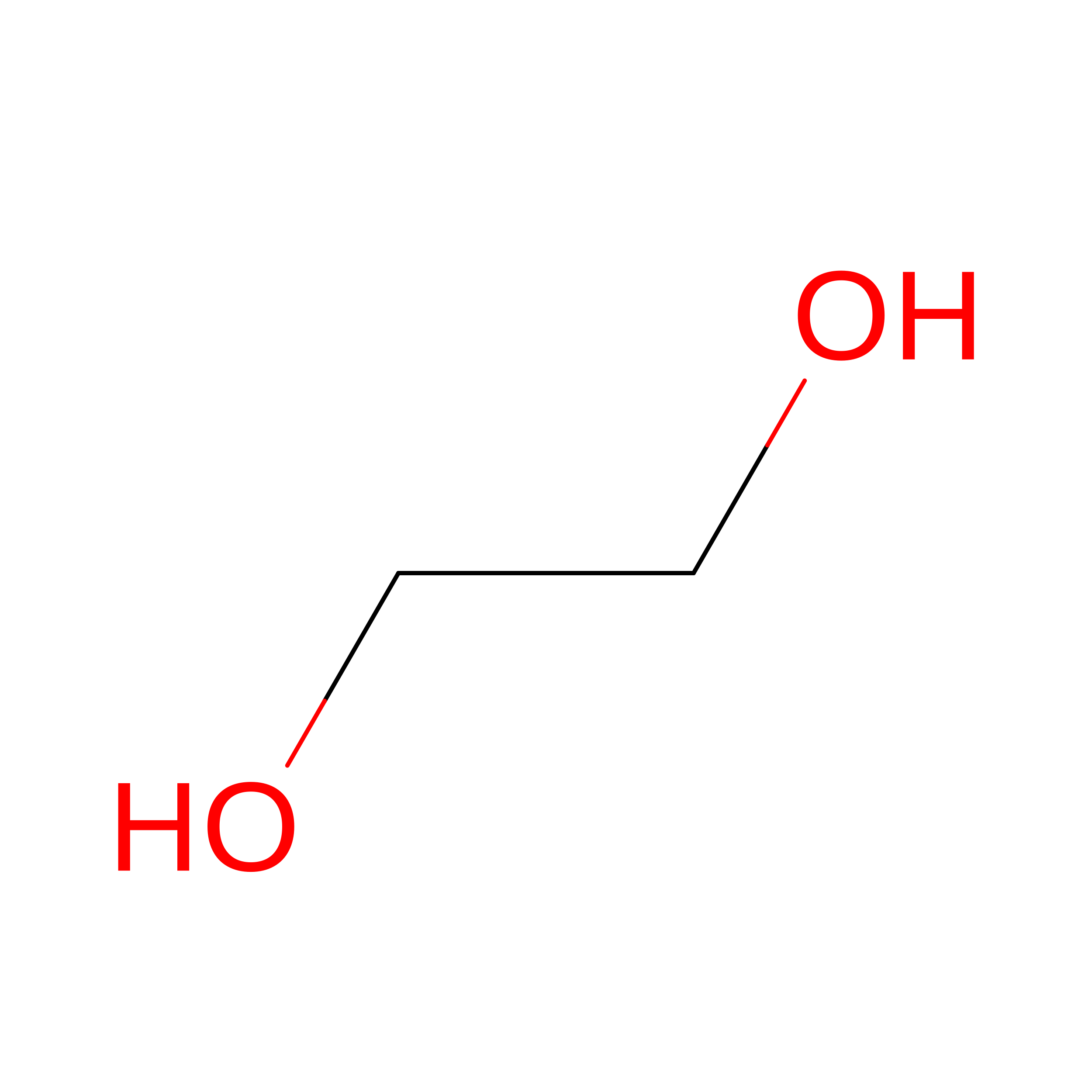
1,2-ETHANEDIOL
C2 H6 O2
LYCAIKOWRPUZTN-UHFFFAOYSA-N

Experimental Data & Validation

Experimental Data

  • Method: X-RAY DIFFRACTION
  • Resolution: 2.28 Å
  • R-Value Free:  0.246 (Depositor), 0.242 (DCC) 
  • R-Value Work:  0.188 (Depositor) 
  • R-Value Observed: 0.191 (Depositor) 
Space Group: C 1 2 1
Unit Cell:
Length ( Å )Angle ( ˚ )
a = 84.426α = 90
b = 39.576β = 117.73
c = 84.66γ = 90
Software Package:
Software NamePurpose
HKL-2000data collection
MOLREPphasing
PHENIXrefinement
HKL-2000data reduction
HKL-2000data scaling

Structure Validation

View Full Validation Report


Ligand Structure Quality Assessment 


Entry History 

Deposition Data

Revision History  (Full details and data files)

  • Version 1.0: 2014-04-09
    Type: Initial release
  • Version 1.1: 2020-01-01
    Changes: Database references
  • Version 1.2: 2023-11-08
    Changes: Data collection, Database references, Derived calculations, Refinement description